 listicle
Wellness Retreat Locations: How to Choose in 2026
Table of Contents
- What Wellness Retreat Locations Actually Offer
- How to Choose a Wellness Retreat That Fits Your Goals
- Wellness Retreat Activities: What Fills the Days
- Wellness Retreat Length: Long Weekend or Full Week?
- Program Credentials, Safety, and What to Ask Before Booking
- Wellness Retreat Packing List: What to Bring and What to Leave
- A Desert Sanctuary in the Sonoran: One Location Worth Knowing
- Conclusion
- Frequently Asked Questions
Last Updated: October 20, 2026
What Wellness Retreat Locations Actually Offer
Wellness retreat locations are places people travel to for structured, immersive health programs, yoga, breathwork, meditation, holistic healing, and restorative rest, deliberately removed from daily life.
A desert sanctuary, a lakeside lodge, and a mountain healing center produce different experiences even on the same schedule.
Below, we'll show you exactly how to choose a wellness retreat location that matches your goals, your schedule, and your comfort level, plus what to ask before you book.
How to Choose a Wellness Retreat That Fits Your Goals
The best way to choose a wellness retreat is to start with the outcome you want, not the brochure. Stress relief, grief work, fitness, spiritual renewal, and rest each point toward different settings and program styles.
A common approach is to write down three things before you browse:
- Your primary goal in one sentence. "Sleep through the night again" is a goal. "Get healthy" is not.
- Your energy budget. Burnout recovery needs quiet. Fitness reset needs movement.
- Your comfort with group work. Small cohorts feel intimate. Large ones feel anonymous.
Match the Setting to the Outcome You Want
Deserts suit quiet reflection and deep rest. Mountains and forests suit hiking and physical reset. Coastal and lakeside settings suit gentle restoration. Urban retreats suit people who want healing without travel logistics.
If you're coming from serious burnout, the setting matters more than the activity list. A quiet nature setting with limited stimulation does more for a fried nervous system than a packed schedule in a beautiful city.
Wellness Retreat Activities: What Fills the Days
Wellness retreat activities typically combine movement, breathwork, meditation, sound healing, nourishing meals, and rest. A well-built schedule alternates active sessions with genuine downtime, and the best programs leave room for silence.
Expect a rhythm rather than a checklist: mornings hold yoga or breathwork, midday opens into bodywork or free time, and evenings lean toward sound baths, ceremony, or restorative practice.
Here's what to verify:
- Session length. Ninety-minute blocks allow depth. Thirty-minute blocks rarely do.
- Free time. Real retreats schedule it. Packed calendars are a red flag.
- Optional versus required. Ceremony and cold plunge should always be optional.
Wellness Retreat Length: Long Weekend or Full Week?
A long weekend of three to four days works for stress relief and first-time retreat goers. A full week or longer suits burnout recovery, grief work, and anyone seeking lasting change rather than a pause.
Length changes what's possible. The first two days are usually decompression, sleep debt, travel fatigue, the mental unwind from work.
The table below maps length to goal, inclusions, and trade-offs.
| Length | Best For | Typical Inclusions | Watch Out For |
|---|---|---|---|
| 1 day (local) | First-timers, men's or women's day retreats, couples' workshops | Sessions, meals, no overnight | No decompression window; you drive home the same night |
| 2-3 days | Stress relief, first overnight retreat | Lodging, meals, 2-4 sessions per day | Ends before deep work and integration begin |
| 4-5 days | Rest, clarity, reset, grief work | Lodging, meals, ceremony, one deep-immersion day | Tight travel windows; little buffer for re-entry |
| 7+ days | Burnout recovery, transformation, teacher training | Lodging, meals, mentorship, integration modules | Time away from work and family; plan re-entry |
Match Length to What You're Carrying
- If you are fried from work and sleeping badly, a 3-day stay is usually enough to reset your nervous system. Going longer without integration support can leave you more raw than restored.
- If you are processing grief or a major life transition, a 5- to 7-day stay gives the work time to land. Shorter stays tend to open something that does not get closed.
- If you are a yoga teacher or facilitator, multi-day immersions (often 5 days in person plus virtual pre- and post-work) are the norm because the credential requires contact hours, not just a weekend.
Budget and Inclusions: What the Price Actually Covers
Retreat pricing varies widely by region, season, and inclusions, so the useful comparison is what is bundled, not the sticker number. Line up these items:
- Lodging, private room, shared room, or off-site? Shared rooms can cut cost significantly but change the experience.
- Meals, all meals, some meals, or none? Organic and chef-prepared meals are a real cost driver and a real part of the healing.
- Sessions, how many facilitated hours per day, and are specialty sessions (sound healing, ceremony, bodywork) included or add-ons?
A retreat that looks more expensive up front is often the better value once meals, sessions, and transfers are included. A cheaper retreat with add-on pricing can cost more by the end.
Travel Logistics and Seasonality
Length and location interact with travel: a 3-day retreat requiring two travel days is really a 5-day commitment. Before you book, confirm:
- Distance from the nearest major airport and whether a transfer is offered.
- Seasonal weather, desert locations swing from cold mornings to hot afternoons, and peak season (often spring) books out early.
- Accessibility, ask about step-free access, mobility needs, and dietary accommodations if any of those apply to you.
Who Each Length Suits, and Who Should Wait
A long weekend is a poor fit if you are in acute grief or crisis and need sustained support; a licensed therapist or longer program is the safer start. A 7-day intensive is a poor fit if you cannot protect re-entry time afterward. Match length to the support you have on both ends, not just the days you can take off.
Program Credentials, Safety, and What to Ask Before Booking
Ask who leads the sessions, what training they hold, and who is on site overnight. Credentials, safety practices, and medical oversight separate a professional retreat from a rented house with a yoga mat.
This is the section people skip, and it matters most. Booking on aesthetics alone is a common mistake: pool photos tell you nothing about whether the facilitator has trauma training or whether anyone checks on guests after a breathwork session.
What Credentials Actually Mean
Retreat credentials are not one thing. Knowing the categories helps you ask better questions:
- Yoga and movement credentials, a Registered Yoga Teacher (RYT) designation at the 200-hour or 500-hour level, or a certified teacher training program, signals a baseline of formal instruction. Advanced trainings (Yin, restorative, Kundalini, somatic) indicate specialization.
- Clinical and therapeutic credentials, licensed psychotherapists, counselors, and clinical social workers are regulated at the state level. If a program markets itself as therapeutic, ask whether the facilitator is licensed and in which state.
- Energy and holistic practitioners, energy healing, sound healing, and breathwork are largely unregulated. Credentials vary widely, so ask about training hours, mentorship, and supervision rather than relying on a title.
A Vetting Framework: Four Layers
Vet a retreat in four layers, each answering a different question.
Layer 1, People. Who facilitates each session, what are their credentials, and what is the guest-to-facilitator ratio?
Layer 2, Safety. Are hosts on site overnight?
Layer 3, Consent and ceremony. Is ceremony optional, and how is consent handled?
Layer 4, Terms. What is the cancellation policy in writing? Is the deposit refundable?
Contraindications and Audience Fit
Not every retreat suits every body or history. Before you book, be honest with yourself and the provider about:
- Cardiovascular and respiratory conditions, intense breathwork and cold plunge carry real risks and should be cleared with your physician.
- Pregnancy, many breathwork, fasting, and heat-based practices are not appropriate; ask directly.
- Mental health history, intensive group work and ceremony can surface material that needs clinical support. A trauma-informed facilitator will screen for this; a good one will refer you elsewhere if the program is not the right fit.
A retreat that suits a burned-out executive may be a poor fit for someone in acute grief, and vice versa. The right provider will tell you so.
Where to Verify
The U.S. Department of Health and Human Services publishes consumer guidance on health care choices worth reviewing if a program makes medical claims, and the FTC's guidance on health claims explains what advertisers may and may not promise. For yoga credentials, the Yoga Alliance maintains a public registry of registered schools and teachers you can check. For licensed therapists, your state's licensing board maintains a public lookup.
Wellness Retreat Packing List: What to Bring and What to Leave
Pack layers, comfortable movement clothing, a refillable water bottle, sun protection, and any medication you take. Leave the laptop, the heavy schedule, and the urge to document everything at home.
A wellness retreat packing list is shorter than most people expect. Desert locations swing from cold mornings to warm afternoons, so layers matter more than outfits.
Bring:
- Comfortable layers and loose clothing for movement
- Walking shoes and sandals
- Refillable water bottle and electrolytes
- Sun protection: hat, sunscreen, sunglasses
Leave behind:
- Work devices unless the program requires them
- Heavy reading lists
- Alcohol and stimulants unless the venue permits them
Many centers provide mats, props, and towels. Confirm before you fill a suitcase.
A Desert Sanctuary in the Sonoran: One Location Worth Knowing
Some locations do part of the work for you.
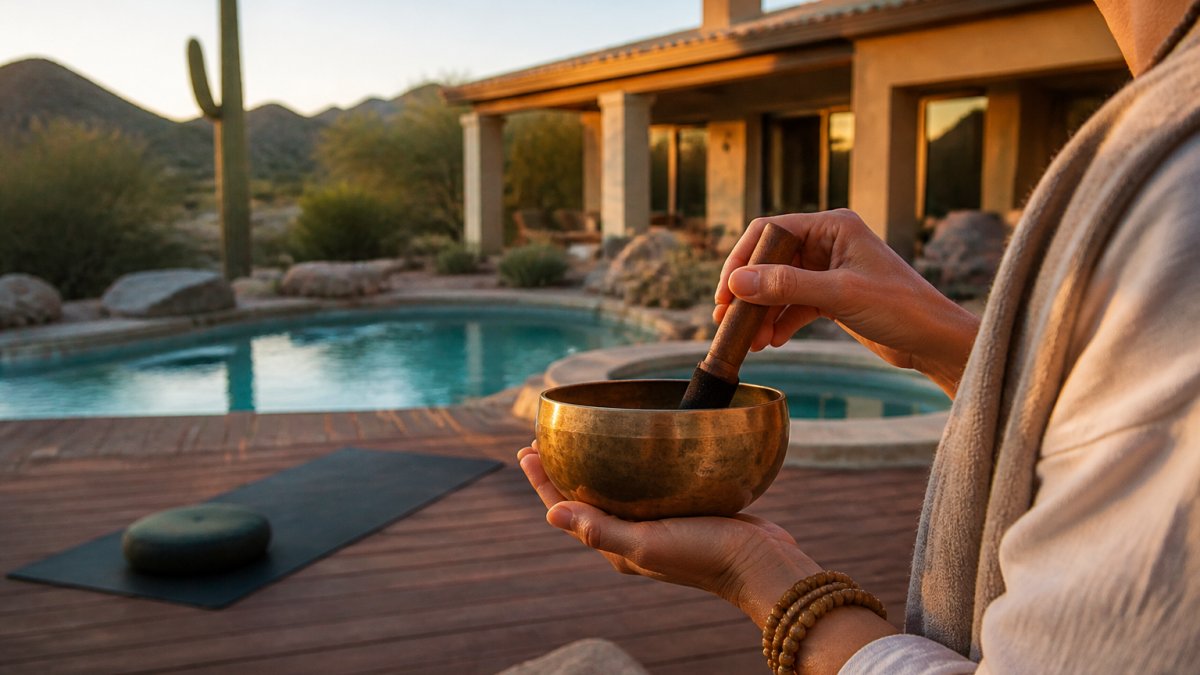
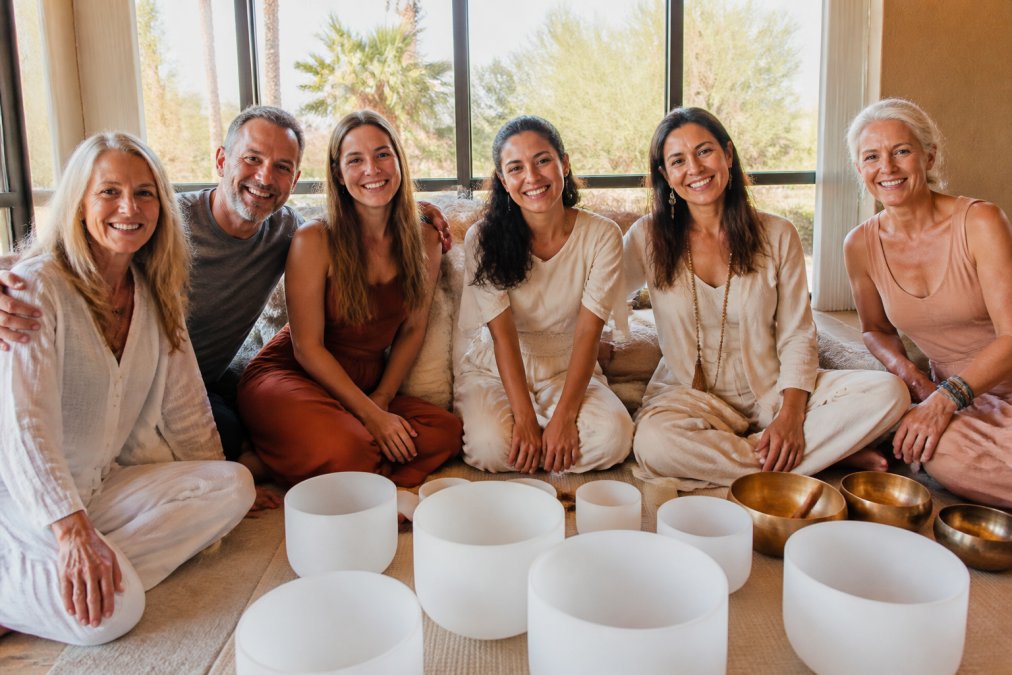
We host transformational wellness retreats built around guided breathwork, sound bath healing, meditation, cacao ceremony, cold plunge, and organic meals, with Mark and Lana Royce living on site in the Casita so guests have support around the clock.
We custom-build retreats from three to fourteen days. Our National Center for Complementary and Integrative Health reference on meditation and breathwork is a useful primer if you're new to these practices.
Programs include women's retreats, men's retreats, couples' workshops, and the Kundalini Fusion Method™ training for yoga teachers. Call us at 623-986-2899 to talk through dates and what's included.
Conclusion
Choosing among wellness retreat locations comes down to matching the setting, schedule, and people to what you actually need, not to what photographs best. That takes honesty about your goal and a few direct questions before you book.
If you want a sanctuary where the desert, the silence, and the care do the work alongside you, Blisstopia Retreats is built for exactly that.
Frequently Asked Questions
How do I choose the right wellness retreat location?
Start with your goal, not the map. If you want quiet and deep rest, a secluded desert or mountain setting beats a busy resort town. If you want daily classes and group energy, look for a location with a full activity schedule. Then check travel time, season, and whether the property is all-inclusive. Ask about group size, facilitator credentials, and what a typical day looks like before you book.
How long should a wellness retreat be?
A long weekend of three to four days suits first-timers or anyone with a tight schedule, and it is enough to reset sleep and step out of routine. Five to seven days gives room for deeper breathwork, meditation, and integration work without rushing. Two weeks or more fits yoga teacher training and immersive certifications. Match the length to how much change you want and how much time off you can realistically take.
What should I pack for a wellness retreat?
Bring comfortable layers, loose clothing for yoga and breathwork, walking shoes for trails, a refillable water bottle, sunscreen, a hat, and a journal. Pack a swimsuit if there is a pool or hot tub, plus a light wrap for cool desert evenings. Leave behind work laptops and heavy schedules. Confirm whether meals, mats, and toiletries are provided so you do not overpack or arrive short on essentials.
Are wellness retreats suitable for beginners?
Yes. Most retreats welcome people with no yoga or meditation experience, and good facilitators offer modifications for every level. Tell the team about injuries, health concerns, or mobility limits when you book so sessions can be adjusted. A retreat is a structured environment, not a performance, so arrive willing to try and to rest when you need to. Ask about group size if you prefer quieter, high-touch settings.