 blog
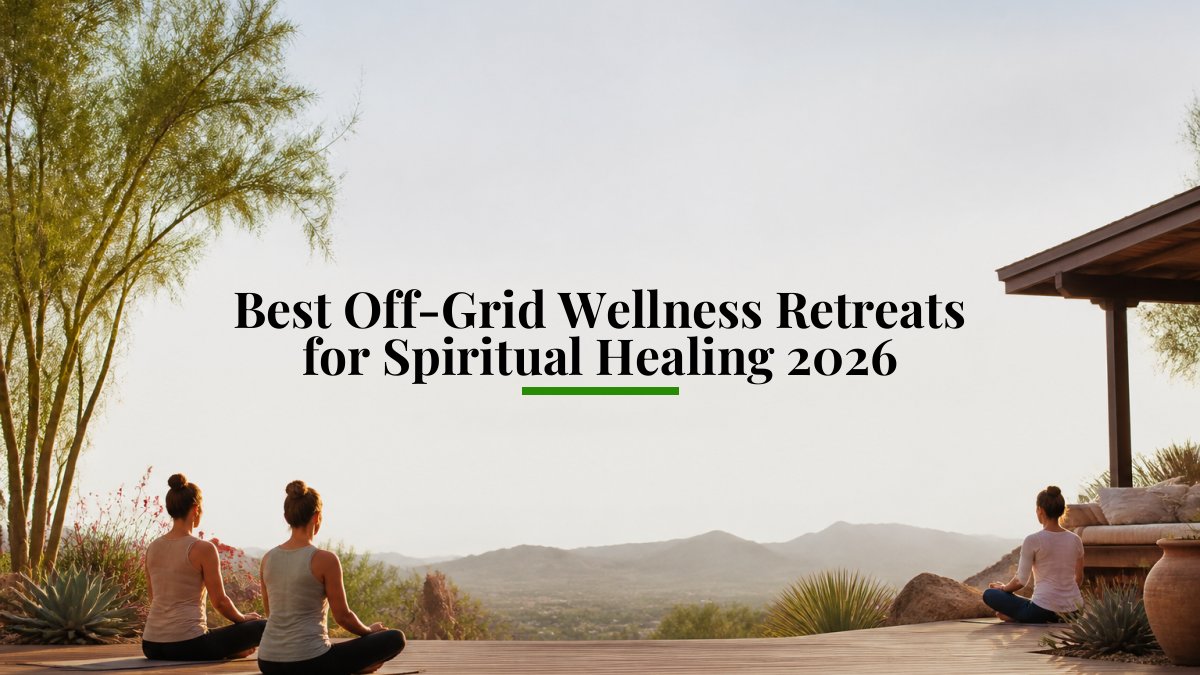
Best Off-Grid Wellness Retreats for Spiritual Healing 2026
Table of Contents
- Why Off-Grid Wellness Retreats for Spiritual Healing Are Booming in 2026
- How to Evaluate an Off-Grid Wellness Retreat Before You Book
- What Makes a Spiritual Healing Retreat Genuinely Effective
- Desert Spiritual Retreat Settings: Why the Sonoran Desert Works
- Inside a Faith-Based Wellness Retreat Experience
- Women's Wellness Retreats and Solo Travel for Inner Growth
- Retreat Duration, Pricing, and What an All-Inclusive Stay Includes
- Frequently Asked Questions
Last Updated: October 19, 2026
Why Off-Grid Wellness Retreats for Spiritual Healing Are Booming in 2026
Off-grid wellness retreats are residential programs held at properties disconnected from public utilities and city noise, built around silence, nature, and guided inner work. Interest in them keeps climbing as more people treat burnout as something a weekend spa day cannot fix.
The appeal is easy to explain. A setting powered by sun, well water, and propane removes the background hum of modern life, and that quiet does much of the healing before a single session begins. Below, we break down how to judge these retreats, what a genuine spiritual healing retreat looks like, and how duration and all-inclusive pricing actually work.
How to Evaluate an Off-Grid Wellness Retreat Before You Book
Start with proof, not poetry. A credible retreat will answer hard questions about utilities, access roads, emergency plans, and facilitator credentials before you pay a deposit. Ask for specifics in writing, and treat vague answers as a warning sign. The single most useful exercise is to request a one-page property fact sheet covering power, water, connectivity, medical access, and accessibility, then compare it line by line against what the marketing page claims.
Verified Off-Grid Status and Connectivity Details
"Off-grid" gets used loosely. Ask directly whether the property runs on solar, well water, septic, and propane, and whether the grid is a backup or the primary source. Then ask about connectivity: is there Wi-Fi, and is it strong enough for video calls? Many guests want a digital detox but still need a way to reach family in an emergency.
- Power source and backup plan, solar array size, battery bank, generator backup, and what happens during a multi-day cloud stretch
- Water source and filtration, well, hauled, or municipal; filtration method; whether drinking water is tested
- Cell signal by carrier, ask the host to name which carriers actually work on the property, not just "some service"
- Wi-Fi availability and where it reaches, main lodge only, guest rooms, or nowhere; bandwidth for video calls
- Distance to the nearest town with a grocery store, pharmacy, and fuel
A useful benchmark: genuinely remote properties are often 20 to 45 minutes from the nearest paved highway and 30 to 60 minutes from a hospital. If a property advertises "off-grid" but sits five minutes from a Starbucks, it is a wellness resort with a marketing angle, not a remote retreat.
Safety, Accessibility, and Emergency Planning
Remote settings demand honest safety answers. Confirm who lives on-site during programs, how far the nearest hospital is, and what the property's evacuation plan looks like. Ask about mobility needs too, since desert terrain, gravel paths, and stairs are common. A retreat that hosts stay on the property full-time, as ours do, gives guests direct access to support at any hour.
A practical checklist to send before you book:
- Nearest hospital and urgent care, with drive time in minutes, not miles
- Whether the property has a landline or satellite communicator that works when cell service does not
- Who is on-site overnight, and how a guest reaches them after hours
- Evacuation plan for fire, flash flood, and medical emergency, desert washes flood fast, and this is not a hypothetical
- Mobility: paved vs. gravel paths, stairs, grab bars, and whether ground-floor rooms are available
- Dietary needs: whether the kitchen can accommodate allergies, gluten-free, or medically restricted diets, and whether that is confirmed in writing
- Medication storage: refrigeration for insulin or other temperature-sensitive prescriptions
Selection Criteria We Use
When we evaluate any off-grid property, including our own, we score it on five factors: verified utility independence, documented emergency plan, facilitator credentials, transparent all-in pricing, and group size. A retreat that scores well on four but hides its pricing is not ready for your deposit. Ask every provider the same five questions and compare the answers side by side; the differences will tell you more than any brochure.
What Makes a Spiritual Healing Retreat Genuinely Effective
Effective programs share three traits: skilled facilitators, structure without pressure, and space for silence. Look for leaders with verifiable backgrounds in psychotherapy, yoga, breathwork, or energy work, and check whether the schedule leaves room for rest. A retreat that fills every hour with activities is a conference with better scenery.
Spiritual wellness also means different things to different people. Some guests want prayer and faith language; others want meditation and nature without doctrine. Ask how the facilitators handle that mix. A good program meets you where you are, and it never pressures anyone toward a belief system.
Desert Spiritual Retreat Settings: Why the Sonoran Desert Works
Desert settings strip away distraction. Wide horizons, saguaro forests, and dry air create a stillness that forests and beaches rarely match, and sunrise and sunset become daily rituals rather than background.
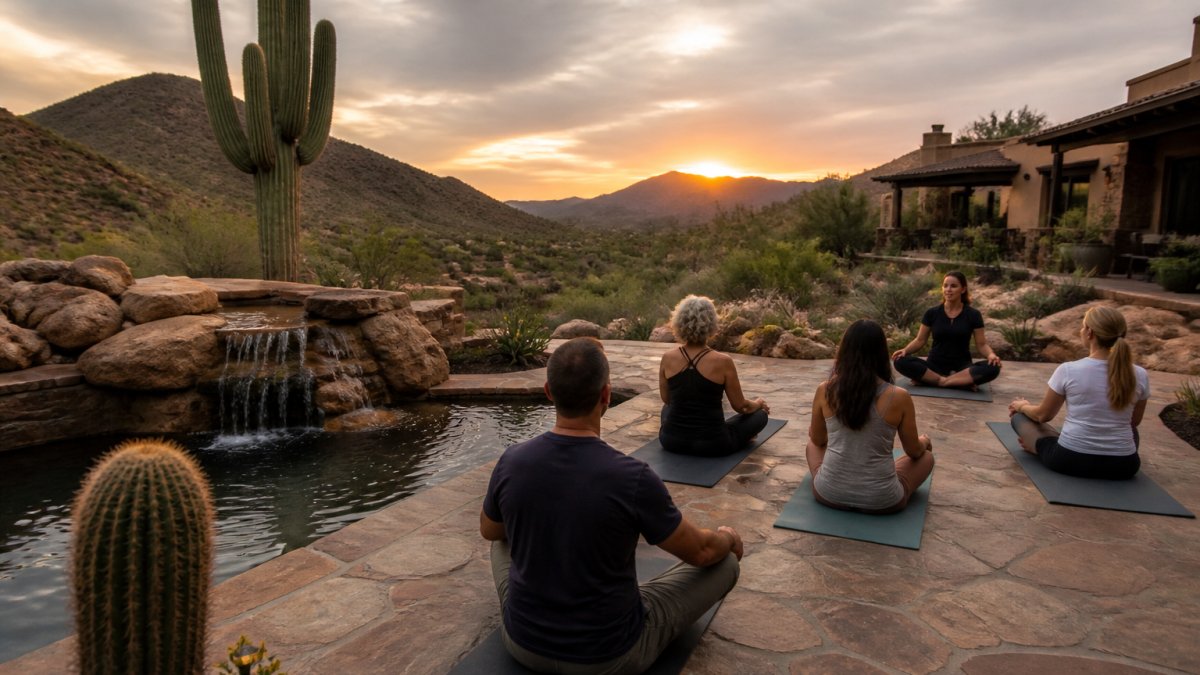
Our own sanctuary sits on secluded acres at the base of Sunrise Mountain, and guests consistently tell us the silence is the first thing they notice. A desert spiritual retreat works because the landscape itself sets the pace.
Inside a Faith-Based Wellness Retreat Experience
A faith-based wellness retreat blends spiritual practice with practical care: breathwork, meditation, sound baths, nourishing meals, and time outdoors, all held in a framework that welcomes belief without requiring it. The goal is inner growth and restoration, not conversion.
What a Typical Day Looks Like
- Morning meditation or yoga before breakfast
- Guided breathwork or sound healing mid-morning
- Free time for hiking, journaling, or the pool
- Afternoon workshop, energy session, or rest
- Evening ceremony, fire circle, or quiet reflection
Programs vary by theme, and shorter stays compress the schedule without losing the core practices. Guests often ask whether a long weekend is enough. In our experience, three days can create real clarity, while five to seven days allow deeper work.
Women's Wellness Retreats and Solo Travel for Inner Growth
Women's wellness retreats have become one of the fastest-growing segments we host, and the reason is simple: many women want a room of their own, metaphorically and literally. Solo travel for self-discovery works best when the environment is safe, small, and intentional. Groups of twelve to fifteen keep the experience personal.
If you are traveling alone, ask about room sharing options, group size, and how the facilitators handle group dynamics. A well-run women's retreat creates connection without forcing it.
Retreat Duration, Pricing, and What an All-Inclusive Stay Includes
Pricing for off-grid wellness retreats depends on length, group size, accommodation type, and what is bundled. Most all-inclusive stays cover lodging, meals, and facilitated sessions, while extras like private rooms or add-on treatments change the total. Because every property structures its packages differently, we recommend requesting a written breakdown rather than comparing headline numbers, a nightly rate that excludes meals and sessions is not comparable to an all-inclusive figure.
The Cost Components That Actually Drive the Total
A transparent quote breaks into seven lines. Ask for each one separately, in writing:
| Component | What to Ask | Why It Moves the Price |
|---|---|---|
| Lodging | Shared vs. private room; nights included | Private rooms commonly add a meaningful premium over shared |
| Meals | How many meals per day; chef-prepared vs. self-catered; alcohol included? | Chef-prepared organic meals are a major cost driver |
| Facilitated sessions | Number and length of yoga, breathwork, sound healing, and ceremony sessions | Session count is the clearest signal of program depth |
| Add-ons | Private sessions, excursions, bodywork, plant medicine ceremonies where offered | Usually priced per item, not bundled |
| Transport | Airport transfers, shuttle to trailheads or excursion sites | Remote properties often require a paid transfer |
| Taxes and fees | State and local lodging tax, service charges, gratuities | Frequently omitted from advertised rates |
| Deposit and cancellation | Deposit amount, refund window, and force-majeure terms | Protects your investment if plans change |
Duration and Depth: What Different Lengths Buy You
Duration is the second-biggest cost driver after lodging, and it also determines how deep the work can go. A rough framework:
- Weekend (2-3 nights): reset and rest. Enough for nervous-system downshift, but not for deep grief or trauma work.
- Five days: the sweet spot most retreats are built around. Long enough for a full arc, arrival, descent, integration, without exhausting guests.
- Seven nights or more: suited to career transitions, grief work, and teacher-training immersions. Diminishing returns set in only if the schedule is overfilled.
A five-day stay is our recommended minimum for a meaningful reset; seven or more for deep transformation. Shorter visits suit a long weekend; longer ones suit life transitions.
How to Compare Quotes Fairly
Convert every quote to a per-night, all-in figure before you compare. Add lodging, meals, sessions, taxes, and mandatory transfers, then divide by nights. That single number exposes packages that look affordable until you add meals and sessions.
Federal Trade Commission guidance on travel and vacation packages is worth reading before you pay a deposit, since it explains your rights around cancellation and misrepresentation. For general wellbeing context, the National Center for Complementary and Integrative Health outlines how meditation and breathwork are studied, which helps you judge claims with clear eyes.
Frequently Asked Questions
What should I look for in an off-grid wellness retreat?
Start with verified off-grid status: ask directly whether the property runs on well, septic, solar, or propane, and confirm connectivity so you know what to expect. Then check facilitator credentials, group size, and whether programming is trauma-informed. Ask about emergency planning, on-site caretakers, and what an all-inclusive rate actually covers (meals, sessions, and accommodations). Finally, request guest reviews that speak to lasting change, not just a pleasant week. A retreat that answers these questions openly is usually the one worth booking.
How much does a spiritual healing retreat cost?
Pricing depends on duration, group size, accommodations, and whether meals and sessions are bundled. Off-grid properties that own their facilities often pass savings along, so rates vary widely across the market. Rather than guessing, request a direct quote from each retreat and compare what is included: meals, guided practice, ceremonies, and lodging. At Blisstopia Retreats, every stay includes curated accommodations, organic meals, and expert-led sessions, and the team will walk you through current offerings and enrollment details before you commit.
How long should a spiritual healing retreat last?
Three to five days suits most people seeking rest, stillness, and a reset, while seven to fourteen days allows deeper inner growth and self-discovery work. A long weekend can deliver real rejuvenation if the programming is focused, but grief work, burnout recovery, and transformational breathwork tend to benefit from more time. Blisstopia custom-builds retreats from three to fourteen days, so you can match the length to how deep you want to go rather than fitting your needs into a fixed schedule.
Can a desert retreat support meditation and personal reflection?
Yes. Desert settings offer solitude, silence, and wide horizons that make silent meditation and guided practice easier to sustain than in noisy urban settings. The Sonoran Desert around Peoria, Arizona, adds hiking trails, a natural labyrinth, and dark night skies ideal for reflection. Pair that with breathwork, sound bath healing, and on-site facilitators, and the environment itself does much of the work. Guests often report that stillness comes faster when the surroundings are quiet and the schedule is intentional.
The real challenge is not finding a retreat. It is choosing one honest enough to tell you what it includes, who leads it, and how it keeps you safe in a remote setting. At Blisstopia Retreats, we host transformational wellness retreats on our off-grid sanctuary, with on-site caretakers, chef-prepared meals, guided breathwork, sound healing, and small groups that keep the experience personal. Call us at 623-986-2899 to talk through dates, availability, and what fits your season of life.