 listicle
Benefits of Sound Bath Healing for Stress Relief
Table of Contents
- What Is a Sound Bath and How Does It Work?
- Key Benefits of Sound Bath Healing for Stress Relief
- Sound Bath Meditation Benefits: What to Expect in a Session
- Sound Healing Instruments for Stress: Bowls, Gongs, and More
- How Long Should a Sound Bath Last?
- What to Wear to a Sound Bath (and How to Prepare)
- Safety, Contraindications, and At-Home Alternatives
- Frequently Asked Questions
Last Updated: September 23, 2026
What Is a Sound Bath and How Does It Work?
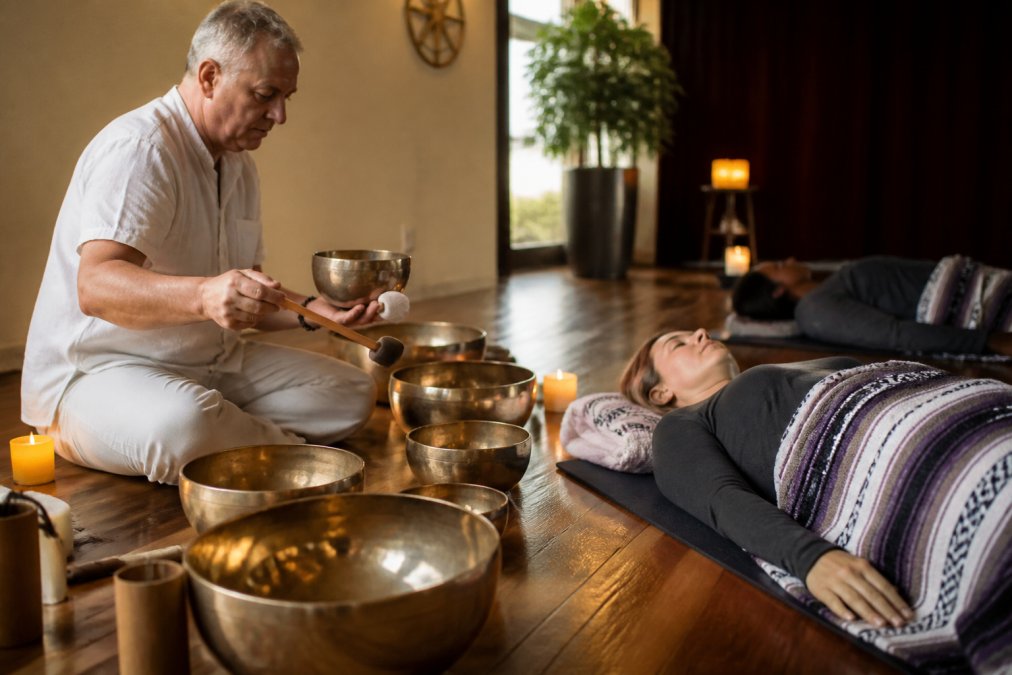
A sound bath is a meditative experience in which you lie down while a facilitator plays instruments like Himalayan singing bowls, gongs, and chimes, using sound frequency and vibration to guide your body into deep relaxation. Unlike a massage, nothing touches you.
The Science Behind Sound Bath Healing
Sound bath healing works through auditory stimulation that shifts brain activity toward alpha and theta brain waves, the states linked to meditation and light sleep. This process, called brainwave entrainment, is the same principle behind guided mindfulness meditation, just delivered through vibrational frequency instead of voice. Low-frequency tones and steady rhythm activate the parasympathetic nervous system.
A few specifics worth knowing before your first session:
- Alpha waves (8-12 Hz) tend to appear when you close your eyes and settle, the doorway state.
- Theta waves (4-8 Hz) show up in deep meditation and the moments just before sleep, which is why sound baths often trigger vivid imagery or sudden emotional release.
- Delta waves (0.5-4 Hz) belong to deep sleep; a good session can nudge you toward the edge of delta without putting you fully under.
- Low-frequency instruments (gongs, large Himalayan bowls) produce longer wavelengths that travel through tissue, which is why you feel them in your chest and jaw, not just your ears.
What Happens in the Body, Minute by Minute
A typical session follows a predictable arc, and knowing it removes the "am I doing this right?" anxiety that keeps first-timers from relaxing.
- Minutes 0-5: Grounding. The facilitator may start with a single bowl or a guided breath cue. Heart rate is still elevated from whatever you were doing before you walked in.
- Minutes 5-15: The shift. Breathing slows, shoulders drop, and the first wave of heaviness arrives. This is when alpha activity typically increases.
- Minutes 15-40: The deep phase. Theta activity builds. Emotional release, tears, sighs, unexpected memories, most often surfaces here, because the body finally feels safe enough to let stored tension move.
- Minutes 40-60: Integration. The facilitator often softens the sound and brings you back slowly. Rushing this phase is the most common mistake; a jarring ending undoes much of the benefit.
Key Benefits of Sound Bath Healing for Stress Relief
The most reliable benefit is cortisol reduction: when the nervous system drops out of fight-or-flight, stress hormones fall and the body repairs. Regular sessions also support nervous system regulation, so your baseline calms over time.
Cortisol Reduction and Nervous System Regulation
A gong bath or bowl session gives your brain a single, non-threatening input to track, interrupting the rumination loops that keep stress chemistry elevated. A common mistake is treating one session as a cure.
Improved Sleep and Emotional Release
Sleep is often the first thing to improve: falling asleep requires a shift into parasympathetic dominance, and a sound bath rehearses that shift while you are awake. Emotional release can surprise first-timers, tears, deep sighs, or sudden mental clarity are common, and stored tension release surfaces once the body feels safe.
Sound Bath Meditation Benefits: What to Expect in a Session
Expect to lie down, fully clothed, on a mat or cushion with a blanket over you. Sessions open with a short grounding exercise, then move into continuous sound. A soundscape builds in layers: a single bowl, then chimes, then the gong at the emotional peak. You may feel vibration move through the floor, your chest, or your jaw.
Sound Healing Instruments for Stress: Bowls, Gongs, and More
Different instruments produce different effects, and a skilled facilitator sequences them deliberately.
- Himalayan singing bowls: warm, sustained tones that settle the chest and slow breathing
- Crystal bowls: brighter, higher frequencies that tend to lift mood and sharpen focus
- Gongs: deep, full-body vibration that produces the heaviest deep relaxation
- Chimes and bells: short, clear tones that punctuate the soundscape and reset attention
- Frame drums and rattles: steady rhythm that supports brainwave entrainment
How Long Should a Sound Bath Last?
A sound bath typically lasts 45 to 90 minutes, with 60 minutes most common for a group session. Shorter 30-minute sessions work as an introduction or class add-on. Longer is not automatically better, past roughly 90 minutes, many people become uncomfortable lying still, which pulls them out of the meditative state.
| Session Length | Best For | Frequency |
|---|---|---|
| 30 minutes | First-timers, class add-on | Weekly |
| 45-60 minutes | Standard group session | Weekly to biweekly |
| 75-90 minutes | Deep tension release, retreat setting | Monthly |
| 20-30 minutes | At-home practice | Several times weekly |
What to Wear to a Sound Bath (and How to Prepare)
Wear soft, comfortable clothing you can lie down in for an hour: leggings, joggers, a loose t-shirt, or a sweatshirt. Skip jeans, belts, and anything restrictive at the waist.
A few preparation habits make a real difference:
- Skip caffeine for two hours before the session
- Eat something light, not a full meal
- Leave your phone in the car or on silent in another room
- Bring a water bottle and an eye mask if you have one
- Arrive ten minutes early so you are not rushing onto the mat
- Tell the facilitator about any injuries, pregnancy, or sound sensitivity
Safety, Contraindications, and At-Home Alternatives
Sound baths are generally safe, but not for everyone.
Who Should Talk to a Doctor First
Contraindications include:
- Pregnancy, particularly the first trimester, strong low-frequency vibration and prolonged lying flat can be uncomfortable or risky; check with your OB before attending.
- Epilepsy or a seizure disorder, rhythmic auditory stimulation can, in rare cases, trigger seizure activity in sensitive individuals. This is not a reason to panic, but it is a reason to get medical clearance.
- Implanted medical devices, pacemakers, vagus nerve stimulators, cochlear implants, and deep brain stimulators can be affected by strong vibration. Ask your device manufacturer or cardiologist before a gong-heavy session.
- Active psychosis or severe PTSD without clinical support, deep relaxation can surface material faster than a person is equipped to process alone. A trauma-informed facilitator and a therapist in the loop make a real difference.
- Recent surgery or acute injury, lying still for 60 minutes and absorbing vibration is not the right move in the first weeks of recovery.
- Tinnitus, hyperacusis, or certain vestibular conditions, loud gongs can be genuinely uncomfortable or destabilizing. A good facilitator will adjust placement and volume, but only if you speak up beforehand.
If you have a condition on that list, talk to your doctor first. A sound bath is a wellness practice, not a medical treatment.
At-Home Sound Bath Alternatives
You do not need a full instrument collection, a facilitator, or a studio to get the stress-relief benefit, just uninterrupted sound, a horizontal position, and 20 to 30 minutes.
- Recorded soundscapes. Streaming apps and free platforms host gong, bowl, and binaural recordings. Use speakers rather than earbuds when you can, the body absorbs vibration through the floor and air, not just the ear canal. Lie down, set a timer, and let the sound run without analyzing it.
- A single singing bowl or pair of tuning forks. One well-played bowl can take you further than a room full of instruments played without intention. Strike, circle the rim slowly, and let each tone decay fully before the next. Ten minutes is enough to feel the shift.
- A short guided sequence. Pair a 5-minute breath practice with 15 minutes of recorded sound and 5 minutes of silence. The silence at the end is not optional, it is where the nervous system consolidates the shift.
Pairing Sound With Other Stress-Relief Modalities
Sound baths work better as part of a stack than as a standalone practice. Three effective combinations:
- Breathwork before, sound during. A few minutes of extended-exhale breathing (for example, a 4-4-4-6 box pattern) primes the parasympathetic system so the sound has less resistance to work against.
- Sound, then journaling. Theta-state sessions often surface material, a memory, a phrase, a feeling, that fades within an hour if it is not written down. Five minutes with a notebook captures it.
- Sound, then gentle movement. Yin yoga, a slow walk, or simple stretching helps the tension release settle into the body rather than rebound. Going straight from a session into a stressful task tends to erase the benefit.
How Often Should You Practice?
The honest answer depends on what you are trying to change.
- For acute stress relief: one session when you need it. A single 60-minute sound bath can drop perceived stress for the rest of the day.
- For ongoing stress management: weekly sessions produce noticeable change within four to six weeks. This is the sweet spot for most people.
- For deep nervous system repatterning: two to three sessions per week, or a multi-day retreat immersion, is where the baseline itself starts to shift.
- For maintenance: monthly sessions hold the gains but rarely create new ones.
Frequently Asked Questions
How does a sound bath help with stress and anxiety?
A sound bath uses vibrational frequency and auditory stimulation to guide your brain into alpha and theta brainwave states, which are linked to deep relaxation. This activates the parasympathetic nervous system, lowering cortisol and promoting emotional regulation. The harmonic resonance of instruments like Himalayan singing bowls creates a meditative state that helps release tension and calm racing thoughts.
How often should you do a sound bath for stress relief?
For ongoing stress management, many people attend a sound bath once a week or every other week. If you are dealing with acute burnout, a more immersive experience like a multi-day retreat that includes daily sound bath healing can deepen the benefits. At-home sessions with recordings can supplement live sessions, though the sensory experience of a live gong bath or bowl session is generally more impactful.
Is sound bath healing considered a form of meditation?
Yes, sound bath meditation benefits include many of the same outcomes as traditional mindfulness meditation: mental clarity, reduced anxiety, and improved focus. The difference is that instead of silently observing thoughts, you anchor your attention to the soundscape. This makes it accessible for people who find silent meditation difficult, as the auditory therapy naturally draws the mind into a meditative state.
What should I expect during my first sound bath session?
You will typically lie down on a mat or cushion while a facilitator plays instruments such as singing bowls, gongs, or chimes. Most sessions last 45 to 90 minutes. You may experience tingling, emotional release, or drifting in and out of sleep. Wear comfortable, loose clothing and bring a blanket or bolster. Afterward, many people report feeling deeply relaxed and mentally clear.