 listicle
Benefits of Catholic Silent Retreats: 7 Reasons to Go
Table of Contents
- Why Silence Still Works: The Benefits of Catholic Silent Retreats
- 1. Room to Pray Without Interruption
- 2. Interior Solitude and Relief From Mental Clutter
- 3. Clarity, Discernment, and Decisions Made in Prayer
- 4. A Renewed Relationship With Christ and His People
- What to Expect at a Catholic Silent Retreat
- Silent Retreat Rules: What You Can and Cannot Do
- How to Prepare for a Silent Retreat
- Frequently Asked Questions
Last Updated: October 8, 2026
Why Silence Still Works: The Benefits of Catholic Silent Retreats
The benefits of Catholic silent retreats come down to one thing: uninterrupted time with God. A Catholic silent retreat is structured prayer, liturgy, and solitude in which conversation is set aside so a person can listen for God without distraction. This guide from Blisstopia Retreats covers the seven reasons people return, what happens on one, and how to prepare.
Most of us pray in fragments, a decade in the car, a hurried intention before bed. Silence reverses that pattern.
1. Room to Pray Without Interruption
Prayer needs time the way a conversation needs time. On retreat, nobody is waiting for an answer and no phone is buzzing.
The daily rhythm is simple: Mass, personal prayer, spiritual reading, and meals taken in quiet. Many centers also offer spiritual direction, a one-on-one meeting with a director who helps you notice what God may be saying. That unhurried pace is the point; most people find prayer deepens by the second or third day, once the mental noise settles.
2. Interior Solitude and Relief From Mental Clutter
Interior solitude is the quiet of the mind, not just the absence of noise. Silence removes the inputs, and eventually the internal chatter quiets too.
A common mistake is treating the first day's restlessness as failure. It isn't, most people arrive carrying a backlog of unfinished thoughts, and it takes a day or so to set them down.
3. Clarity, Discernment, and Decisions Made in Prayer
Discernment is weighing a decision in prayer rather than in panic. A Catholic retreat for discernment gives you the conditions that make it possible: silence, Scripture, the sacraments, and a director to talk it through with.
People bring all kinds of questions, a career change, a relationship, a grown child who has walked away from the faith, a vocation they have circled for years.
4. A Renewed Relationship With Christ and His People
A silent retreat is not a solo project. You are praying within the Church, and the sacraments anchor the week.
Many retreatants name the same moments afterward: a confession that lifted years of weight, a Eucharist that felt different, a conversation with a director that named something they could not name themselves. That renewal usually outlasts the retreat, people describe returning home with more patience, more forgiveness, and a stronger pull toward daily prayer.
What to Expect at a Catholic Silent Retreat
Expect a structured day built around Mass, personal prayer, meals, and rest, with silence kept throughout. Most retreats run two to eight days.
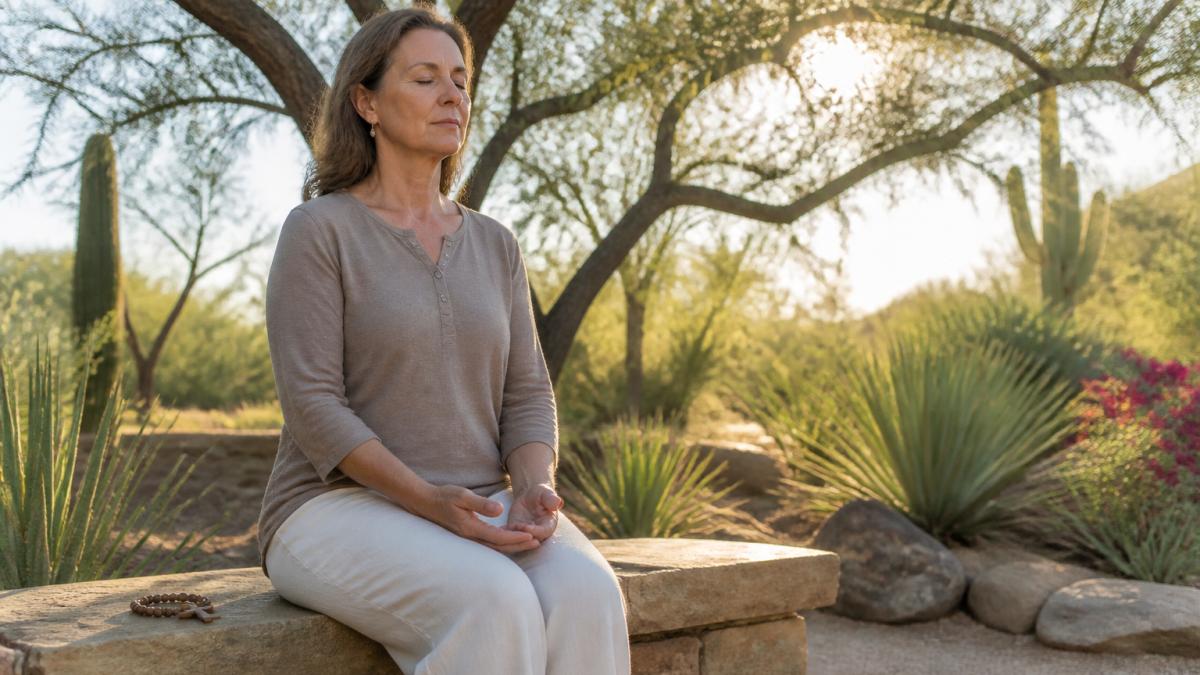
Here is what a typical day looks like:
| Time | Activity | Notes |
|---|---|---|
| Early morning | Morning prayer or Mass | Often the quietest hour |
| Mid-morning | Personal prayer and Scripture | Chapel, garden, or walking path |
| Midday | Mass and lunch | Meals usually taken in silence |
| Afternoon | Spiritual direction or rest | Scheduled one-on-one meeting |
| Evening | Evening prayer or adoration | Some houses offer Benediction |
| Night | Examination of conscience | Then early to bed |
The Four Formats, and Who Each One Suits
The four common formats are not interchangeable, and the choice determines whether the week fits you.
Fully silent (also called a silent preached retreat). Silence is kept from arrival to departure.
Individually directed (also called a directed retreat). You meet with a director once a day, often for 30 minutes, and everything else is personal prayer.
A practical rule of thumb: if you have never made a silent retreat, start with guided or preached.
How Long Should You Go?
Length changes the experience more than most people expect.
- A weekend (two to three days). Enough to feel the shift and get past the first day's restlessness. A good first retreat.
- Five to eight days. The classic length, long enough for prayer to deepen and a decision to settle. Where most people report the clearest fruit.
- Thirty days. The full Spiritual Exercises of St. Ignatius, usually made in a retreat house with a director. Rare, demanding, and typically undertaken at a major transition.
If unsure, book shorter than you think you want. A weekend you finish wanting more beats eight days spent watching the clock.
What to Ask Before You Book
A short list of questions will tell you more than any brochure:
- Is the retreat fully silent, or is there conversation at meals and in conferences?
- Is spiritual direction included, and is there an additional fee?
- Is daily Mass offered on site, and is a priest available for confession?
- Are private rooms available, or is lodging shared?
- What is the accessibility situation, elevators, ground-floor rooms, paved paths, accessible bathrooms?
- Can the kitchen accommodate dietary needs, and how far in advance should you tell them?
- Is there financial assistance? Many houses run a sliding scale, and some dioceses and parishes subsidize part or all of the cost. Asking is routine, not awkward.
- What is the cancellation policy?
If You Cannot Travel
A retreat does not require a retreat house. Many parishes run day-long or overnight retreats, and some offer a "retreat in daily life" format, usually 30 to 60 minutes of prayer a day for several weeks, with a weekly meeting with a director. It is a real retreat, not a consolation prize, and it fits around caregiving, work, and mobility limits.
Not every retreat is Catholic, and not every silent retreat is religious. If you want a faith-based setting with room for stillness, look for one that is explicit about its tradition.
Silent Retreat Rules: What You Can and Cannot Do
The rules are simpler than most people expect, and they protect the silence for everyone.
What you can do:
- Speak during scheduled spiritual direction and confession
- Attend Mass, adoration, and any offered conferences
- Walk the grounds, read, journal, and rest
- Ask staff for practical help when you need it
What you cannot do:
- Chat with other retreatants in common areas
- Use your phone for calls, texts, or scrolling
- Play music, video, or podcasts without headphones
- Bring work, or treat the retreat as a working trip
How to Prepare for a Silent Retreat
Preparation is mostly subtraction: arrive with as little noise in your head as possible, so the first day is not spent unpacking the week you just left.
A practical checklist:
- Confirm the retreat dates, arrival time, and what the house provides
- Set an out-of-office reply and name one emergency contact
- Tell family and work you will be unreachable, then mean it
- Pack comfortable layers, walking shoes, a journal, a Bible, and a rosary
- Leave the laptop at home; bring a simple watch instead of relying on your phone
- Write down the two or three questions you most want to bring to prayer
- Schedule a light day for your return, not a full calendar
What to Bring, and What to Leave
Beyond the basics, a few small items make a real difference. A watch, so you are not reaching for your phone to check the time. A paper journal, because writing by hand slows the mind in a way typing does not.
Leave behind the laptop, the work notebook, and anything that turns the retreat into a project. If you must bring a phone for safety or family reasons, tell the house in advance and ask where you can store it during the day.
First-Time Concerns, Answered Plainly
"I can't sit in silence for hours." You are not expected to. Schedules include meals, walking, rest, and reading. Silence means no conversation, not no movement.
"I don't know how to pray." Most directors start people with Scripture, read a short passage slowly, then sit with one line.
"I'll feel lonely." You probably will, at least on the first day.
"Can I read, walk, or take a break?" Yes to all three, within the house's rules. Most houses allow spiritual reading, walking the grounds, and rest.
After the Retreat: A Simple Integration Plan
This is where most of the fruit is either kept or lost. The week after a retreat matters more than the week of it.
A workable plan, in order:
- Protect the first 48 hours. Do not schedule a full calendar for the day you return. Give yourself one slow morning before the noise resumes.
- Write down three things. Before the details fade, note what you heard in prayer, what you decided, and one question still open. Keep it somewhere you will see it again.
- Pick one practice, not five. A single 15-minute daily prayer slot, kept for a month, does more than an ambitious plan that collapses in a week.
- Schedule the next retreat before the feeling fades. A date on the calendar turns a one-time experience into a rhythm.
- Tell one person. A friend, a spouse, or a director who knows what you are trying to keep. Accountability is a guardrail, not a lack of trust.
- Expect a letdown. A flat or irritable day or two after a retreat is common and usually passes.
If you worked with a director, ask about a follow-up meeting four to six weeks out. A single check-in often keeps a decision from quietly dissolving.
If you would rather begin with something gentler, a shorter stay works. We build retreats from three to fourteen days at Blisstopia Retreats, and a long weekend is often enough to feel the shift, especially for a first-timer.
Frequently Asked Questions
What are the benefits of going on a silent retreat?
The main benefits are uninterrupted time for prayer, relief from mental clutter, and enough quiet to hear what you have been avoiding. Many people leave with clearer judgment about a decision, a renewed sense of God's presence, and a calmer nervous system. A silent retreat also resets habits: without a phone or constant conversation, you notice how much noise you carry and how little rest you were actually getting. The effects tend to show up in daily life as steadier patience, better sleep, and a stronger desire to keep praying once you are home.
Are silent retreats only for religious people?
No. Faith-based silent retreats are built around spiritual exploration and personal growth, so they suit anyone who wants to explore faith or deepen it, including people who feel rusty or uncertain. You are not required to have a polished spiritual practice or advanced knowledge. Most retreat centers welcome beginners and explain everything as you go. If you are spiritual but not attached to a specific tradition, a faith-based wellness retreat that holds silence alongside meditation and breathwork can offer the same quiet without assuming a particular background.
Can you talk at all during a silent retreat?
Yes, in specific settings. Silence usually covers meals, hallways, and free time, but most retreats allow conversation during guided sessions or scheduled group discussions. Some retreats also set aside a short window each day for practical questions. The point is not to punish speech; it is to protect a stretch of unhurried attention. If you are unsure what is allowed, ask before you arrive to plan your days around what matters most to you.
How long should a Catholic silent retreat last?
A weekend, roughly two nights, is enough to feel the shift and is often a good first step. Three to five days gives you room to settle past the first restless day, which is when deeper reflection and discernment usually begin. If your schedule is tight, even one full day of silence helps. Pick a length you can keep without checking your phone, and ask the retreat center what schedule they recommend for first-time attendees.