 listicle
Yoga Retreats Near Me: Find Your Perfect Wellness Escape
Table of Contents
- What Makes a Yoga Retreat Different From a Wellness Getaway
- Types of Yoga Retreats: Weekend, Week-Long, and Immersive Experiences
- Choosing a Yoga Retreat: Key Criteria That Matter
- Spiritual Growth Retreats: Meditation, Breathwork, and Sound Healing
- What to Expect: Daily Practices and Community Experience
- Solo Travel, Safety, and Post-Retreat Integration
- Frequently Asked Questions
Last Updated: September 30, 2026
What Makes a Yoga Retreat Different From a Wellness Getaway
A yoga retreat near me combines structured practice, skilled facilitation, and a curated environment designed for transformation, not relaxation. While wellness getaways offer spa services and occasional classes, yoga retreats build entire days around practice, creating genuine shifts in how you think, move, and feel. The schedule, meals, community, and teachings work together toward one goal: helping you access something real within yourself.
At Blisstopia Retreats, our sanctuary blends guided transformational breathwork, sound bath healing, meditation, cacao ceremony, cold plunge, and nourishing organic meals in an environment built for clarity. When everything supports your practice, transformation becomes possible. The key difference: a wellness getaway is about comfort. A yoga retreat near me is about courage, showing up, going inward, and allowing yourself to be changed.
Types of Yoga Retreats: Weekend, Week-Long, and Immersive Experiences
Yoga retreats near me come in several formats, each serving different needs and schedules. Understanding the structure helps you choose what actually fits your life and your readiness for change.
Weekend Yoga Retreats for Busy Professionals
A weekend retreat compresses transformation into 48 to 72 hours. You arrive Friday evening or Saturday morning, participate in morning and evening sessions, and leave Sunday afternoon with genuine shifts in perspective. Weekend yoga retreats near me typically include morning meditation and yoga, midday meals, afternoon sessions (sound healing or breathwork), and evening practice. The condensed schedule creates intensity, you're fully present without email or daily obligations. While depth takes time, many professionals report that even a brief retreat breaks the burnout cycle enough to return to work with renewed clarity.
Week-Long Transformational Wellness Retreats
A week-long yoga retreat near me is where real integration begins. Seven days allows your nervous system to settle, your mind to stop racing, and insights to emerge that wouldn't surface in a shorter window. Week-long retreats typically include two to three sessions daily, plus meals, ceremonies, and free time for rest. This rhythm rewires how your body experiences time and space. Many people describe it as the first time in years they've felt truly present, with momentum that lasts months after returning home.
Yoga Teacher Training Immersion Programs
For yoga teachers or those called to deepen their practice into teaching, immersion training combines intensive study, personal practice, and preparation to guide others. Blisstopia Retreats offers 200-hour and 300-hour yoga teacher training certifications, along with specialized immersions like our Kundalini Fusion Method, which blends Kundalini-inspired practices, nervous system regulation, subtle body awareness, breathwork, meditation, and embodied leadership. These programs go deeper into philosophy, anatomy, and the art of holding space for transformation. Teacher training is for people ready to commit, you're learning to become a facilitator of healing, with pre-training modules, intensive in-person weeks, and post-training integration.
Choosing a Yoga Retreat: Key Criteria That Matter
Choosing a yoga retreat near me means evaluating three core elements: who's leading, where it happens, and what the schedule includes.
Evaluating Facilitator Credentials and Experience
The facilitator makes or breaks a retreat. Look for teachers with substantial certifications (200-hour minimum for yoga teachers, ideally 500+ hours for retreat leaders) and ask about their personal practice history, group experience, and approach to challenging moments. A skilled facilitator knows how to hold space when someone has a breakthrough or breakdown. Experience matters deeply, a teacher who's run retreats for years understands logistics, group dynamics, and how to adjust when needed.
At Blisstopia Retreats, Lana Royce brings 30+ years as a psychotherapist and 500-RYT yoga guru and teacher of teachers, 200/300-hour YTT lead, hypnotherapist, and Ayurvedic wellness chef. Mark Royce has 45+ years of martial arts and self-defense experience, 38-year teacher of self-discipline and self-care, and is a Certified Regenerative Health and Breathwork Coach. They stay on-site during retreats, available for support around the clock, a commitment that shapes how the retreat feels.
Assessing Retreat Settings and Accommodations
Where you practice matters. Look for settings with natural beauty, quiet surroundings, and comfortable beds where your nervous system can relax. Amenities like yoga studios, meditation spaces, pools, and saunas support deeper practice. Ask about room configurations (shared or private) and meals (vegetarian, organic, customized for dietary needs). Nutrition is part of the healing work.
Blisstopia's sanctuary sits on 2.5 secluded, off-grid acres at the base of Sunrise Mountain, powered by well, septic, solar, and propane. Amenities include a fully equipped yoga studio (20 mats), pool with waterfall, a 104° hot tub, infrared sauna, hiking trails, a natural labyrinth, a fire ring, and free-range chickens. Every detail supports the work you came to do.
Understanding the Itinerary and Daily Schedule
The schedule tells you what to expect and how much space exists for integration. A retreat packed with sessions back-to-back feels different than one with breathing room.
Look for a mix: morning practice, nourishing meals, afternoon sessions (sound healing, breathwork, or free time), and evening wind-down. The best retreats include silence, community, and solitude. You need all three.
Ask about flexibility. Can you skip a session if you need rest? Do facilitators adjust based on the group's energy? Rigid schedules feel like work. Intentional flexibility feels like care.
Request the full itinerary before committing. A good retreat provider will share exactly what each day includes. That transparency shows respect for your time and your needs.
Spiritual Growth Retreats: Meditation, Breathwork, and Sound Healing
Spiritual growth retreats near me focus on practices that quiet the mind and open the heart. These aren't about religion, they're about reconnecting with what feels true and authentic within you.
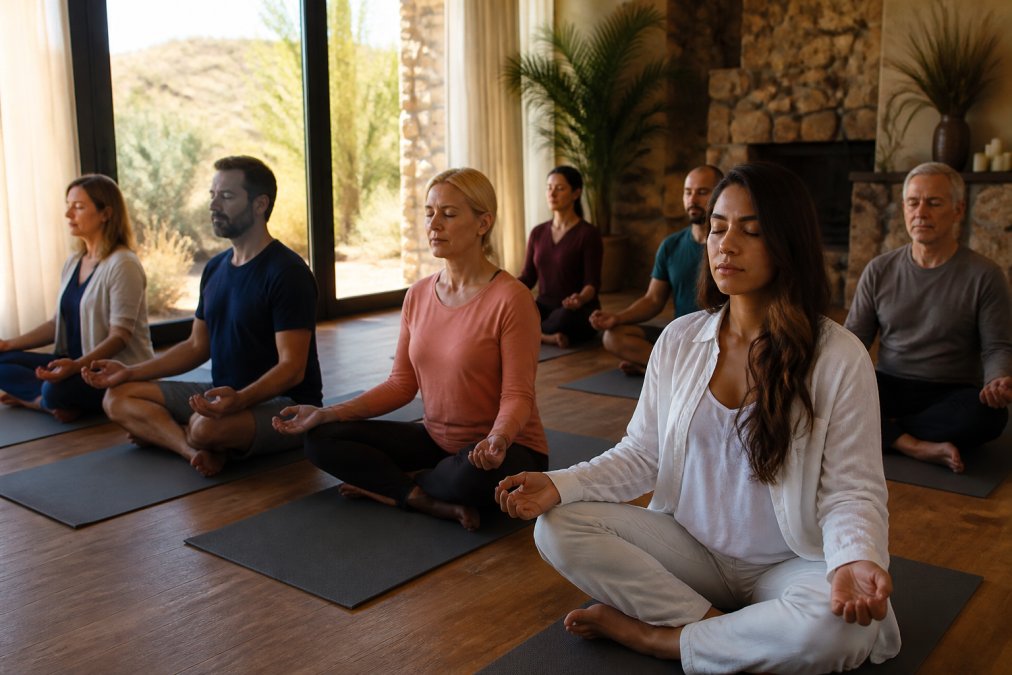
Meditation is the foundation. Sitting quietly, watching your breath, observing your thoughts without judgment, this simple practice rewires your nervous system over time. Most people have never actually sat in silence for an hour. When you do, things shift. Stress dissolves. Clarity emerges.
Breathwork amplifies meditation. Specific breathing patterns activate your parasympathetic nervous system, the part of you that knows how to rest and heal. Box breathing (4-4-4-6 count with extended retention) calms racing thoughts. Different practices serve different needs.
Sound healing uses vibration to shift your state. Singing bowls, gongs, and chanting create frequencies that your body recognizes as safe. Many people fall into deep relaxation during sound baths, a state where genuine healing occurs.
These practices work best when combined and held in a sacred space. A yoga retreat near me that integrates meditation, breathwork, and sound healing creates conditions where your nervous system can finally rest and recalibrate.
What to Expect: Daily Practices and Community Experience
Walking into a yoga retreat near me for the first time can feel uncertain. What happens each day? Will you fit in? What if you've never meditated before?
Here's what a typical day looks like: you wake early, often around 5 or 6 a.m. Morning practice begins in a quiet studio. You might start with breathwork or meditation, then move into gentle yoga.
Guided Meditation and Mindfulness Sessions
Meditation isn't about emptying your mind, it's about observing it without judgment. A skilled facilitator teaches you how to notice thoughts without getting caught in them.
Breathwork and Nervous System Regulation
Your breath is the bridge between your conscious and unconscious mind. When you're stressed, your breath is shallow and fast. When you're calm, it's deep and slow. By changing your breath, you change your nervous system state.
Sound Healing and Restorative Practices
Sound baths use singing bowls, gongs, or other instruments to create healing vibrations. You lie down, close your eyes, and let the sound wash over you. Many people describe it as deeply relaxing, sometimes even transcendent.
Solo Travel, Safety, and Post-Retreat Integration
Many people come to yoga retreats near me alone. That choice takes courage, and it deserves support.
Creating Meaningful Connections as a Solo Traveler
A well-designed retreat creates community naturally. Shared meals, group practice, and intentional community time build connection. You're not forced to socialize, connection emerges because you're all doing the same deep work.
Sustaining Transformation After You Return Home
The real work happens after the retreat ends. You leave feeling clear, open, and transformed. Then you return to your normal life, your job, your family, your routines, and the old patterns start creeping back.
Frequently Asked Questions
What should I look for when choosing a yoga retreat?
Focus on three core elements: facilitator credentials (look for 200+ hours of training, specialized certifications, and years of teaching experience), retreat setting (peaceful location, quality accommodations, all-inclusive meals), and the itinerary (ensure it matches your skill level and goals, whether stress reduction, spiritual growth, or teacher training). Read testimonials from past participants, verify the retreat's approach to community and safety, and confirm whether the retreat offers post-retreat support to help you integrate what you've learned.
Can a short weekend yoga retreat actually create lasting transformation?
Yes, if it's well-designed. A focused weekend retreat can shift your nervous system, quiet mental noise, and reconnect you with your body in ways that ripple forward for months. The key is choosing a retreat that combines guided practice with intentional downtime, offers personalized attention, and provides tools you can use at home. Many people find that a weekend immersion breaks the cycle of burnout enough to reset their priorities and begin deeper work.
How do I know if a yoga retreat is right for my skill level?
Look for retreats explicitly labeled 'all-levels' or 'beginner-friendly,' and check whether the facilitators offer modifications and individual attention. Read reviews from other beginners. A quality retreat will welcome you as you are, no prior experience required, and scale the intensity to your body and comfort. Reach out to the retreat organizers directly with questions about pacing; their responsiveness tells you a lot about how they hold space.
What's the difference between a yoga retreat and a wellness sanctuary?
A yoga retreat is typically a defined program, set dates, specific itinerary, guided classes, focused on yoga practice and personal transformation. A wellness sanctuary is a physical space designed to support healing through multiple modalities (yoga, meditation, breathwork, sound healing, energy work) and often offers both structured retreats and flexible, ongoing access. Some sanctuaries operate as private membership communities where you can return regularly for classes and practices.