 How-to
7 Steps to Hosting Small Group Yoga Retreats That Sell Out
Last Updated: October 26, 2026
Quick Summary
Hosting small group yoga retreats starts with defining a one-sentence theme and audience, then choosing a venue that fits your group before setting numbers. Most first-time hosts land at 9-12 guests for balanced attention and cost, and price from fixed and variable costs up.
- Pick the venue before you set your group size, since the venue sets your ceiling.
- Break-even guests equals total fixed costs divided by price per guest minus variable cost per guest.
- Build one open, unstructured block into every day so guests can process the experience.
- Collect dietary, mobility, rooming and health details at booking, not the week before.
- Open a waitlist before registration to validate demand before committing to a venue date.
Table of Contents
- Why Small Group Yoga Retreats Beat Big Crowds
- Step 1: Define the Theme, Goals and Target Audience
- Step 2: Choose a Retreat Venue and Location That Fits Your Group
- Step 3: Set Group Size, Capacity and Break-Even Math
- Step 4: Build Your Yoga Retreat Itinerary Template
- Step 5: How Long Should a Yoga Retreat Be?
- Step 6: Meals, Accommodation and Rooming Logistics
- Step 7: Pricing, Payments and Enrollment Without Guesswork
- Frequently Asked Questions
Why Small Group Yoga Retreats Beat Big Crowds
Hosting small group yoga retreats is one way to plan a retreat. A twelve-person retreat can hold real conversation, real silence, and real rest. A sixty-person retreat holds a schedule.
The seven steps below cover considerations for planning a small group retreat.
Step 1: Define the Theme, Goals and Target Audience
Start with one sentence: who is this retreat for, and what should they feel on the last morning? Everything else follows.
A theme is not a title, it is a filter. "Rest and reset for burned-out professionals" tells you the schedule, tone, and meals. "Yoga retreat" tells you nothing.
Write your goal in plain words. Examples that work:
- Guests leave rested and clear-headed
- Guests build a daily practice they keep at home
- Guests connect with a small group of like-minded people
Then name your audience precisely: age range, life stage, experience level, and what they are escaping. A retreat for women in their fifties rebuilding after decades of caregiving looks nothing like one for new yoga teachers.
For the full step-by-step hosting plan, see our guide to retreat hosting logistics for beginners.
Step 2: Choose a Retreat Venue and Location That Fits Your Group
The venue sets your ceiling. Pick it before you set your group size.
Look for three things: a practice space that fits everyone on a mat, sleeping space that matches your rooming plan, and a setting that does part of the emotional work for you. Desert, forest, and coastline all shift a guest's state before the first class.
Ask every venue these questions:
- How many beds, and how are rooms divided?
- Is there a dedicated studio, or do we share a space?
- What is included in meals, and who cooks?
- What is the cancellation policy if we fall short on numbers?
- Who is on-site during our stay if something goes wrong?
A common mistake: booking a venue that looks beautiful in photos but has no quiet room for the afternoon rest block. Walk the property or ask for a video tour.
For a deeper look at evaluating locations, read how to choose a wellness retreat location, and if you teach yoga, compare the amenities that matter most to yoga teachers.
Step 3: Set Group Size, Capacity and Break-Even Math
Break-even guests = Total fixed costs ÷ (Price per guest − Variable cost per guest)
| Group Size | Attention Level | Cost Per Guest | Best For |
|---|---|---|---|
| 6-8 | Very high | Highest | Specialty or advanced themes |
| 9-12 | High | Balanced | Most first-time hosts |
| 13-16 | Moderate | Lowest | Teachers with a large following |
| 17+ | Lower | Lowest | Event-style retreats, not small group |
Step 4: Build Your Yoga Retreat Itinerary Template
A yoga retreat itinerary template is a repeatable daily structure you fill with sessions, meals, and rest. Build the skeleton once, then reuse it.
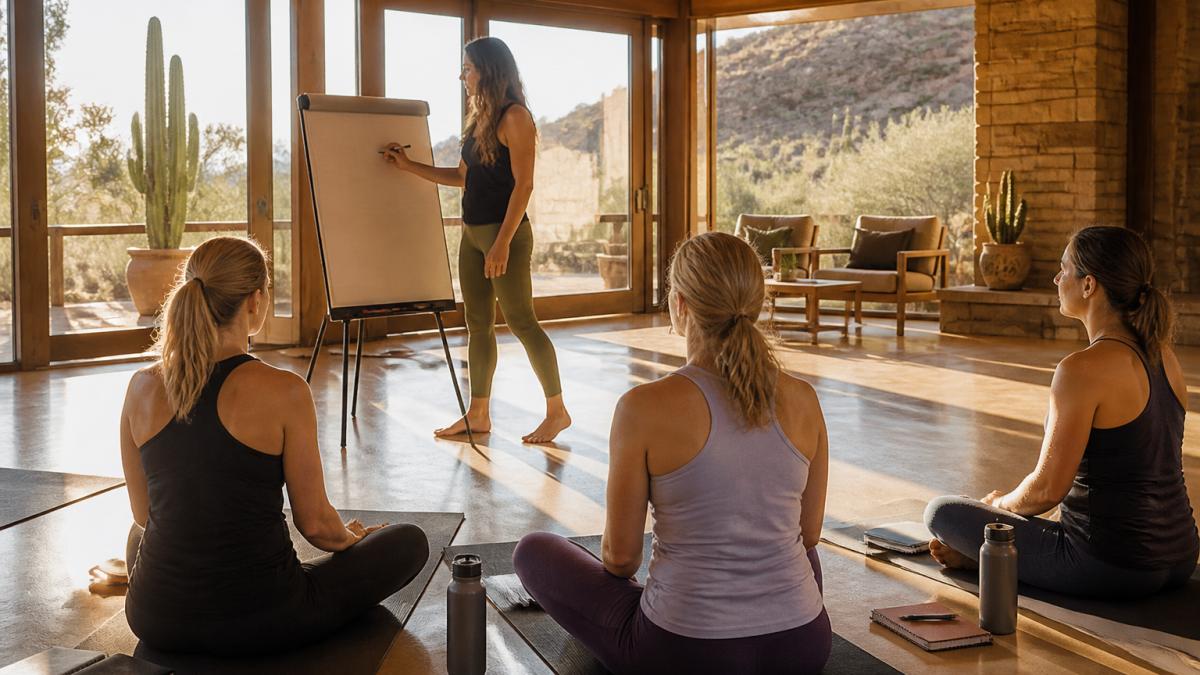
A structure that works for most small groups:
- Morning: silent or gentle practice, then breakfast
- Mid-morning: the main workshop or teaching block
- Afternoon: free time, rest, or an optional excursion
- Late afternoon: restorative or breathwork session
- Evening: shared meal, then a circle, sound bath, or early night
Build in one open block per day. Guests need unstructured time to process what is happening; a packed schedule feels productive and lands as exhausting.
For a worked example of how to lay out the days, see how to structure a 3 day retreat itinerary.
Step 5: How Long Should a Yoga Retreat Be?
Match length to your goal. If the promise is rest, a weekend delivers. If the promise is transformation, give it four nights or more.
Step 6: Meals, Accommodation and Rooming Logistics
Plan meals and rooms before you open registration, and consider inclusive design from the start.
Collect the right information at booking, not the week before
- Dietary requirements and allergies, including severity, so you know which are preferences and which are safety issues.
- Roommate preferences, and whether the guest is willing to share at all.
- Mobility and accessibility needs, stairs, uneven terrain, bathroom access, mat modifications, and any equipment they use.
- Yoga experience level, so you can sequence sessions that welcome beginners without boring advanced practitioners.
- Emergency contact and relevant health disclosures, collected with a clear note on how the information will be used and stored.
Rooming list basics
- Offer a private room option and a shared room option at different price points.
- Confirm who is willing to share before you assign beds. Never assume two guests who booked together want to room together.
- Publish your rooming policy so no one is surprised by an assignment.
- Plan for one spare bed or a flexible room if the venue allows it, a single late change is far easier to absorb with slack in the plan.
Meals and dietary needs
- Build the menu around the most common needs first, then adapt for the rest. A plant-forward base with a clear protein option covers most groups without turning the kitchen into a short-order line.
- Confirm with your venue who handles allergies and how. Ask specifically how the kitchen separates utensils and surfaces for severe allergies.
- Label every dish at every meal. Labels prevent the mid-meal interrogation that ruins the mood.
- Plan one meal that guests help prepare or serve if the venue allows it. Shared food work is one of the fastest ways to build connection in a small group.
Our own approach at Blisstopia is simple: an Ayurvedic chef prepares meal plans. For practical help, read how to handle retreat guest dietary restrictions.
Inclusive and accessible retreat design
- Vary the yoga sessions so first-timers and experienced practitioners both have a place, offer a gentler track and a more advanced option within the same schedule.
- Provide props and modifications for mobility needs, and say so in the pre-arrival email so guests do not have to ask.
- Design the schedule with rest built in, not as an afterthought. Quiet space and unstructured time are accessibility features, not luxuries.
- Check the venue for step-free access, bathroom grab bars, and quiet rooms if you expect guests with mobility or sensory needs.
- Ask, do not assume. A short pre-arrival check-in call catches needs that a form misses.
For a deeper look at evaluating locations, read how to choose a wellness retreat location, and if you teach yoga, compare the amenities that matter most to yoga teachers.
Step 7: Pricing, Payments and Enrollment Without Guesswork
Price from your costs up, not from what feels fair. Then build a payment plan and enrollment calendar that protect your cash flow and minimum attendance.
Price from the cost stack, not from a gut feeling
- Fixed costs, venue, insurance, your own travel, any permits or licenses, and facilitator fees you have committed to.
- Variable costs per guest, meals, materials, props, excursion tickets, and any per-person add-ons.
- Buffer, a contingency reserve for the unexpected. A common pattern among small-group hosts is to hold back a reserve equal to roughly one guest's contribution, so a single late cancellation does not sink the retreat.
Set a minimum viable attendance before you open registration
Your break-even number from Step 3 is your floor, not your target. Set a minimum viable attendance, the smallest group that still delivers the experience you promised, and write it into your booking terms, along with a cancellation trigger date. Publishing that rule at booking separates a professional small retreat from a hopeful one.
Build a payment structure that protects cash flow
A structure that works for most small groups:
- A non-refundable deposit to hold a spot, sized to cover your per-guest variable costs, so a no-show does not cost you money.
- A second payment at a set date before the retreat, timed to your venue's own deposit deadline.
- Final balance due before arrival.
- A written cancellation policy shared at booking, including what happens if you cancel for low enrollment.
Enrollment: validate demand before you build the funnel
- Run a free or low-cost intro session, a class, a workshop, or a virtual circle, and invite attendees to a waitlist for the retreat.
- Open a waitlist before you open registration. A waitlist tells you whether the theme resonates before you commit to a venue date.
- Use early-bird pricing with a real deadline. Early-bird works because it rewards the people who already trust you and gives you cash to cover venue deposits.
- Manage the waitlist actively. When a spot opens, offer it to the waitlist first with a short acceptance window, then release it publicly.
Co-host agreements: put it in writing
- Who markets and who owns the leads and email list after the retreat.
- Who teaches which sessions and who is responsible for backups if someone falls ill.
- Who handles money, one account, one bookkeeper, one reconciliation date.
- How revenue splits after expenses, and how expenses are approved.
- How disputes are resolved, a named mediator or a simple escalation step.
For a deeper look at the full hosting sequence, see our guide to retreat hosting logistics for beginners.
Frequently Asked Questions
How many people should attend a small yoga retreat?
Choose a group size that fits your retreat plan and venue.
How do yoga teachers find a venue for a retreat?
When evaluating a venue, ask about capacity, sleeping arrangements, meal service, and available hosting arrangements. Visit in person if you can.
What should a yoga retreat host tell participants before they arrive?
Consider sharing arrival and departure information, what to pack, the itinerary, meal information, and the retreat theme before participants arrive.
How do you make a yoga retreat feel personal for a small group?
Consider leaving unstructured blocks for rest and conversation. Blisstopia's on-site caretakers oversee details so guests and hosts receive high-touch care.