
 How-to
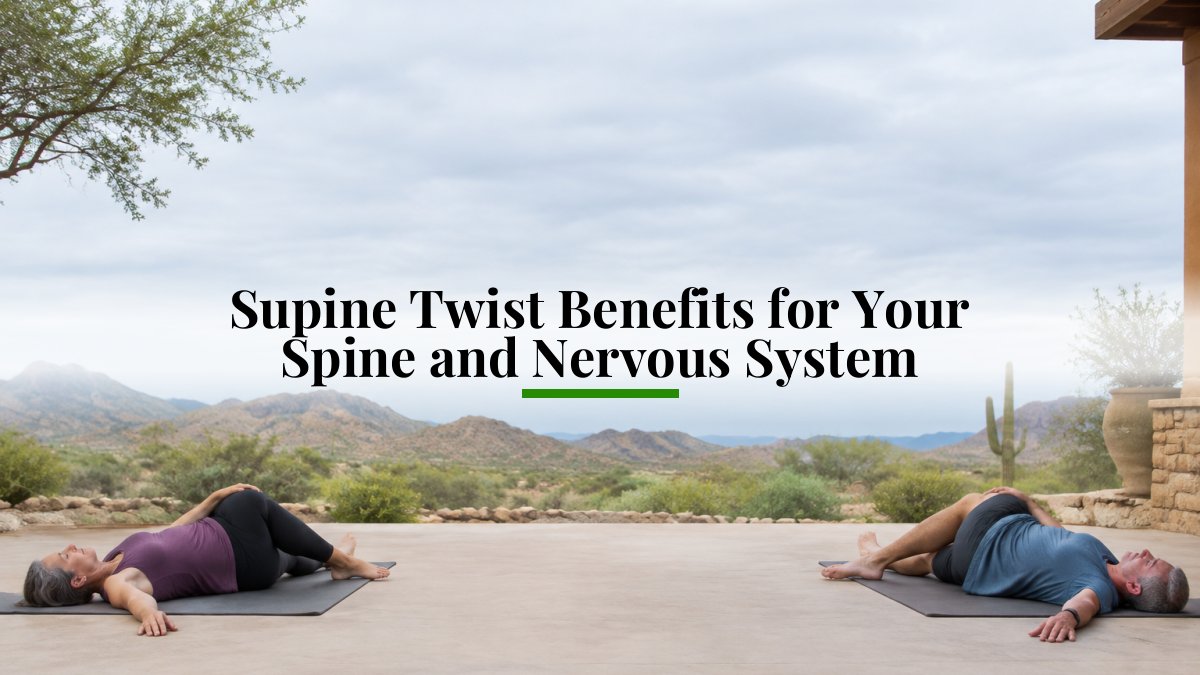
Supine Twist Benefits for Your Spine and Nervous System
Last Updated: November 14, 2026
Quick Summary
A supine twist is a reclined resting pose that rotates your spine while the floor supports your full weight, releasing tension in the spinal muscles and gently stretching the hips and glutes. It also helps settle the nervous system, which is why we teach it in nearly every class.
- Hold the pose 30 seconds to 2 minutes per side, breathing slowly throughout.
- Two to three rounds per side in an evening practice is plenty, and daily is fine.
- Keep both shoulders grounded; if one lifts, you have gone past your available rotation.
- Rest the top knee on a yoga block to soften the twist instead of pushing it down.
- Twisting does not flush toxins; detoxification is handled primarily by the liver and kidneys.
Table of Contents
- Why the Supine Twist Belongs in Your Daily Practice
- How to Do a Supine Twist: Step-by-Step Cues
- Supine Spinal Twist Muscles Stretched and What Each One Does
- Supine Twist Sanskrit and the Roots of Supta Matsyendrasana
- Supine Twist Variations and Prop Setup for Every Body
- Breath, Hold Time, and How Often to Practice
- When to Skip or Modify the Pose, and What Detox Claims Get Wrong
- Bringing the Twist Into a Guided Retreat Practice
- Frequently Asked Questions
Why the Supine Twist Belongs in Your Daily Practice
The supine twist benefits almost every body that spends its days seated, stressed, or stiff. This gentle reclined pose asks nothing of your balance and gives back a surprising amount: a freer spine, quieter shoulders, and a nervous system that finally settles. At Blisstopia Retreats, we teach this shape in nearly every class because it meets people exactly where they are.
Here is the core idea: a supine spinal twist is a resting pose that rotates the spine while the floor supports your full weight. That support is what makes it so useful. You cannot force it, and you do not need to.
Twisting invites the spinal muscles to release tension they have carried all day. It gives the hips and glutes a gentle stretch.
But first, here is what most guides get wrong. They rush the pose. They crank the knee down hard and call it a stretch. A twist works through breath and patience, not force. Below, we will show you exactly how to do it, how long to hold, and who should skip it.
How to Do a Supine Twist: Step-by-Step Cues
The safest way to enter a supine twist is slowly, one segment at a time. Follow these cues and let the floor do the work.
- Lie on your back with legs extended and arms resting at your sides, palms down.
- Bend your right knee and draw it toward your chest, keeping the left leg long on the floor.
- Let the right knee fall across your body toward the left, stopping the moment the left shoulder begins to lift.
- Open your left arm out to the side at shoulder height, palm up, and soften the right hand onto the right knee or thigh.
- Turn your head gently to the left only if the neck feels neutral; otherwise keep the gaze up.
- Breathe here for several slow rounds, then return through center and switch sides.
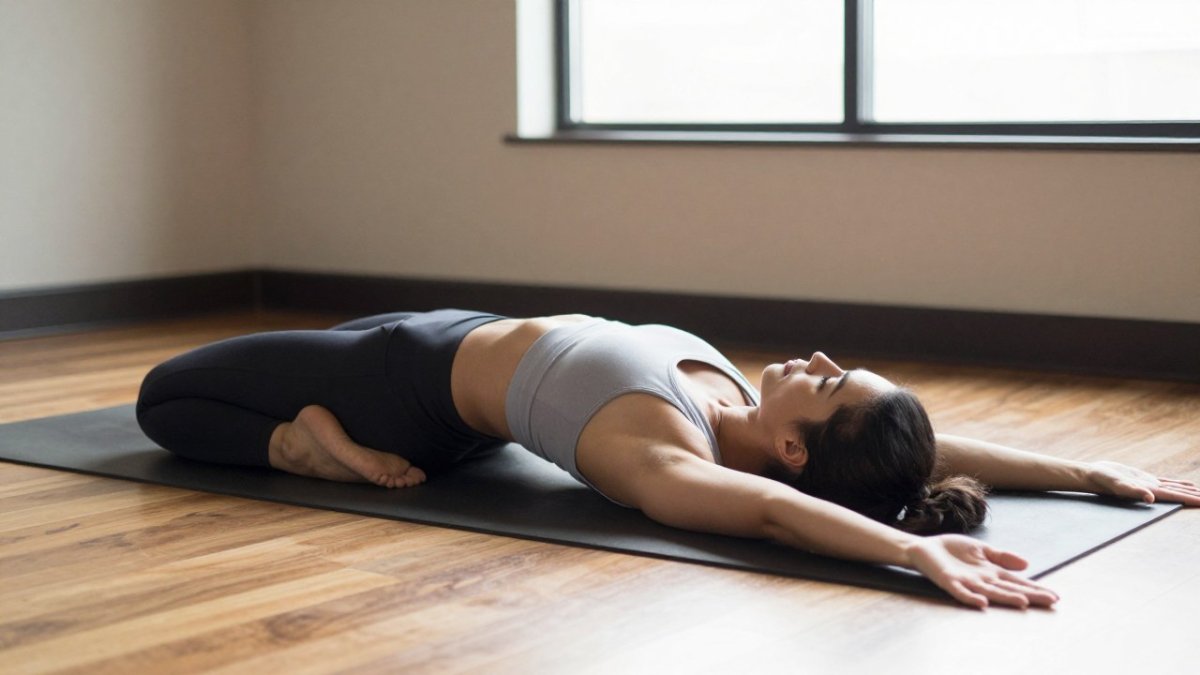
Keep both shoulders grounded. If one lifts, ease off the twist. The pose should feel like a gentle stretch, never a strain.
Alignment cues that matter most. The bottom shoulder stays heavy on the floor; if it rolls up, you have gone past your available rotation. The top knee does not need to touch the floor, hovering is fine and often safer.
Common mistakes to avoid. Cranking the knee down with the hand is the most frequent error; the hand should rest, not push. Lifting the opposite shoulder to chase a deeper stretch defeats the purpose. Holding the breath shortens the available range, so let each exhale be the signal to settle a little further.
Watch out: If you feel a pinch in the lower back rather than a broad stretch across the hip and outer thigh, you have rotated from the pelvis instead of letting the spine follow the knee, back off and place a block under the knee.
Props that make the pose accessible. A yoga block under the top knee supports the leg so the twist can soften. A folded blanket under the head keeps the neck neutral when the head turns. A bolster lengthwise under the spine turns the shape into a supported restorative version.
How long and how often. Hold 30 seconds to 2 minutes per side, breathing slowly. Two to three rounds per side in an evening practice is plenty; daily is fine. Switch sides and notice whether one direction feels tighter, that asymmetry is useful information, not a problem to fix by forcing the stiffer side.
Supine Spinal Twist Muscles Stretched and What Each One Does
The supine spinal twist muscles stretched span your whole back line, from hips to shoulders. Knowing what each area does helps you feel the pose working.
- Spinal muscles: lengthen and release along the rotation, improving spinal mobility.
- Glutes and hip external rotators: stretch as the top knee crosses the body.
- Thoracic spine and shoulders: open through the upper back, easing tight shoulders.
Supine Twist Sanskrit and the Roots of Supta Matsyendrasana
The supine twist Sanskrit name is Supta Matsyendrasana, which translates roughly to "reclined lord of the fishes pose." Supta means reclined. Matsyendra is a legendary yogi, and asana means seat or pose.
The name links the shape to a long tradition of spinal rotation. Teachers use the Sanskrit term to connect students to the lineage behind the movement.
You do not need the Sanskrit to practice. But knowing it helps you follow along in class and understand why this reclined twist appears in so many sequences.
Supine Twist Variations and Prop Setup for Every Body
Supine twist variations let you shape the pose to your own body. Our rule: props are not cheating. They are how you find the stretch safely.
- Knees together: keep both knees bent and drop them to one side for a deeper hip stretch.
- Block under the knee: rest the top knee on a yoga block to soften the twist.
- Bolster under the shoulders: supports the upper back and makes breathing easier.
- Blanket under the head: keeps the neck neutral if your head turns.
- Straight-leg version: extend the bottom leg for a stronger stretch through the hip.
If you are exploring more prop-supported shapes, our guide to Utthan Pristhasana breaks down another asana step by step.
Breath, Hold Time, and How Often to Practice
Hold a supine twist for 30 seconds to 2 minutes per side, breathing slowly the whole time. Longer is not better if you are forcing it. Let each exhale deepen the twist a little.
How often? Daily is fine. A short evening practice of a few breaths per side can help you unwind before sleep.
Breathing is central to the pose. Try a slow count in and out, and let the ribs expand. If breathwork interests you, our beginner's guide to using a mudra for balance pairs well with a calm twist practice.
Here are the practice parameters the article recommends for holding and repeating the pose.
| Item | Value | Note |
|---|---|---|
| Hold time per side | 30 seconds to 2 minutes | Breathe slowly the whole time |
| Rounds per side | Two to three | Plenty for an evening practice |
| Frequency | Daily is fine | A few breaths per side can help before sleep |
| Breathing | Slow count in and out | Let each exhale deepen the twist |
| Longer holds | Not better if forcing | Longer is not better if you are forcing it |
When to Skip or Modify the Pose, and What Detox Claims Get Wrong
Most people can practice a supine twist safely, but the pose is not for everyone on every day. Knowing when to modify, when to stop, and what the pose can and cannot do is what separates a useful practice from a risky one.
Modify rather than skip if: you are pregnant (keep the twist small and supported, avoid deep closed twists, and check with your provider), you have a history of disc issues or spinal surgery (keep the knees together and stacked, use a block, and stay well short of end range), you have tight hips or hamstrings (bend both knees and let them fall together), or you have shoulder sensitivity (keep the top arm supported on a bolster instead of opening it fully). Consistent attention to these subtle adjustments fosters the stability necessary to improve spinal control through a structured approach to daily movement.
Stop and consult a professional if: you feel sharp pain anywhere in the spine, hip, or shoulder; you notice numbness, tingling, or weakness in the legs; you feel dizzy or lightheaded; or the twist produces pain that persists after you come out of the pose. These are not signals to push through.
Watch out: A common pattern is mistaking a strong sensation for progress. A twist should feel like a broad stretch, not a sharp catch.
What the pose can and cannot do. The supine twist may support comfort and relaxation. It is not a substitute for care from a physician or physical therapist. If you are managing a condition, treat the pose as one gentle tool among many and clear it with your care team first.
The detox claims, examined. You will see articles promise that twisting "flushes toxins" from your organs or "wrings out" the digestive tract. That is not how the body works. Detoxification is handled primarily by the liver and kidneys, and no stretch squeezes waste out of tissue. What a twist actually does is create a sensation of release in the muscles around the spine and encourage relaxation. The language is marketing; the sensation is real. We would rather tell you the truth and let the pose be what it is.
If rest itself feels hard for you, our piece on why rest feels hard for Pitta doshas offers gentle guidance on restorative practice.
Bringing the Twist Into a Guided Retreat Practice
A twist practiced alone at home is lovely. A twist practiced in a guided setting, with breathwork and sound healing around it, lands differently. That is the heart of what we offer.
At Blisstopia Retreats, our retreats blend guided breathwork, meditation, and sound bath healing in a private desert sanctuary. New to the practice? Our new students page shows you what to expect. Ready to go deeper? Browse our upcoming retreats and find the one that fits.
You can also call us at 623-986-2899 with any questions.
The supine twist rewards patience more than effort. Give it a few slow breaths each day, and your spine and nervous system will notice. If you want to practice it in a space built for deep rest, Blisstopia Retreats offers guided yoga, breathwork, and sound healing in a secluded desert sanctuary with on-site caretakers. Get started with Blisstopia Retreats and give your body the rest it has been asking for.
Frequently Asked Questions
What are supine twists good for?
A supine twist is a gentle way to move the spine through rotation while lying down, which makes it accessible for most bodies. It supports spinal mobility, eases lower-back and upper-back tension, opens the shoulders and hips, and calms the nervous system. Because the floor supports your weight, you can hold it longer than a standing twist. Many teachers use it near the end of class or before bed as a wind-down pose.
Which muscles does supine spinal twist stretch?
The pose lengthens the spinal muscles along the back, the obliques and abdominal tissues, the hip external rotators and glutes on the top side, and the chest and front shoulder on the open side. It also creates space through the thoracic spine, which is often the stiffest part of the back. Because the bottom shoulder stays grounded, you get a mild stretch through the upper-back and shoulder area at the same time.
How long should you hold a supine twist?
Start with 30 to 60 seconds on each side and build toward 2 to 3 minutes as the muscles release. Breathe slowly through the nose and let the exhale soften the ribs. If you feel pinching, tingling, or sharp pain, come out sooner. Holding longer is not automatically better; the goal is steady breath and a stretch you could describe as mild, not intense.
When should you avoid or modify a supine twist?
Skip or modify the pose if you are pregnant, recovering from spinal surgery, have an acute back injury, or feel sharp pain in the spine or hips. Use a bolster under the knees, keep the twist small, or practice a gentle reclined twist with both knees supported. If you have a diagnosed spinal condition, ask your doctor or physical therapist before adding rotation to your routine.