
 how-to
How to Handle Retreat Guest Dietary Restrictions
Table of Contents
- Why Dietary Restrictions Make or Break the Guest Experience
- Step 1: Build a Retreat Dietary Questionnaire Template
- Step 2: Retreat Meal Planning for Food Allergies
- Step 3: Vegan and Gluten-Free Retreat Meals That Guests Love
- Step 4: Communicating Dietary Accommodations to Guests
- Step 5: Emergency Plans for Severe Reactions
- Common Mistakes Retreat Hosts Make With Guest Diets
- Conclusion
- Frequently Asked Questions
Last Updated: October 15, 2026
Why Dietary Restrictions Make or Break the Guest Experience
Getting dietary restrictions right is one of the fastest ways to lose a guest's trust, and one of the easiest ways to earn it back. At Blisstopia Retreats, we've learned that how to handle retreat guest dietary restrictions is really a lesson in hospitality: a guest who feels safe at the table relaxes everywhere else. A guest who doesn't will remember it for years.
Retreats are intimate by design. Meals are shared, often outdoors, often long. When someone can't eat what's served, they feel like a problem instead of a guest. That feeling spreads. It colors the whole week.
What most guides miss is that dietary planning isn't a kitchen task. It's a guest experience task that happens to involve a kitchen.
Step 1: Build a Retreat Dietary Questionnaire Template
A retreat dietary questionnaire template is the single most useful tool you'll build. It turns guesswork into a clear list before anyone arrives, and it doubles as your kitchen prep sheet, your labeling list, and your emergency reference. Send it early, keep it short, and ask better questions.
Which Questions Belong on the Form
Most forms ask too little. Ours asks for specifics, grouped so the answers are easy to sort later:
Identity and contact
- Full name and emergency contact
- Room or cabin assignment (so servers know where to follow up)
Medical and allergy detail
- Allergies, with severity noted (mild, moderate, severe)
- Whether the guest carries an epinephrine auto-injector, and where they keep it
- Intolerances and sensitivities (lactose, FODMAP, nightshades, sulfites)
- Medications or conditions that affect eating
Dietary pattern and preference
- Dietary pattern (vegan, vegetarian, gluten-free, keto, halal, kosher, pescatarian)
- Foods you simply won't eat, even if you can
- Alcohol and caffeine preferences
- Texture or temperature aversions that matter to you
Logistics
- Kitchen access needs (do you need a fridge shelf, a microwave, a private prep space?)
- Whether you're willing to be contacted about menu questions before arrival
When and How to Send It
Send the form at registration and again two weeks before arrival. People forget, and plans change. A second touch catches what the first missed. A common pattern is to see 10-20% of guests update at least one answer on the second pass.
Build the form so responses land in a spreadsheet or shared doc, not a personal inbox. That single choice is what makes the rest of this process work.
Turning Answers Into a Working Document
Once responses are in, sort them into three lists:
- Universal-safe dishes, meals that already fit every guest at the table
- Modify-in-kitchen dishes, meals that work with a swap (oil instead of butter, tamari instead of soy sauce)
- Separate-prep dishes, meals that need their own pan, board, and shelf
That third list is the one that protects your guests with severe allergies, and it's the one most hosts never build.
Step 2: Retreat Meal Planning for Food Allergies
Retreat meal planning for food allergies starts with one rule: separate first, cook second. Cross-contact is the real risk, not the ingredient list. A clean pan matters as much as a clean recipe.
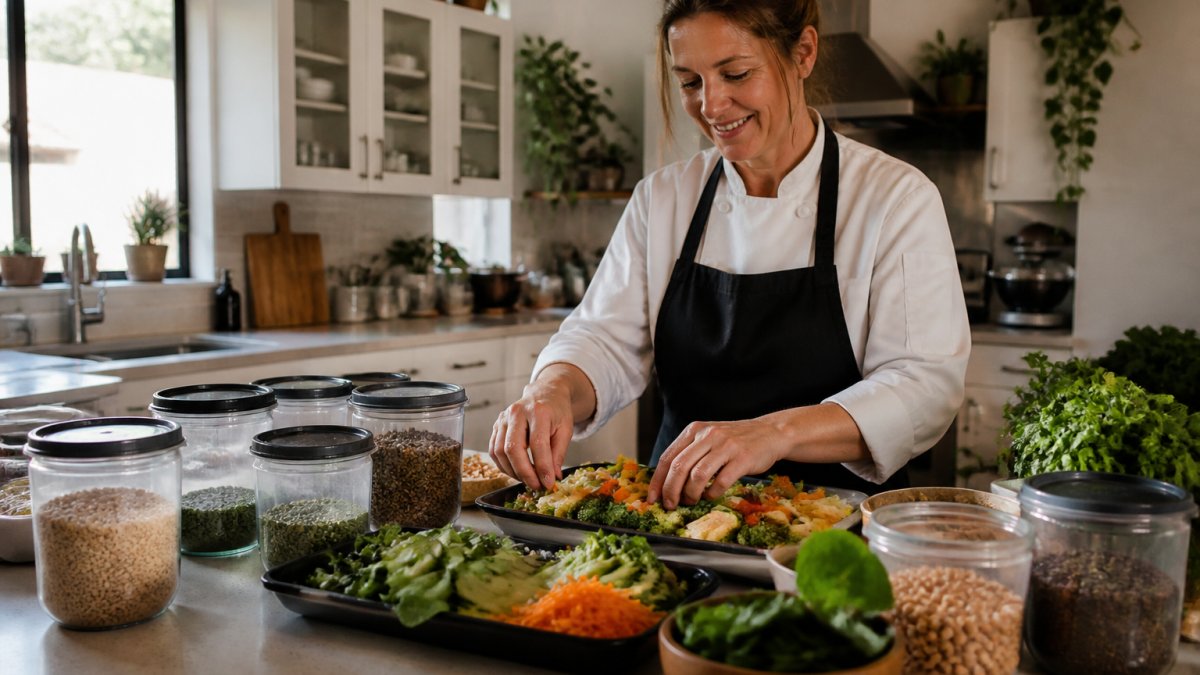
Preventing Cross-Contact in the Kitchen
Cross-contact happens when a safe food touches a surface, tool, or hand that held an allergen. It's invisible, and it's the most common mistake we see.
- Use separate cutting boards, color-coded if possible
- Keep dedicated pans and utensils for allergen-free prep
- Wash hands and surfaces between tasks
- Store allergen-free dishes on a separate shelf
- Label every container clearly
Working With Vendors and Suppliers
If you're using an outside caterer or a shared commercial kitchen, the cross-contact rules don't relax, they get harder, because you don't control the room. A few things to confirm in writing before you sign anything:
- Which allergens the kitchen handles regularly, and whether they can guarantee a separate prep zone
- Whether they'll provide ingredient lists for every dish, not just the menu description
- Who on their staff is the point of contact for dietary questions on the day
- What their policy is if a guest's needs change after the contract is signed
A common pattern is to discover, too late, that a caterer's "gluten-free" dish is prepared on the same board as wheat bread. Ask the question before the contract, not after.
When the Kitchen Can't Meet a Need
Some needs exceed what a shared kitchen can safely deliver. When that happens, the honest move is to say so early and offer a workable alternative:
- Let the guest bring sealed, shelf-stable food and give them a labeled shelf and a dedicated prep space
- Arrange a simple meal kit the guest can assemble themselves
- Coordinate with the guest on a nearby grocery run before the retreat begins
None of these are failures. They're the difference between a guest who feels handled and a guest who feels dismissed.
Building a Menu That Works for Everyone
Design meals so the default dish already fits most restrictions. Bowls, curries, roasted vegetable plates, and grain salads with certified gluten-free grains cover vegan, gluten-free, and dairy-free guests at once. Then add optional proteins, sauces, and toppings on the side so guests with narrower needs can build their own plate without a separate meal.
Step 3: Vegan and Gluten-Free Retreat Meals That Guests Love
Vegan and gluten-free retreat meals fail when they're treated as substitutions. They win when they're designed as real dishes everyone wants. Build the menu around naturally plant-based, naturally gluten-free food.
Think bowls, curries, roasted vegetable plates, grain salads with certified gluten-free grains, and hearty soups. Our chef builds meals this way, and guests rarely notice what's "missing."
A simple approach:
- Pick a base (rice, quinoa, greens)
- Add a protein (beans, lentils, tofu)
- Add roasted or raw vegetables
- Finish with a sauce or dressing
This format scales easily and covers most dietary needs at once.
Step 4: Communicating Dietary Accommodations to Guests
Communicating dietary accommodations to guests means confirming, labeling, and repeating. Guests need to know their needs were heard before the first meal.
- Send a confirmation email listing what you're preparing for them
- Label dishes at the table with clear cards
- Have a staff member who knows the menu
- Check in quietly at the first meal
A short note before arrival does more for trust than any menu ever will.
Step 5: Emergency Plans for Severe Reactions
Every retreat needs a written emergency plan for severe allergic reactions. Know who carries medication, where it's stored, and who calls for help.
- List each guest's allergies and medication location
- Assign one staff member to know the plan
- Keep a phone charged and a route to care mapped
- Review the plan with your team before guests arrive
Common Mistakes Retreat Hosts Make With Guest Diets
The biggest mistake is treating dietary needs as an afterthought. Here are the others we see most:
| Mistake | Why It Hurts | Better Approach |
|---|---|---|
| Asking too late | No time to plan or shop | Send the form at registration |
| Ignoring severity | Mild and severe need different care | Ask guests to rate severity |
| One "safe" dish for all | Feels like a punishment plate | Design meals that fit everyone |
| No labeling at meals | Guests guess and worry | Label every dish clearly |
| No emergency plan | Panic when it matters most | Write and rehearse one plan |
Conclusion
Dietary care is where a retreat proves it actually sees its guests. Get it right and people settle in, open up, and do the work they came for.
Handling guest dietary restrictions well takes planning, and it takes a team that genuinely cares. At Blisstopia Retreats, our on-site caretakers and high-touch approach mean every guest's needs are known before they arrive. We build meals around real dietary requirements, keep allergen-free prep separate, and stay on-site so someone is always there if something goes wrong. If you'd like support beyond the menu itself, our nutritional coaching helps guests carry those food choices home, and our Ayurveda approach shapes meals around each person's constitution. Call us at 623-986-2899 to talk through your group's needs and see how we hold space for every guest at the table.
Frequently Asked Questions
How should retreat hosts ask guests about dietary restrictions?
Send a short questionnaire immediately after booking that asks about allergies, intolerances, and preferences, plus a severity question for each. Follow up by phone or email two weeks before arrival to confirm nothing has changed. This gives your kitchen time to plan, keeps guests safe, and shows you take their needs seriously from the start.
What should a retreat dietary questionnaire include?
Include the guest's name, all allergies and intolerances, severity level, dietary preferences such as vegan or gluten-free, and whether they carry emergency medication. Add a line for cross-contact concerns and a notes field for anything else. Keep it to one page so it is quick to complete, and store responses in one shared document your chef and staff can access.
How do you accommodate food allergies at a retreat?
Plan meals around the most restrictive diets first, then build the rest of the menu around them. Keep dedicated prep areas and utensils for allergen-free cooking, label every dish clearly at the buffet, and brief servers on which items contain which allergens. If a guest has a severe allergy, confirm your plan with them before arrival and keep emergency contacts on hand.
How do you plan vegan and gluten-free retreat meals?
Build menus on naturally vegan and gluten-free bases like rice bowls, roasted vegetables, legumes, and fresh salads, then add optional proteins or grains on the side. Use certified gluten-free grains and check sauces and dressings for hidden gluten. Many guests with other restrictions can also eat these meals, so a plant-forward menu simplifies your kitchen while keeping the food satisfying.