 how-to
Sound Healing Therapy for Women Over 40: A Guide
Table of Contents
- Why Sound Healing Therapy Fits Women Over 40
- How Sound Healing Works: Vibration, Frequency, and the Nervous System
- What to Expect at a Sound Bath
- Sound Healing for Stress and Anxiety
- Sound Bath Duration: How Long Sessions Last and What Fits Your Schedule
- Sound Bath Safety Precautions and Realistic Expectations
- A Beginner-Friendly Home Routine for Women Over 40
- Frequently Asked Questions
Last Updated: October 21, 2026
Why Sound Healing Therapy Fits Women Over 40
Sound healing therapy for women over 40 meets a specific kind of exhaustion: sleep gets lighter, stress lands harder in the shoulders and jaw, and the nervous system holds tension longer.
Sound healing is a complementary practice that uses instruments, voice, and rhythm to guide the body into a calmer state. It doesn't ask you to think your way out of stress, it gives your nervous system something gentle to follow.
How Midlife Stress Shows Up in the Body
Midlife stress is often mistaken for a mood problem, but it shows up physically:
- Shoulders that creep toward the ears without warning
- A jaw that aches by mid-afternoon
- Shallow breathing that never quite reaches the belly
- A racing mind at 2 a.m., even when you are exhausted
Many women find that talk-based approaches alone do not touch this layer. Sound and vibration work directly on the body's relaxation response, which is why it fits so well alongside therapy, movement, and rest.
How Sound Healing Works: Vibration, Frequency, and the Nervous System
Sound healing uses sound waves and vibration to shift the body out of a stress response and into a restful one. The instruments create steady, predictable tones, and your nervous system begins to match those patterns.
Slow, low-frequency sound and long exhales can nudge the body toward "rest and digest", often bringing slower breathing, looser muscles, and a quieter mind within minutes.
The Instruments You'll Hear
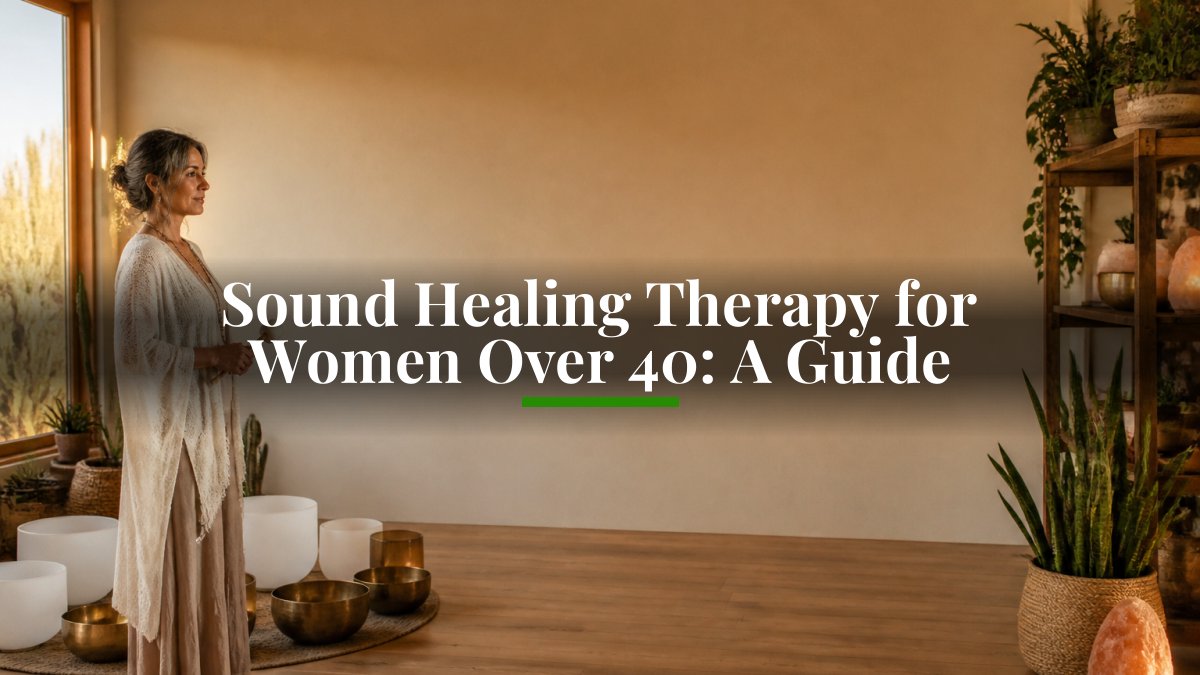
Sessions draw on a small, familiar set of tools:
- Singing bowls (crystal or metal) for sustained tones and overtones
- Gongs for deep, full-body vibration
- Chimes and bells for gentle resets
- Drums and rhythm for grounding
- Voice and chanting for breath and resonance
Each instrument creates a different frequency and a different sensation. Crystal bowls tend to feel bright and clear. Gongs feel like a wave moving through the chest.
What to Expect at a Sound Bath
Expect to lie down, fully clothed, on a mat with a blanket, and simply listen. A sound bath is an immersive, meditative experience where a practitioner plays instruments while you rest, closer to a long, guided exhale than a performance.
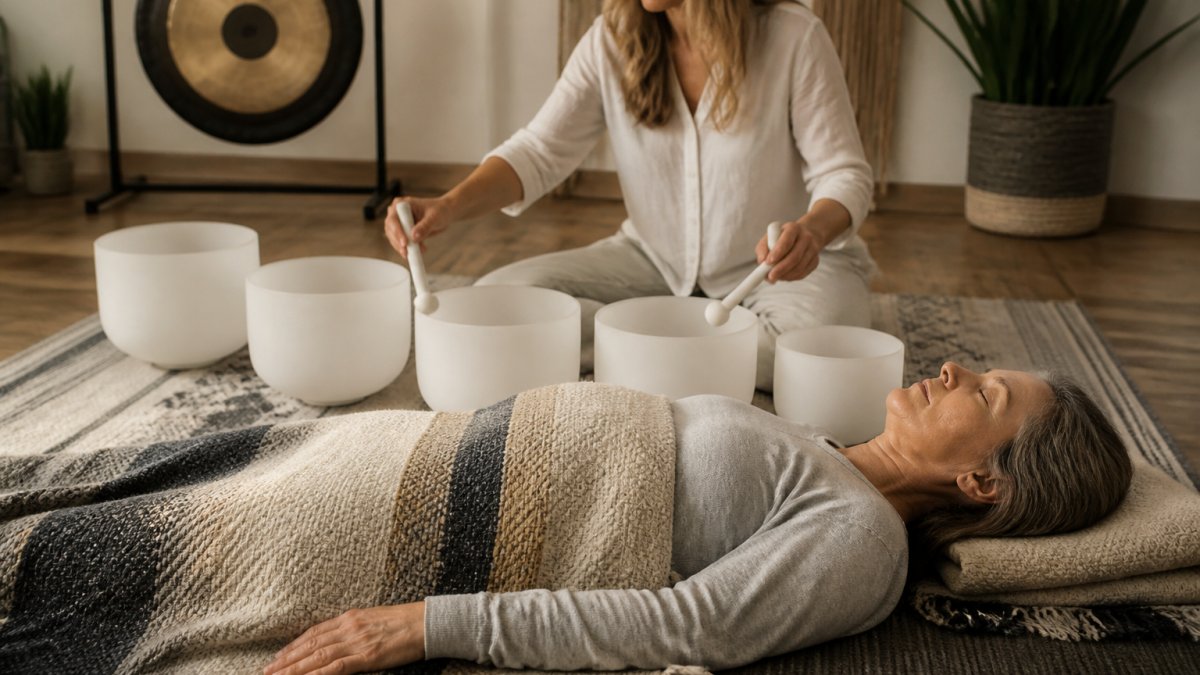
Here is the typical shape of a session:
- Arrival and settling. Choose a spot, lie back, and get comfortable. Most studios provide mats, bolsters, and blankets; ask ahead if you need extra padding for hips or knees.
- Opening tones. The practitioner begins with soft sound, often a single bowl or gentle chime, to help you land.
- The main journey. Instruments build and fade in waves for the bulk of the session, in sequence rather than all at once.
- Quiet integration. Sound tapers off and you rest in stillness for a few minutes. This silence is part of the practice.
- Gentle return. Sit up slowly, often with water and a few minutes to reorient. Some facilitators close with a short grounding exercise.
What It Actually Feels Like in a Midlife Body
Women over 40 often report sensations that surprise first-timers:
- Vibration in the chest and belly during gong or low metal bowls, a physical thrum, not just a sound.
- Temperature drop as the body relaxes; hands and feet cool first, which is why a thick blanket matters.
- Emotional release, tears, sighing, or unexpected grief. This is common, not a sign something is wrong; a trauma-informed facilitator lets it pass without making it a spectacle.
- Mental restlessness in the first ten minutes, then a noticeable settling. The mind often protests before the body lets go.
- Drowsiness or vivid imagery. Drifting into a hypnagogic state is a normal depth of relaxation, not a failure to "meditate properly."
First-Timer Logistics Worth Knowing
- Arrive 10-15 minutes early to set up and use the restroom. Once the session starts, moving around disturbs others.
- Wear soft, loose clothing you can lie down in. Avoid belts, tight waistbands, and heavy jewelry.
- Bring or request an eye mask and a thick blanket. Body temperature drops during deep relaxation, and most people who feel "cold and distracted" simply under-packed.
- Lie on your back, side, or seated in a chair. Comfort is the point; no position is more spiritual than another.
- Expect silence between instruments. The pauses are intentional and often where the deepest rest happens.
You don't need experience, flexibility, or belief in anything. Come as you are and let the sound do the work. If a group setting feels uncertain, ask about a seated option near the door, many women over 40 prefer that for a first session.
Sound Healing for Stress and Anxiety
Sound healing for stress and anxiety is where most women notice results first. The practice lowers arousal in the body, exactly what anxiety keeps elevated.
Many women find that a session can lead to:
- Slower, deeper breathing
- A noticeable release of muscle tension in the neck and shoulders
- A calmer, less reactive mood
- Better sleep on the night of a session
Emotional balance tends to build over time rather than arrive in one sitting. If you carry grief, burnout, or old trauma, tell your practitioner. A trauma-informed approach matters, and a facilitator may adjust volume, pacing, and positioning accordingly.
Sound Bath Duration: How Long Sessions Last and What Fits Your Schedule
Sound bath duration ranges from about 20 minutes for a short reset to 90 minutes for a full immersive session. Most group sound baths run 45 to 60 minutes, with a few minutes on either side for settling in and coming back.
| Session Type | Typical Length | Best For |
|---|---|---|
| Mini reset | 20-30 minutes | Busy weekdays, lunch breaks |
| Standard group bath | 45-60 minutes | First-timers, weekly practice |
| Extended journey | 75-90 minutes | Deep rest, retreat settings |
| Home practice | 10-20 minutes | Daily nervous system upkeep |
If your schedule is tight, a shorter session still counts. Consistency beats duration. Three short sessions a week will do more for your nervous system than one long one every few months.
Sound Bath Safety Precautions and Realistic Expectations
Sound bath safety precautions are simple but matter. Sound is generally gentle, yet a few people should check with their doctor first or adjust how they participate. The bigger issue is expectations: sound healing is a complementary practice, not a treatment, and the research is promising but limited.
Who Should Check With a Doctor First
- Pregnancy: ask your provider and tell the practitioner so volume and positioning can be adjusted; many offer a seated, farther-from-the-gong option.
- Seizure disorders or epilepsy: consult your doctor before sessions with strong vibration or gongs; some practitioners recommend avoiding gong-heavy sessions entirely.
- Hearing aids or tinnitus: request lower volume and avoid sitting near the gong. Many women over 40 first notice tinnitus in this decade, so tell the facilitator, a good one keeps tones soft and avoids sudden cymbal-like swells.
- Recent surgery, implants, or pacemakers: check with your physician before high-vibration work. A precaution, not a known hazard, but worth the conversation.
- Sound sensitivity, misophonia, or PTSD: let the facilitator know so you can sit near the door and take breaks. A trauma-informed facilitator won't single you out or ask you to explain yourself in front of the group.
How to Stop or Adjust a Session
You are always in control. Reputable facilitators offer practical options:
- Raise a hand, most facilitators watch for this and will quietly come to you.
- Sit up and move to a chair without waiting for permission.
- Step out for a few minutes and return when you are ready.
- Ask for earplugs ahead of time if you are sound-sensitive; many studios keep them on hand.
- Choose a spot near the door on your first visit so leaving doesn't feel disruptive.
None of these are rude. A facilitator who makes you feel bad for adjusting is one to avoid.
What the Research Does and Does Not Show
This is where most sound healing articles overreach. The honest summary:
- Reasonably supported: sound-based relaxation practices are associated with reduced self-reported stress and improved relaxation in small studies. Many people report better sleep on the night of a session.
- Not established: sound healing is not a treatment for anxiety disorders, depression, menopause symptoms, chronic pain, or any medical condition, and does not replace therapy, medication, or medical care.
- Unknown: optimal session length, frequency, and instrument types aren't standardized in research. Claims about specific frequencies "healing" specific organs or chakras are traditional and experiential, not clinically proven.
- Be skeptical of: any practitioner who promises to cure a condition, tells you to stop medication, or charges heavily for "diagnostic" frequency assessments.
Realistic Expectations for Women Over 40
Expect a single session to erase years of burnout and you'll be disappointed. Expect deep rest and a nervous system that slowly learns to settle, and you'll likely be pleased.
Sound healing supports relaxation, stress relief, and emotional balance. It does not replace medical or mental health care, if you carry trauma, grief, or a diagnosed condition, use it alongside professional care, not instead of it.
A Beginner-Friendly Home Routine for Women Over 40
You can build a home practice with one bowl, a chime, or a calming playlist and ten quiet minutes.
Try this simple weekly rhythm:
- Set a consistent time. Same slot, three days a week, even if it is short.
- Create a low-light space. Dim the room, silence your phone, lie down.
- Start with breath. Five slow exhales, longer than the inhales.
- Play one sound source. A bowl, a chime, or a playlist, at low volume.
- Rest in the silence afterward. Two minutes of quiet before you move.
- Track one thing. Note your sleep or tension level that evening.
To go deeper, a guided session with an experienced facilitator is the fastest way to learn what your body responds to.
Midlife asks a lot of your body, and it deserves more than another cup of coffee and a longer to-do list.
Frequently Asked Questions
Is sound healing safe for women over 40?
For most women over 40, sound healing is a low-risk complementary practice. Sessions involve lying still and listening, so the main considerations are comfort and any medical conditions you already manage. If you are pregnant, have a seizure disorder, wear a pacemaker or other implanted device, or have significant hearing loss, check with your doctor first. Tell your practitioner about anything relevant before the session begins. Sound healing supports relaxation and stress relief; it is not a substitute for medical or mental health treatment.
Can sound therapy help with stress or anxiety during midlife?
Many women over 40 use sound healing for stress and anxiety because the slow, rhythmic tones encourage physical relaxation and a calmer mental state. The practice pairs well with breathwork and meditation, and it can be a gentle way to unwind when other relaxation methods feel hard to settle into. Evidence is still developing, so treat it as one supportive tool rather than a cure. If anxiety is affecting daily life, work with a licensed mental health professional alongside any complementary practice.
How long does a sound bath usually last?
Sound bath duration varies by setting. A studio class often runs 45 to 75 minutes, while a private or retreat session may last 60 to 90 minutes. Shorter 20 to 30 minute sessions work well for beginners or for a home routine. If you are new to sound healing, start with something under an hour and see how your body responds. Ask the facilitator about length before booking so you can plan around your schedule and comfort.
What should I bring or wear to a sound bath?
Wear loose, comfortable clothing and bring a yoga mat, a blanket, and a small pillow so you can lie down comfortably for the full session. An eye mask helps some people settle deeper. Bring a water bottle and arrive a few minutes early to set up your space. If you tend to feel cold while lying still, an extra layer makes a difference. Most studios and retreats provide mats and blankets, but confirming ahead saves surprises.