 blog
Spiritual Desert Retreats for Professionals: 2026 Guide
Last Updated: October 23, 2026
Quick Summary
Spiritual desert retreats are structured immersions in silence, stillness, and guided self-reflection held in remote natural settings away from urban stimulation, and they have moved from fringe curiosity to mainstream recovery strategy for professionals. At Blisstopia, our faith-based sanctuary in the Sonoran Desert blends breathwork, meditation, sound healing, and genuine rest so you can recover from burnout and clarify priorities.
- Name the problem precisely and write your retreat goal in one sentence before comparing options.
- Score each retreat on program depth, group size, facilitator credentials, length, professional focus, integration, and realistic outcomes.
- A typical day runs from silent morning meditation to evening sound bath, cacao ceremony, or fire circle.
- Pack loose layers, a wide-brim hat, high-SPF sunscreen, a refillable water bottle, walking shoes, and a journal.
- Book your return flight for the day after the retreat ends, not the same afternoon.
Table of Contents
- Why Spiritual Desert Retreats for Professionals Are Booming in 2026
- Faith-Based Wellness Retreats: What Makes Them Different
- Choosing a Professional Burnout Retreat That Fits Your Life
- Inside a Desert Meditation Retreat: Silence, Stillness, and Self-Reflection
- Guided Breathwork Retreats and Other Healing Therapies
- What a Typical Day Looks Like on a Desert Retreat
- How to Prepare for a Spiritual Desert Retreat
- Frequently Asked Questions
Why Spiritual Desert Retreats for Professionals Are Booming in 2026
Spiritual desert retreats for professionals have moved from fringe curiosity to mainstream recovery strategy. At Blisstopia Retreats, we hear the same story weekly: a leader who has optimized every part of their life except the part that needs quiet. Desert landscapes strip away the noise that offices, notifications, and calendars create, and that removal is the point.
The Burnout Economy and the Search for Silence
The modern professional's problem isn't a lack of productivity tools. It's the absence of unstructured silence. Desert environments offer something rare: a horizon with nothing to scroll past. If you want to understand why silence itself is therapeutic, our guide to the mental health benefits of silent retreats breaks down what extended quiet does for an overstimulated nervous system. Many professionals find that three days of genuine stillness resets more than three weeks of ordinary vacation.
Faith-Based Wellness Retreats: What Makes Them Different
Faith-based wellness retreats combine contemplative practice with holistic health support, and the difference shows up in how the week is held. A secular spa weekend relaxes you. A faith-based sanctuary asks you to look inward with guidance, ritual, and community.
We built Blisstopia as a private, faith-based wellness ministry in the Sonoran Desert, and guests often tell us the absence of pressure is what surprises them. No doctrine is imposed. No experience is required. If you want to understand the full landscape of what a desert sanctuary actually offers, read our faith-based desert wellness sanctuary guide before you book anywhere.
Choosing a Professional Burnout Retreat That Fits Your Life
The right professional burnout retreat matches your available time, your tolerance for group work, and your honest goal for the week. Most people choose badly because they pick the prettiest photos instead of the program structure, and because they never name what they actually need to recover from.
Start by naming the problem precisely. Burnout in professionals rarely looks like exhaustion alone. A common pattern is a blend of emotional depletion, cynicism about work that once mattered, and a nagging sense that effort no longer produces results (the WHO). Decision fatigue is its close cousin: by Friday, choosing lunch feels like a board vote. A retreat built for professionals should address those mechanisms directly, through nervous system regulation, unstructured silence, and guided reflection, rather than simply offering a nicer place to be tired.
A practical filter helps. According to the American Institute of Stress, workplace stress remains one of the leading sources of health complaints among adults, which means your retreat should address recovery, not just relaxation. We suggest scoring every option you consider on these seven criteria:
- Program depth: Does the schedule include guided breathwork, meditation, or contemplative practice, or only free time?
- Group size: Small cohorts protect the intimacy that makes deep work possible. Ask for the actual maximum.
- Facilitator credentials: Look for licensed therapists, certified breathwork coaches, or experienced teachers, and ask what training qualifies them to hold intensive emotional work.
- Length and structure: Confirm the retreat fits a long weekend if that's all your calendar allows, and ask how many hours per day are scheduled versus open.
- Professional focus: Does the program acknowledge work-related stress, career transitions, leadership reflection, or boundaries, or is it a generic wellness weekend?
- Integration: Ask whether the program includes follow-up support, a re-entry plan, or any post-retreat check-in.
- Realistic outcomes: A responsible provider will tell you what the retreat may support and what it will not fix. Be wary of anyone promising transformation on a schedule.
That last point deserves emphasis. Retreats can support recovery, clarify priorities, and interrupt destructive patterns. They do not replace therapy, medical care, or a sustainable change at home. The best facilitators say so up front.
Matching the Retreat to Your Professional Goal
Professionals arrive with different goals, and the program should match. Someone recovering from burnout needs rest, silence, and nervous system work more than intensive emotional processing. Someone in a career transition needs structured reflection and time to think clearly about what comes next. A leader preparing for a harder season may want contemplative practice and boundary-setting frameworks. A creative stuck in a rut may want movement, landscape, and unstructured time more than scheduled sessions.
Write your goal in one sentence before you compare options. If a retreat's schedule does not serve that sentence, it is the wrong retreat, no matter how good the photos look.
For a fuller evaluation framework, our guide on how to choose a spiritual retreat walks through each criterion in detail.
Inside a Desert Meditation Retreat: Silence, Stillness, and Self-Reflection
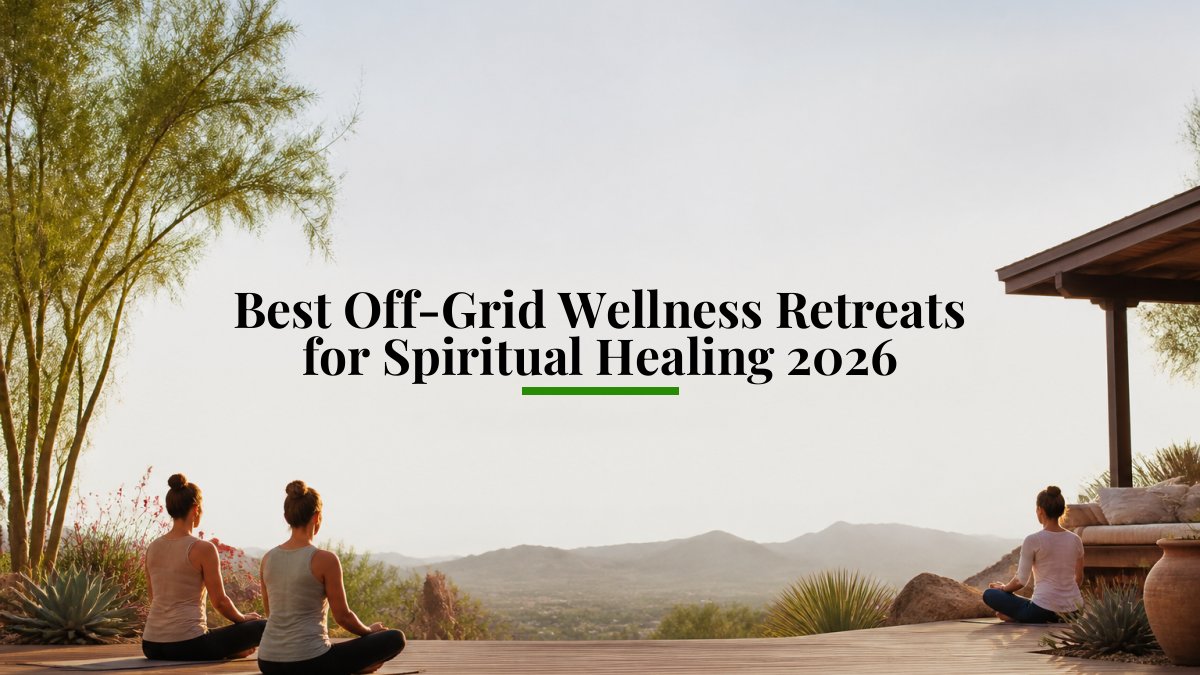
A desert meditation retreat is a structured immersion in silence, stillness, and guided self-reflection, usually held in a remote natural setting away from urban stimulation. The desert does half the work before you sit down. Sound carries differently. Light changes hourly. Sitting still stops feeling like deprivation and starts feeling like relief.
At Blisstopia, our meditation and breathwork sessions run alongside sound bath healing, Reiki, and energy work. Guests often arrive skeptical and leave surprised by how quickly the quiet becomes comfortable. A common mistake is treating meditation as a performance. It isn't. The goal is attention, not achievement.
Guided Breathwork Retreats and Other Healing Therapies
Guided breathwork retreats use structured breathing patterns to regulate the nervous system, release stored tension, and open the door to emotional processing. Breathwork is the fastest route we know from "I can't slow down" to "I can."
Our sessions draw on box breathing with extended retention, alongside sound healing, Reiki, Ayurvedic assessment, and an Ayurvedic chef who builds meals around how you actually feel. The National Center for Complementary and Integrative Health notes that mind and body practices like breathwork and meditation are increasingly studied for stress management, and that research continues to evolve. That honesty matters. These practices support recovery; they don't replace medical care.
What a Typical Day Looks Like on a Desert Retreat
A typical day on a desert retreat alternates structured practice with genuine rest, starting before sunrise and ending with quiet. Ours looks like this:
- Early morning: silent meditation or yoga as the desert cools
- Mid-morning: guided breathwork or a teaching session
- Afternoon: free time for hiking trails, the labyrinth, the pool, or a nap
- Evening: sound bath, cacao ceremony, or fire circle under open sky
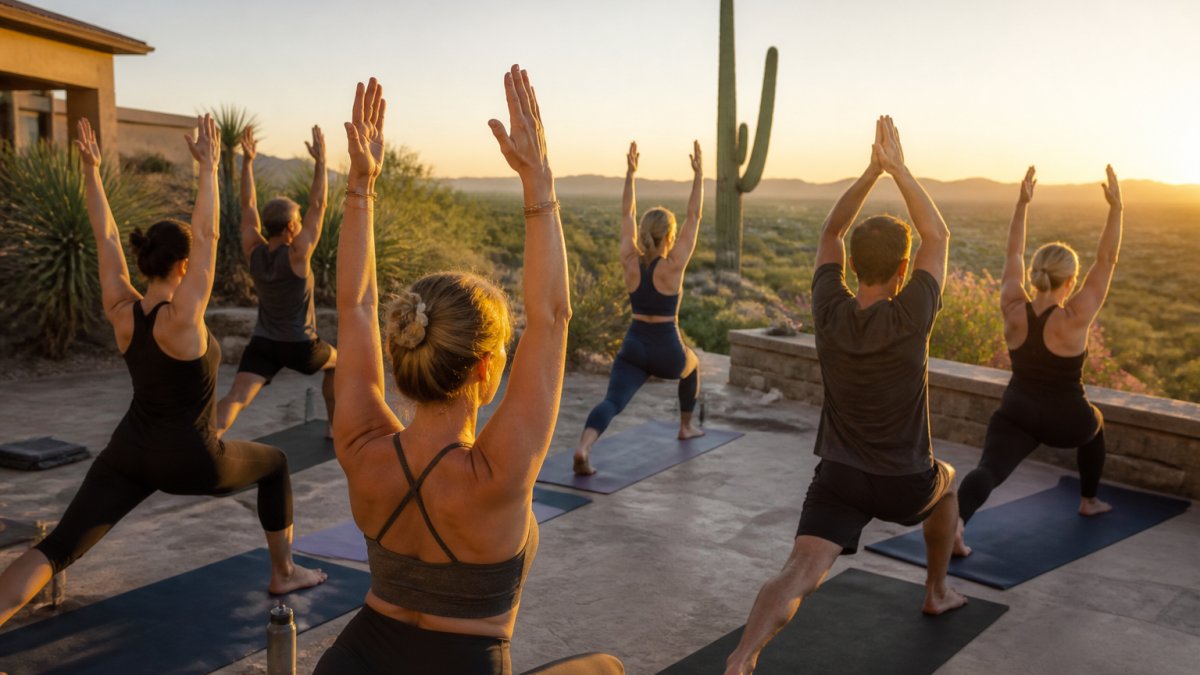
The rhythm matters more than any single activity. Professionals who struggle with unscheduled time at first usually find by day two that the empty hours are where the real processing happens.
Here is how the hours of a desert retreat day are structured, from first light to open sky.
| Time of day | Activity |
|---|---|
| Early morning | Silent meditation or yoga as the desert cools |
| Mid-morning | Guided breathwork or a teaching session |
| Afternoon | Free time for hiking trails, the labyrinth, the pool, or a nap |
| Evening | Sound bath, cacao ceremony, or fire circle under open sky |
How to Prepare for a Spiritual Desert Retreat
Preparation for a spiritual desert retreat comes down to three things: packing for the terrain, clearing your calendar honestly, and arriving with a realistic expectation of what change feels like. Desert mornings are cold and afternoons are hot, so layers beat single outfits.
A practical packing baseline:
- Loose layers for temperature swings
- A wide-brim hat and high-SPF sunscreen
- A refillable water bottle
- Comfortable walking shoes for uneven ground
- A journal and pen
- Any prescription medication in original packaging
For a complete list, our religious retreat packing checklist covers everything from footwear to electronics. One insider note: bring fewer devices than you think you need. For help stepping away from work email and screens, see our guide on how to disconnect during a spiritual retreat. Most guests overpack technology and underpack patience.
Frequently Asked Questions
Are there faith-based retreats for working professionals?
Yes. Faith-based wellness retreats are increasingly designed around working professionals, offering shorter 3- to 5-day formats that fit around limited PTO. These retreats blend spiritual practice with practical recovery tools like guided breathwork, meditation, and yoga. Blisstopia Retreats, a private faith-based ministry in the Sonoran Desert, hosts retreats from 3 to 14 days and welcomes guests from all belief backgrounds, so you can engage with the spiritual elements at your own comfort level without feeling pressured toward a specific doctrine.
Can a retreat help with work-related stress and burnout?
A retreat can interrupt the cycle of chronic stress by removing you from your daily environment and giving your nervous system extended quiet. Practices like guided breathwork, meditation, sound healing, and time in nature are commonly used to support recovery from burnout. A professional burnout retreat is not a substitute for clinical care, but it can provide the space and tools to reassess your priorities. Many guests report that the combination of silence, rest, and facilitated reflection helps them make clearer decisions about work and life.
How long should a spiritual desert retreat be?
For professionals with limited time off, a 3- to 5-day retreat is often enough to feel a meaningful shift. Longer stays of 7 to 14 days allow for deeper integration and more sustained silence. The right length depends on your goals: a long weekend works well for burnout recovery and rest, while a full week supports deeper self-reflection and spiritual growth. Ask about arrival and departure times, and confirm whether virtual integration sessions are offered before or after your stay.
What should I bring to a desert retreat?
Pack layers for temperature swings, a refillable water bottle, sunscreen, a hat, and comfortable clothing for yoga and meditation. Bring a journal for self-reflection and any personal items that support your spiritual practice. Most retreats provide mats, props, and meals, but confirm before you pack. Leave work devices behind if possible, or set clear boundaries around checking email. A small daypack is useful for hiking trails and nature immersion on the property.
Burnout doesn't resolve on its own, and a long weekend of distraction won't touch it. If you're ready for genuine quiet, Blisstopia Retreats offers a private, faith-based sanctuary in the Sonoran Desert with on-site caretakers, guided breathwork, sound healing, and a yoga studio built for stillness. Call us at 623-986-2899 to talk through dates and what your stay would include.