 ultimate-guide
Mental Health Benefits of Silent Retreats: A 2026 Guide
Table of Contents
- Why Silence Works: The Mental Health Benefits of Silent Retreats
- Stress Reduction, Anxiety Relief, and Emotional Wellbeing
- What to Expect at a Silent Retreat
- Silent Retreat Rules: What You Can and Cannot Do
- How Long Should a Silent Retreat Be?
- Preparing for a Silent Retreat: Screening, Contraindications, and Readiness
- What to Do If Distress Arises During Your Retreat
- Making the Benefits Last: Aftercare and Integration
- Frequently Asked Questions
Last Updated: October 8, 2026
Why Silence Works: The Mental Health Benefits of Silent Retreats
Silent retreats are structured multi-day programs where participants set aside speech, screens, and social input to focus inward through meditation, rest, and reflection. The mental health benefits come from what that quiet removes: constant stimulation, decision fatigue, and the low-grade social performance most of us run all day.
The mechanism is simple: silence gives your nervous system a break from reacting. Without conversation to manage, attention turns inward, and thoughts normally drowned out by noise rise to the surface, uncomfortable at first, and exactly where the work happens.
Stress Reduction, Anxiety Relief, and Emotional Wellbeing
Stress reduction is the most reported benefit of a silent retreat, and it starts with removing inputs rather than adding techniques.
Anxiety often loosens for a related reason: constant stimulation keeps the mind rehearsing and worrying, and in silence those loops have less fuel.
- Mental clarity and focus sharpen as mental rest accumulates
- Stress levels drop when the demand to respond disappears
- Emotional challenges surface, which is often the point
The National Center for Complementary and Integrative Health overview of meditation and mindfulness notes that meditation research is promising but still developing, which is a fair way to hold these benefits: real, widely reported, and not a cure.
What to Expect at a Silent Retreat
A typical silent retreat day is highly structured, even though it is quiet. You wake early, sit or move in meditation, eat meals in silence, walk, rest, and repeat. The schedule exists because unstructured silence is much harder than supported silence. Most days include:
- Morning meditation or yoga before breakfast
- Silent meals, often with simple, nourishing food
- Guided breathwork or sound sessions
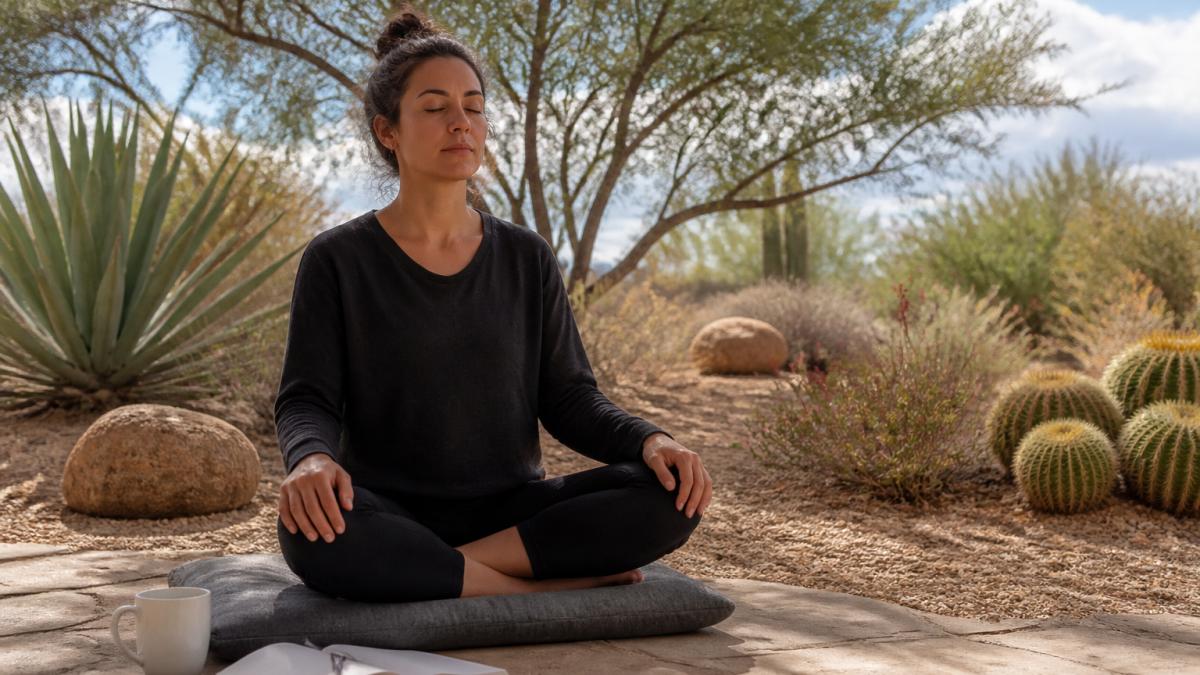
What surprises first-timers is how emotional the quiet can be.
What the Research Can and Cannot Tell You
Most of what you read about silent retreats online falls into three buckets, and it helps to know which one you are looking at before you book.
- Established findings. Meditation and mindfulness practices, in general, have a solid body of research behind them for reducing perceived stress and improving attention. The National Center for Complementary and Integrative Health overview of meditation and mindfulness summarizes this well and is honest that results vary by study design.
- Promising but limited findings. Research on multi-day silent retreats specifically is much thinner. Sample sizes tend to be small, participants are often self-selected, and few studies follow people past a few months. That does not make the reported benefits unreal. It means the evidence is not strong enough to promise a specific outcome for you.
- Personal testimony. Retreat centers, including ours, share guest stories because they are true and moving. They are not clinical evidence. Treat them as illustration, not proof.
A fair way to hold all of this: silent retreats are widely reported to help with stress, mood, and clarity, and the underlying practices have real research support, but no one can promise you a particular result.
How to Judge a Retreat Before You Book
Format and facilitation matter more than the marketing copy. Ask these questions of any program, including ours:
- Duration and intensity. How many hours of formal practice per day? Eight or more sitting hours is a very different experience from three.
- Level of guidance. Is a teacher available for private questions, or are you expected to self-direct the entire time?
- Facilitator qualifications. What training and clinical background does the lead teacher hold? For trauma-informed work, this matters enormously.
- Screening process. Does intake include a mental health history questionnaire and a real conversation, or is it a checkbox?
Practical Barriers and Alternatives
A multi-day residential retreat is not the only path, and it is not accessible to everyone. Cost, caregiving, work schedules, disability access, and language can all stand in the way. If a full retreat is out of reach, shorter and home-based options still deliver real benefit: Integrating brief periods of stillness into a demanding daily routine often requires the structured support found in virtual therapy options to help maintain mental clarity amid professional pressures.
- A single silent day at home, phone off, following a simple schedule
- A weekly two-hour silent sit with a local group
- A guided audio retreat spread across a weekend
- A one-day program at a nearby center instead of a week-long stay
What matters is consistency and structure, not the length of the stay. A well-held silent afternoon beats a poorly supported week.
Silent Retreat Rules: What You Can and Cannot Do
Silent retreat rules are consistent across most programs, and knowing them in advance removes a lot of anxiety: no talking, no screens, no reading or writing for entertainment, and no eye contact or gestures that invite interaction.
| Rule | What It Means in Practice |
|---|---|
| No speech | No talking, whispering, or mouthing words |
| No devices | Phones and laptops stay stored, not silenced |
| No reading or writing | No books, no journaling unless the program allows it |
| Limited eye contact | A soft downward gaze avoids silent conversations |
| Meals in silence | Eat slowly, no passing items or signaling |
| Ask staff if needed | Practical needs are always allowed |
Most retreats allow you to speak with teachers or staff about logistics, health, or a genuine difficulty. Confirm that exception before you arrive, a program with no way to raise a concern is a red flag.
How Long Should a Silent Retreat Be?
Three to five days is the sweet spot for most first-timers. A weekend can deliver real relief, while seven to ten days tends to produce deeper shifts, but only if you are ready for them.
Here is how length changes the experience:
- One to two days: a reset, useful for immediate stress relief
- Three to five days: enough time to move past restlessness into clarity
- Seven days or more: deeper self-reflection, better suited to experienced practitioners
- Custom lengths: some centers build programs from three to fourteen days
If your schedule only allows a long weekend, take it. What matters more than duration is arriving without an agenda and following the structure.
Matching Format to Your Situation
Duration is only one variable, format and support often matter more than the number of days. Use this to think through your own fit:
- First retreat, high stress, no meditation background. A two- to three-day program with a gentle schedule and a teacher available for questions. Do not start with a ten-day intensive.
- Established practice, seeking depth. A five- to seven-day sit with longer practice blocks and less hand-holding.
- Caregiver or tight work schedule. A one-day or weekend program, or a structured silent day at home. Consistency beats duration.
- History of trauma or anxiety. A trauma-informed program with a low practice-to-rest ratio, clear staff support, and an explicit option to step out of any session.
Questions to Ask Before You Choose a Program
- How many hours of formal silence per day, and how many are guided versus self-directed?
- Who leads the retreat, and what is their training and clinical background?
- What is the ratio of staff to participants, and how do you reach someone if you are struggling?
- Is there a screening process for mental health history, and what happens if a participant is in crisis?
Measuring Whether It Worked
You do not need a clinical study to know if a retreat helped. Rate your stress, mood, sleep quality, and focus on a one-to-ten scale the week before you go, then again at thirty and ninety days after, and note one or two specific changes, a shorter fuse, easier mornings, a clearer decision. Most people see the biggest gains hold when they keep some form of practice going afterward.
Preparing for a Silent Retreat: Screening, Contraindications, and Readiness
Preparing for a silent retreat means being honest about your mental health before you book, not after.
Talk with a licensed mental health professional first if you have active psychosis, untreated bipolar disorder, recent trauma, or a history of severe dissociation.
Practical readiness matters too:
- Taper caffeine for a week before you go to avoid withdrawal headaches
- Tell someone where you will be and how to reach you in an emergency
- Pack layers, comfortable clothing, and any medication you take
- Set an intention, not a goal, for the stay
The Substance Abuse and Mental Health Services Administration national helpline is a useful starting point if you are unsure whether a retreat is appropriate for where you are right now.
What to Do If Distress Arises During Your Retreat
Distress during a silent retreat is more common than most people expect, and it is not a sign of failure. Intense sadness, anxiety, irritability, and intrusive thoughts can all surface when the noise stops.
Here is what helps:
- Tell a teacher or staff member. This is always allowed, even in strict silence.
- Step outside the schedule. Walking, stretching, or sitting by water can settle a racing mind.
- Breathe slowly with a longer exhale. A simple four-count in, six-count out pattern calms the body.
- Reduce intensity. Skip a sitting block and rest instead. The retreat will still be there.
- Ask about leaving early. A good program will support this without shame.
What you should not do is white-knuckle through severe distress alone. Silence amplifies whatever is already there, and pushing through a genuine crisis is not brave, it is risky.
Making the Benefits Last: Aftercare and Integration
Aftercare is where most of the benefit is won or lost.
Try these steps in the first two weeks:
- Keep one daily silence block of ten to twenty minutes
- Protect one weekly longer sit or walk without your phone
- Write down the two or three insights you want to act on
- Change one thing in your daily routine that caused the stress
Measuring outcomes over time helps too. Our American Psychological Association resources on stress and its effects explain why chronic stress is worth addressing at the root rather than the surface.
If you want support keeping the thread going, our guided breathwork and meditation sessions are designed for exactly that.
The challenge with any retreat is that the quiet ends and daily life rushes back in.
Frequently Asked Questions
What are the benefits of going on a silent retreat?
Silent retreats give your mind a break from constant input, which many people find lowers stress levels and improves mental clarity. Research on meditation and mindfulness suggests benefits like reduced anxiety, better focus, and greater emotional wellbeing. The silence also creates space for self-reflection and self-awareness that daily life rarely allows.
Can a silent retreat help with stress or anxiety?
Many people report that silent retreats reduce stress and lower anxiety, largely because the format removes constant stimulation and encourages mindfulness practice. However, retreats are not a substitute for professional mental health treatment. If you have an anxiety disorder, PTSD, or a history of psychosis, talk with a licensed clinician before booking. Screening matters because intensive silence can surface difficult emotions, and a qualified facilitator should be able to support you if that happens.
How long should a first silent retreat be?
For a first silent retreat, a weekend or 3-day format is often the most comfortable starting point. Longer retreats of 5 to 10 days can offer deeper benefits, but they also require more mental preparation. The right length depends on your experience with meditation, your stress levels, and your schedule. If you are unsure, start shorter and build up, since adjusting to silence takes time and individual differences matter.
How can you prepare for a silent retreat?
Preparing for a silent retreat starts with honest self-assessment: check in with your mental health, review any medications, and speak with a therapist if you have concerns. Practice short periods of silence or daily meditation beforehand so the format feels familiar. Read the retreat schedule and rules in advance, arrange for aftercare and integration time when you return, and pack comfort items like a journal. Arriving rested and informed makes the experience smoother.