 ultimate-guide
How to Become a Yoga Teacher for Beginners
Table of Contents
- What Is a 200-Hour Yoga Teacher Training?
- Yoga Teacher Training Requirements You Need to Know
- How Long Is Yoga Teacher Training?
- Choosing the Right Yoga School for Your Path
- Core Curriculum: What You'll Study
- Cost of Yoga Teacher Training and Financing Options
- Getting Certified and Becoming an RYT-200
- Building Your Teaching Career After Certification
- Frequently Asked Questions
Last Updated: September 3, 2026
What Is a 200-Hour Yoga Teacher Training?
A 200-hour yoga teacher training (YTT) is a foundational certification program that prepares you to teach yoga classes professionally. It's the entry-level credential recognized by the Yoga Alliance, the primary accrediting body for yoga instruction in the United States (yogaalliance.org). This intensive program combines practical asana practice, pranayama techniques, yoga philosophy, anatomy, teaching methodology, and ethics into a comprehensive curriculum designed to transform you from a dedicated student into a qualified instructor.
Most programs deliver these hours over 4-12 weeks of intensive training or several months of part-time study. By the end, you'll have logged the necessary teaching methodology hours, completed your practicum experience, and earned your RYT-200 credential, which opens doors to teaching positions at studios, gyms, corporate wellness programs, and retreat centers.
Yoga Teacher Training Requirements You Need to Know
Most Registered Yoga Schools have minimal entry barriers, but a genuine yoga practice is essential. Schools typically expect you to have a personal asana practice for at least 6-12 months before starting. Teaching yoga without having experienced it yourself creates blind spots in your understanding of alignment, breath, and the emotional journey students take on the mat.
You'll need basic physical capability. Yoga teacher training is physically demanding, with hours of daily practice and demonstrations. If you have significant injuries or physical limitations, discuss them with the school before enrolling; many can accommodate modifications.
Mental and emotional readiness matters more than most realize. You're about to spend weeks exploring yoga philosophy, personal trauma, and spiritual concepts, which can bring up unexpected emotions. A willingness to examine your own beliefs, remain open to different yoga lineages, and commit to continuing education after certification separates instructors who thrive from those who struggle.
How Long Is Yoga Teacher Training?
The 200-hour requirement can be completed in different timeframes depending on your schedule and learning style. Intensive residential programs compress the 200 hours into a retreat with pre training like it is done at Blisstopia Institute of Blisstopia Retreats in Peoria, AZ Choose your training format based on your life situation, not just cost. Intensive programs work for people who can fully disconnect; part-time programs suit those balancing other commitments. The format doesn't determine quality, the school's curriculum and instructors do.
Choosing the Right Yoga School for Your Path
Not all 200-hour programs are created equal. A Registered Yoga School designation from the Yoga Alliance signals that the program meets baseline standards for curriculum, instructor qualifications, and continuing education.
Start by clarifying what you want to teach. Some schools emphasize vinyasa flow and dynamic sequencing; others focus on hatha fundamentals and alignment principles. Some integrate trauma-informed teaching; others emphasize spiritual philosophy or restorative yoga.
Instructor experience matters significantly. Look for teachers with 10+ years of personal practice and teaching experience, not just certification. At Blisstopia Institute of Blisstopia Retreats, the 200-hour and 300-hour yoga teacher training programs are led by experienced instructors grounded in both ancient yoga philosophy and modern teaching methodology, ensuring you learn from practitioners with deep roots in the tradition.
Class size affects your learning. Small cohorts of 12-20 students allow personalized feedback on your teaching practice and alignment adjustments. Location and environment shape your experience in ways you might not anticipate. An intensive program in a serene retreat setting creates different learning conditions than one in an urban studio.
Finally, ask about post-certification support. Does the school offer mentorship? Are there continuing education credits available? What's the alumni community like? The best schools support your transition into teaching.
Core Curriculum: What You'll Study
Asana Practice and Alignment Principles
Your asana practice forms the foundation of everything you'll teach. During training, you'll refine your own practice while learning how to teach it safely to others. This means understanding alignment principles deeply, not just knowing that your shoulders should stack over your wrists in downward dog, but understanding why and how to cue students toward better alignment without causing injury.
You'll study anatomy as it applies to asana. Which joints move in which directions? How do hip socket differences affect poses like pigeon or warrior one? This isn't abstract; you're learning to see your students' bodies clearly and offer modifications that work for their actual structure.
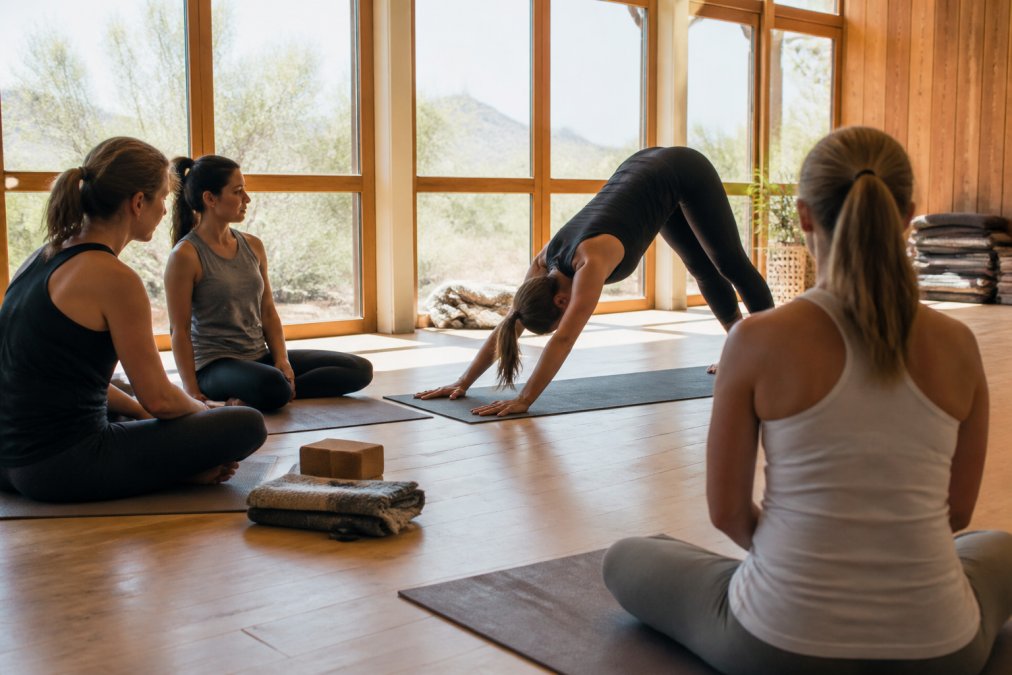
Sequencing becomes a skill you develop intentionally. You'll learn how to structure a class so that earlier poses prepare the body for deeper work later. Teaching cueing techniques is crucial. How do you guide a student into better alignment using words alone? When should you use demonstrations versus verbal cues? Your practicum gives you the chance to teach real students and receive feedback on your cueing effectiveness.
Pranayama, Yoga Philosophy, and Ethics
Pranayama, breath work, is foundational to yoga practice. You'll learn different pranayama techniques: ujjayi breath for building internal heat, nadi shodhana for balancing the nervous system, kapalabhati for energizing. More importantly, you'll understand the physiology behind each technique and when to teach which pranayama to different students.
Yoga philosophy connects the physical practice to something deeper. You'll study the Yoga Sutras of Patanjali, which define yoga as "the cessation of the fluctuations of the mind." You'll explore the eight limbs of yoga, asana and pranayama are just two of eight. The other six include yama and niyama (ethical principles), pratyahara (sense withdrawal), dharana (concentration), dhyana (meditation), and samadhi (enlightenment). yoga apparel guide.
Yoga ethics, yama and niyama, form the moral foundation of practice. Yama includes non-violence, truthfulness, non-stealing, energy management, and non-attachment. Niyama includes purity, contentment, discipline, self-study, and surrender. These shape how you interact with students and build a teaching practice rooted in integrity.
Human Anatomy and Physiology
You need functional anatomy knowledge. You'll study the skeletal system, how bones connect, where joints can move, and what limits movement. You'll learn muscle groups and their actions. When a student can't touch their toes, is it tight hamstrings, limited hip flexion, or a mobility issue in the spine? The answer changes how you approach teaching them.
You'll study the nervous system and how yoga affects it. The parasympathetic nervous system is activated by slow breathing and restorative poses, triggering the relaxation response (peer-reviewed research). The sympathetic nervous system activates during intense practice or stress. Understanding this helps you design classes that meet students' needs.
Common injuries and contraindications matter. Which poses are problematic for people with low back pain, neck issues, or shoulder impingement? How do you modify class sequences for pregnant students, older adults, or people recovering from surgery?
Cost of Yoga Teacher Training and Financing Options
Yoga teacher training represents a significant investment. Program costs vary based on format, location, duration, and school reputation. Residential intensive programs typically cost more than part-time local programs, though the difference isn't always dramatic.
Many schools offer payment plans that spread costs across months, making training more accessible. Some offer early-bird discounts if you register several months in advance. A few schools work with financing companies that offer low-interest loans specifically for education and professional development.
Scholarships and grants exist but are less common in yoga than in other fields. Some schools reserve spots for scholarship recipients, often based on financial need or demonstrated commitment to yoga.
Tax deductions may apply if you're pursuing yoga teaching as a business. Consult a tax professional, but many training costs are deductible as professional development.
At Blisstopia Retreats, we offer customizable retreat-based yoga teacher training that combines professional instruction with the transformative environment of our sanctuary. The all-inclusive setting means you're not juggling accommodation costs separately, and the intimate group size ensures personalized attention. For current pricing and financing options, contact us at 623-986-2899.
Getting Certified and Becoming an RYT-200
After completing your 200-hour training, you're eligible to register as an RYT-200 with the Yoga Alliance. This registration is optional, but it carries significant professional weight. The RYT-200 credential signals to employers and students that you've completed standardized training from a Registered Yoga School.
The registration process is straightforward. You provide proof of completion from your school, pay a registration fee, and submit your application. The Yoga Alliance maintains a public registry, so your credentials are verifiable.
YACEP (Yoga Alliance Continuing Education Provider) credits become relevant once you're registered. Maintaining your RYT status requires completing 30 continuing education hours every three years (yogaalliance.org). This ongoing learning requirement keeps you current and prevents stagnation in your teaching.
Professional liability insurance becomes important once you start teaching. This protects you if a student is injured in your class and claims you were negligent. Most studios require instructors to carry liability insurance.
Building Your Teaching Career After Certification
Getting certified is one thing; building a sustainable teaching career is another. This is where many new teachers struggle. You have credentials but no students, no reputation, and no clear path forward.
Start by clarifying your teaching vision. Do you want to work at a yoga studio, teach corporate wellness classes, offer private sessions, or build an online teaching business? Each path has different requirements and income potential. Studio teaching typically pays less per hour but provides steady work. Corporate wellness pays better but requires sales skills. Private sessions offer flexibility and higher rates but require you to find and retain clients.
Building your student base takes time. Most new teachers spend their first 6-12 months building classes, offering free or low-cost sessions to generate testimonials and word-of-mouth referrals. Your teaching practice improves through repetition and feedback. Ask experienced teachers to observe your classes and offer constructive criticism.
Business skills matter as much as teaching skills. You need to understand pricing, marketing, scheduling, and client communication. Many yoga teachers undercharge because they undervalue their expertise. Research what experienced teachers in your area charge, then price accordingly.
The most successful teachers specialize. Rather than offering generic yoga classes, they develop expertise in a niche, yoga for runners, yoga for anxiety, yoga for back pain, restorative yoga for stress management. Specialization makes you memorable, allows you to charge premium rates, and creates a distinct professional identity.
Professional development continues throughout your career. Attend workshops, take advanced trainings, read yoga philosophy, and deepen your personal practice. The teachers students remember are those who continue learning and growing.
Building a teaching career from certification requires patience, strategy, and genuine commitment to your students' growth. The credential opens doors, but your skill, integrity, and dedication determine whether you thrive as a teacher. If you're ready to deepen your yoga practice and training in a transformative environment, Blisstopia Retreats offers comprehensive 200-hour and advanced yoga teacher training programs designed for serious practitioners. Our experienced instructors, intimate group settings, and sanctuary location create ideal conditions for becoming the teacher you envision. Contact us at 623-986-2899 to explore how we can support your journey to become a yoga instructor.
Frequently Asked Questions
How long does it take to become a yoga teacher?
A standard RYT-200 yoga teacher training typically takes 3-6 months of full-time study or 6-12 months part-time, depending on the school's schedule. Some intensive programs compress the 200 hours into 3-4 weeks, while others spread them across a year of weekend and weekday classes. After certification, many instructors pursue advanced training to deepen their teaching methodology and specialization.
What are the main yoga teacher training requirements?
You need to complete 200 contact hours with a Registered Yoga School. Requirements include asana practice, pranayama, yoga philosophy and history, anatomy and physiology, teaching methodology, practicum experience, and yoga ethics. Most schools require you to be at least 18 years old and have some personal yoga practice before enrolling, though prior teaching experience is not necessary.
How much does yoga teacher training cost?
The cost of yoga teacher training varies widely based on format, location, duration, and school reputation. Pricing depends on whether you choose in-person or online training, the duration, and the school's experience level. Contact schools directly for current pricing and inquire about payment plans or scholarships, as many offer financing options to make training more accessible.
Can I become a yoga instructor with no experience?
Yes. While most RYT-200 programs recommend some personal yoga practice before enrolling, you don't need teaching experience or an extensive background. Many beginners start their journey with a few months of regular yoga classes to build familiarity with poses and terminology, then enroll in teacher training. Your dedication and willingness to learn matter more than prior experience.
This article was written using GrandRanker