 ultimate-guide
Luxury Spa and Hotel vs Wellness Retreat
Table of Contents
- What a Luxury Spa and Hotel Stay Actually Delivers
- Wellness Retreat vs Luxury Hotel: Where the Experiences Diverge
- How to Vet a Wellness Retreat Provider Before You Book
- Matching the Stay to Your Goal: Burnout, Grief, or Reconnection
- Why a Desert Sanctuary Changes the Equation
- What to Do After the Treatment Ends
- Choosing What Actually Restores You
- Frequently Asked Questions
Last Updated: September 27, 2026
What a Luxury Spa and Hotel Stay Actually Delivers
A luxury spa and hotel stay delivers polished hospitality: a signature treatment, a beautiful room, and service designed around comfort. This guide from Blisstopia Retreats examines where that model excels and where it stops short. The distinction matters because the two formats solve different problems.
A luxury spa and hotel is built for restoration of the body and a reset of the mood. You check in, choose from a treatment menu, and move through spaces designed for pleasure: a relaxation lounge, a steam room, a Himalayan salt room, an aquatic world with hydrotherapy pools. The setting is resort-style, the pace is yours, and the staff anticipate needs before you voice them.
What it rarely includes is programming aimed at change.
Signature Treatments and Amenities You Can Expect
The typical luxury spa and hotel experience centers on a curated treatment menu. Expect therapeutic massage, facials and skincare regimens, body wraps, aromatherapy, and add-ons like manicure and pedicure services. Facilities usually include a steam room, sauna, hydrotherapy circuit, and a quiet relaxation lounge.
Wellness amenities often extend to fitness centers, pools, and occasionally a Himalayan salt room or cold plunge. Some properties now offer wellness programming such as sunrise yoga or guided meditation, though attendance is optional and rarely integrated into a larger arc. The guest experience is defined by luxury amenities and exclusive access, not by a plan for your growth.
Wellness Retreat vs Luxury Hotel: Where the Experiences Diverge
The wellness retreat vs luxury hotel comparison comes down to intention. A hotel sells you access to amenities. A retreat sells you a structured process with a beginning, a middle, and an end.
At a hotel, you decide what each day holds. At a retreat, the day is designed for you: morning breathwork, a sound bath, an afternoon session, an evening circle. That structure is the product. It removes the decision fatigue that follows burnout and replaces it with a rhythm that carries you.
| Factor | Luxury Spa and Hotel | Wellness Retreat |
|---|---|---|
| Core promise | Comfort and restoration | Transformation and clarity |
| Daily structure | Self-directed | Facilitator-led programming |
| Group size | Large, anonymous | Small, high-touch |
| Duration of effect | Days | Months |
| Best for | Stress relief, celebration | Burnout, grief, reconnection |
Programming, Pace, and Personalization
Programming is where the gap widens. A hotel may publish a schedule of classes, but no one tracks whether you attend or adapts the plan when you struggle. A retreat with a wellness concierge approach does the opposite: facilitators read the room, adjust sequencing, and hold space for what surfaces. This personalized attention ensures that the journey remains grounded in intentional growth, often incorporating various holistic wellness alternatives to deepen the connection between physical movement and internal state.
Pace matters just as much. Hotels optimize for turnover and volume. Retreats optimize for depth, which is why small groups and on-site caretakers change the felt experience. Personalization is not a marketing word here; it is the difference between a massage that feels good and a week that reorders your priorities.
How to Vet a Wellness Retreat Provider Before You Book
Learning how to vet a wellness retreat provider protects both your money and your emotional safety. Ask direct questions and expect specific answers, not brochures.
- Who facilitates the sessions, and what are their credentials?
- What is the maximum group size, and is it capped?
- Are meals included, and can they accommodate dietary needs?
- Do caretakers live on-site during the program?
- What is the refund and cancellation policy in writing?
- Can they share references from past guests?
- Is the property owned or subcontracted?
That last question reveals more than any testimonial. A provider that owns its facility controls the environment, the schedule, and the quality of every meal. A provider that rents space inherits whatever the venue decides to prioritize.
Matching the Stay to Your Goal: Burnout, Grief, or Reconnection
Most spa guides stop at the property list. They do not help you decide which format actually fits what you are carrying, and that is the decision that determines whether the stay helps or just feels expensive. Matching the stay to your goal is the single highest-use choice you will make, so it is worth doing deliberately.
Start by naming the goal in one sentence. "I am exhausted and cannot think straight" is a different problem from "I lost someone and cannot talk about it" and different again from "my partner and I have not really talked in a year." Each one calls for a different structure, group size, and pace.
Burnout. The signature of burnout is a nervous system stuck in a low-grade alarm state. Sleep is shallow, decisions feel heavy, and rest does not restore. For this, choose a longer, structured retreat with nervous system work at the center: guided breathwork, restorative and Yin yoga, sound healing, and long stretches of quiet. A weekend spa getaway will not touch career-level exhaustion because two days is not enough time for the body to downshift. Look for a program of at least four to five days, a capped group, and facilitators who live on-site. The presence of on-site leadership matters more here than anywhere else, because burnout often surfaces emotionally once the pace drops.
Grief. Grief needs witness and time, not distraction. Smaller groups are essential, a group of six to twelve holds space; a group of thirty does not. Look for facilitators trained in emotional release work, and ask directly how the program handles a guest who becomes overwhelmed mid-session. A good answer describes a specific protocol: a quiet room, a one-on-one check-in, an option to step out without shame. A vague answer is a warning. Avoid programs that promise to "clear" grief; healthy grief work makes room for it rather than removing it.
Reconnection. Whether the goal is reconnecting with a partner or with yourself, the requirement is the same: remove distraction and build in shared practice. Couples' formats work best when they pair structured communication exercises with something physical, breathwork, a sound bath, a slow morning practice, because shared nervous system regulation does more for closeness than conversation alone. For solo reconnection, look for a setting with real solitude available, not just a quiet room in a busy building.
A short stay can still work.
Once you know your goal, you can build a simple three-day arc around it. A common pattern that works across all three goals looks like this:
- Day one, arrive and downshift. Travel, settle in, eat something nourishing, and do one gentle practice: a slow walk, a restorative class, or ten minutes of breathwork. Do not schedule a deep session on arrival day; the body is still in transit mode.
- Day two, go deep. This is the day for the intensive work: the long breathwork session, the grief circle, the couples' workshop, the sound bath. Keep the rest of the day light and protect the evening for rest.
- Day three, integrate and prepare to leave. Revisit what surfaced, choose one practice to take home, and write down the two or three things you noticed. Leaving with a single sustainable practice beats leaving with five you will abandon by Thursday.
Why a Desert Sanctuary Changes the Equation
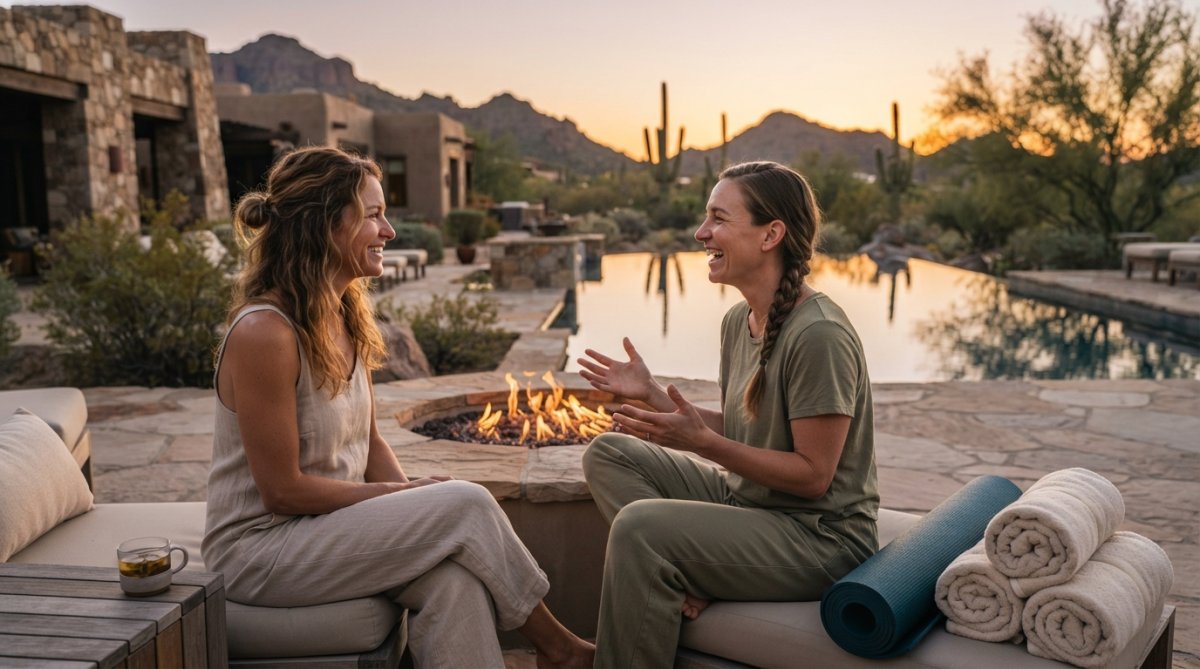
Setting does quiet work that no treatment room can replicate. A desert sanctuary removes the noise that keeps you in performance mode: traffic, notifications, the low hum of other people's expectations.
What to Do After the Treatment Ends
Post-treatment recovery advice is where most spa experiences quietly fail. You leave relaxed, then return to the same inputs and lose the benefit within a week.
Choosing What Actually Restores You
A luxury spa and hotel is the right answer when you need rest, celebration, or a beautiful pause. It is the wrong answer when you need to change something.
Frequently Asked Questions
What is the difference between a luxury spa hotel and a wellness retreat?
A luxury spa and hotel stay centers on comfort: a signature treatment, a relaxation lounge, a steam room, and a menu of facials or a pedicure you book between meals. A wellness retreat centers on a goal, with structured programming like breathwork, meditation, sound baths, and counseling woven through the day. The spa delivers a pleasant pause; the retreat is built to change how you feel weeks later.
How do I vet a wellness retreat provider before I commit?
Ask who leads the sessions and what their credentials are, how many guests attend, and whether facilitators live on site. Request a real treatment menu and daily schedule, not just photos. Confirm the refund and cancellation terms in writing, and ask for contact details of past guests. A provider with nothing to hide answers all of it quickly.
Is a short wellness retreat worth it if I only have a long weekend?
Yes, if the programming is dense. A focused three-day stay with morning breathwork, an afternoon sound bath, and one deep counseling session can move more than a week of unstructured lounging. What matters is whether the provider builds a real arc into the shorter format rather than trimming a longer program down to filler.
What should I do after a spa treatment or retreat ends?
Protect the gains. Drink water, skip alcohol for a day or two, and keep the sleep schedule you built. Journal for ten minutes on what surfaced, and schedule one follow-up practice, like a weekly breathwork session, within seven days. Guests who plan a single reconnection point after returning home report the calm lasting far longer than those who jump straight back into a full calendar.