 ultimate-guide
Benefits of Private Wellness Retreats: A 2026 Guide
Last Updated: October 22, 2026
Quick Summary
Private wellness retreats concentrate one-to-one facilitation on a single guest or small group, with a schedule that bends around your needs instead of a fixed program. They suit people in acute transition such as burnout, grief, or a major decision, because attention stays on one nervous system and one set of goals.
- Private retreats remove shared dining schedules, strangers' alarms, and the obligation to be pleasant at breakfast.
- If you have serious burnout, give yourself at least five days rather than a long weekend.
- Compare quotes by cost per facilitated hour, not by headline price per night.
- Ask which facilitator leads each session and how many guests share them before paying a deposit.
- Guests who leave transformed arrive with a clear intention and build a plan for the week after.
Table of Contents
- What Makes Private Wellness Retreats Different
- Private Retreat vs Group Retreat: Which Fits Your Goals
- The Core Benefits of a Private Wellness Retreat
- How to Choose a Wellness Retreat That Actually Delivers
- Questions to Ask Before Booking a Retreat
- Wellness Retreat Duration: How Long Do You Need?
- Costs, Inclusions, and What Value Really Looks Like
- Realistic Outcomes and Making the Benefits Last
- Frequently Asked Questions
What Makes Private Wellness Retreats Different
Private wellness retreats are hosted experiences where one guest or one small group holds the entire property, schedule, and facilitation team, rather than sharing a program with strangers. The distinction sounds small.
At Blisstopia Retreats, we have watched this play out for five years on our 2.5 secluded acres at the base of Sunrise Mountain. When a guest books a private stay, the schedule bends around them: breathwork moves if grief surfaces, the sound bath runs long if the body needs it, and no one performs calm for a room of twenty.
The core difference is attention. Group retreats spread a facilitator across many people. Private retreats concentrate that attention on one nervous system, one story, one set of goals.
Private Retreat vs Group Retreat: Which Fits Your Goals
Private retreats suit people in acute transition: burnout, grief, a career decision, a relationship at a crossroads. Group retreats suit people who want low cost, shared energy, and the social lift of a cohort.
Here is the honest comparison:
| Factor | Private Retreat | Group Retreat |
|---|---|---|
| Attention per guest | High, one-to-one facilitation | Shared across the cohort |
| Schedule flexibility | Fully customized | Fixed program |
| Cost per person | Higher | Lower |
| Social dynamic | Solitude or your own people | Built-in community |
| Best for | Burnout, grief, major decisions | First-timers, budget, connection |
Neither is superior. The mistake we see most often is someone in deep burnout booking a large group retreat because it costs less, then spending the week managing social anxiety instead of resting.
The Core Benefits of a Private Wellness Retreat
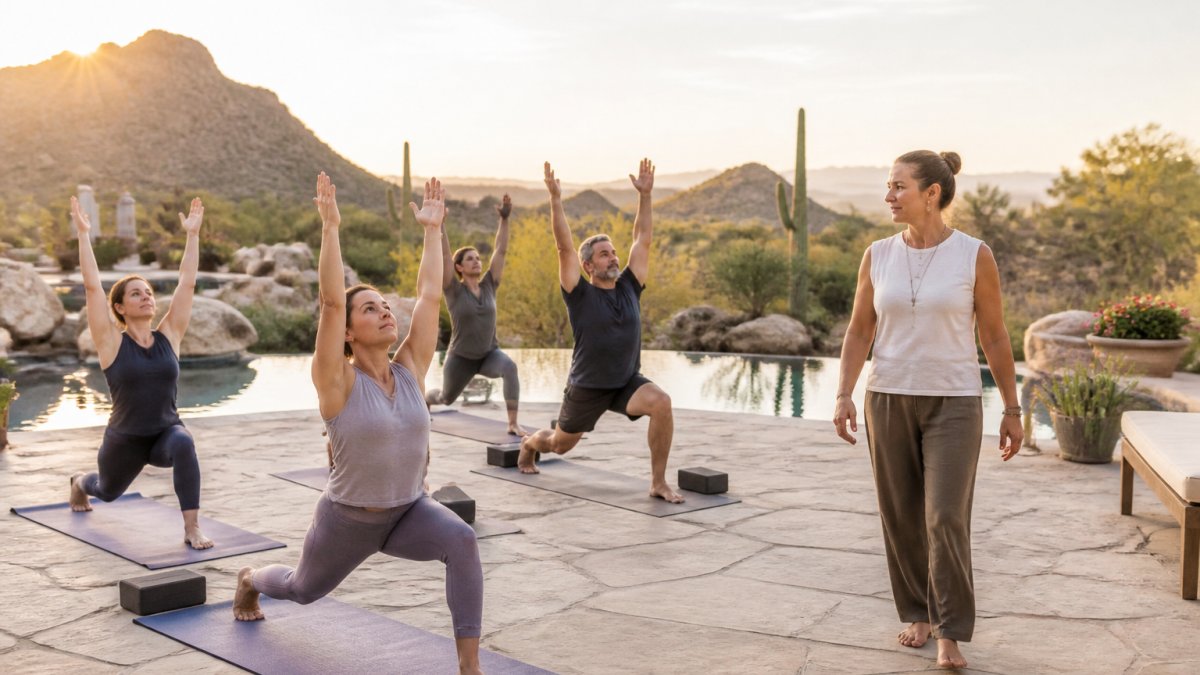
The benefits stack in a specific order: first decompression, then clarity, then the physical work of restoring the body. Skip the first step and the other two never land.
Stress Reduction, Rest, and a Real Reset
Rest is not the same as sleep. A real reset requires removing the inputs that keep your nervous system braced: notifications, commutes, decisions, the low hum of other people's needs.
Private retreats remove those inputs by design: no shared dining schedule, no stranger's 5 a.m. alarm, no obligation to be pleasant at breakfast.
Stress reduction at this depth comes from sustained removal, not from a single massage. Three days of quiet does more than three separate afternoons of quiet.
Self-Reflection, Mindfulness, and Mental Clarity
Clarity arrives after the noise stops. Mindfulness, meditation, and structured self-reflection give the mind a container for what surfaces once distraction is gone.
This is where private retreats outperform group formats. A guided journaling session in a room of twenty invites performance.
The outcome guests describe most often is not euphoria. It is a plain, steady sense of knowing what to do next.
Yoga, Breathwork, and Holistic Healing for Body and Mind
Holistic healing treats the body and mind as one system (Whole Person Health: What It Is and Why It's Important). Yoga restores movement and circulation, breathwork regulates the nervous system, sound healing and energy work settle the mind, and nutritional support rebuilds the physical foundation.
Our retreats blend guided breathwork, sound bath healing, meditation, cacao ceremony, cold plunge, and organic meals. Guests can add yoga classes and Reiki and energy work to any stay. None of these is a cure.
How to Choose a Wellness Retreat That Actually Delivers
Choosing well comes down to four checks: who runs it, who else will be there, what is included, and whether the philosophy fits you. Most people check price first. We would check the humans first.
Ask about the facilitators' backgrounds.
Then ask about group size, inclusions, and whether the property is owner-operated. A retreat run by people who live on-site feels different from one run by rotating staff.
Questions to Ask Before Booking a Retreat
Ask these before you pay a deposit. The answers tell you more than any brochure.
- Who facilitates each session, and what are their credentials?
- What is the maximum group size?
- Are meals, lodging, and all sessions included in the quoted rate?
- What is the cancellation and refund policy?
- Is the property owner-operated or staffed by contractors?
- What is the daily schedule, and how much free time is built in?
- What happens if a session brings up something difficult emotionally?
- Is there Wi-Fi, and is a digital detox encouraged or required?
- What is the refund policy if the retreat is canceled by the host?
- Can you speak with a past guest?
Wellness Retreat Duration: How Long Do You Need?
Wellness retreat duration should match the depth of what you are working through. A weekend handles fatigue. A week handles burnout. Longer stays handle life transitions.
Here is how we think about it:
| Length | Best For | What to Expect |
|---|---|---|
| 2-3 days | Fatigue, quick reset | Decompression begins, light clarity |
| 4-5 days | Burnout, stress | Nervous system settles, reflection deepens |
| 7+ days | Major transitions, grief | Full reset, integration work begins |
We custom-build retreats from 3 to 14 days for exactly this reason. A long weekend can genuinely help, but only if the schedule is tight and intentional. If you have serious burnout, give yourself at least five days.
Costs, Inclusions, and What Value Really Looks Like
Most retreat articles say a private retreat costs more and stop there. The honest way to judge value is to break a quote into its parts, price each against what you would pay separately at home, then ask what the private format adds on top.
The Four Cost Buckets
Every retreat quote, private or group, is really four numbers stacked together:
- Lodging. A private property means you are effectively renting the whole venue, not one room. That is the single biggest reason private retreats cost more per person, you are covering space no one else is using.
- Food. Organic, chef-prepared meals three times a day plus snacks add real cost. Ask whether alcohol, specialty coffees, and between-session snacks are included or billed separately.
- Facilitation. This is where quotes diverge most. A single facilitator running everything costs less than a team of specialists, a psychotherapist, a breathwork coach, a sound healer, a yoga teacher, each leading their own sessions.
- Add-ons. Massage, energy work, private sessions, excursions, and airport transfers are frequently excluded from the headline rate. Ask for the add-on menu in writing before you compare two quotes.
A Comparison Method That Actually Works
Do not compare headline numbers. Compare cost per facilitated hour.
Take the total quote, subtract anything you would not use, then divide by hours of actual facilitated programming, not meals, free time, or sleep. A retreat that looks expensive per night may be cheaper per facilitated hour than a budget option padded with unstructured time. Run the same math on a group retreat and the private premium usually narrows to the cost of exclusivity itself.
What a Complete Quote Should List
Ask any host to confirm, in writing, whether each of these is included:
- All lodging nights, with the specific room or building named
- All meals and non-alcoholic beverages, with dietary accommodations confirmed
- Every scheduled session, with the facilitator named per session
If a host cannot produce that list, that is your answer about how the week will be run.
Where the Private Premium Goes
At Blisstopia, every retreat, class, training, and rental includes curated accommodations, meals, and expert-led sessions, and because we own our facility we keep the private premium focused on attention and space rather than overhead. We do not publish rates online; reach out and our team will walk you through current offerings and exactly what each includes, line by line, so you can run the comparison above before you commit.
The Value Test
Value comes down to three questions: Is the group small enough that facilitation is genuinely personal? Are the facilitators qualified for the specific work you are doing, grief, burnout, transition? Is the property cared for by people who live there? Get three yeses and the rate is usually fair. Get two and you are paying for scenery.
Realistic Outcomes and Making the Benefits Last
Retreat marketing tends toward the miraculous. The useful version is more durable: a retreat creates conditions for change, and what you do in the weeks after determines whether the change holds.
What the Evidence Supports, and What It Doesn't
Research on meditation, yoga, breathwork, and time in nature generally supports modest, real improvements in perceived stress, mood, and sleep quality for many people (pubmed.ncbi.nlm.nih.gov). What it does not support is the idea that a single week cures a clinical condition.
Practitioners commonly describe a lift in the first two to four weeks after a retreat, followed by a gradual return toward baseline if nothing changes at home. That return is not failure; it is the signal that integration, not the retreat itself, is the real work.
Who Benefits Most, and Who Should Take Precautions
Private retreats tend to serve these guests best:
- People in acute transition, burnout, grief, divorce, a career decision, who need attention concentrated on one situation.
- People who find group settings draining, introverts, caregivers, anyone who spends their working life managing others.
- Couples rebuilding communication in a setting with no audience.
Take extra care, and speak with your clinician first, if you:
- Are in active treatment for a mental health condition
- Have a history of trauma that intense breathwork or ceremony could destabilize
- Are pregnant, or managing cardiovascular or respiratory conditions
A good host will ask these questions before you book. Ours do.
The Integration Plan: The Week After Matters More Than the Week Itself
Guests who leave transformed usually did three things: arrived with a clear intention, engaged honestly with the difficult sessions, and built a plan for the week after. That last part matters most.
A workable integration plan is small and specific:
- One daily practice, a breathwork sequence, a ten-minute meditation, a short yoga flow, chosen before you leave, not after.
- One boundary, a single commitment about your time, your phone, or a relationship you intend to change.
- One check-in, a scheduled call with a friend, therapist, or coach two weeks out, so the retreat does not quietly become a memory.
We help guests leave with exactly this kind of plan and stay available afterward, because the point of the week is the months that follow it.
If you are ready to stop managing your exhaustion and start rebuilding from the inside out, we would love to host you. Call us at 623-986-2899 or explore our transformational wellness retreats to find the stay that fits where you are right now.
Frequently Asked Questions
How is a private wellness retreat different from a group retreat?
A private wellness retreat is built around a smaller, more controlled group, often with the option of solo or couples-only stays, so the schedule, therapies, and pace can be adjusted to individual needs. Group retreats usually run larger cohorts on a fixed itinerary. Smaller private retreats tend to offer more one-on-one attention, quieter spaces, and a tailored experience, while large group retreats may be lower cost but less flexible. Ask any host how many guests share the property and how much customization is possible before you book.
How long should a wellness retreat last?
Wellness retreat duration depends on your goals and schedule. A long weekend of three to four days can deliver real rest, a change of scenery, and a reset from routine. Five to seven days gives more room for deeper self-reflection, mindfulness practice, and habit change to take hold. Longer stays suit people working through burnout or major transitions. Many private retreats, including those at Blisstopia Retreats, customize stays from three to 14 days, so match the length to how much time you can fully step away.
What should I ask before booking a retreat?
Ask who leads the sessions and what their credentials are, how many guests will be present, and what is included in the rate such as meals, lodging, and therapies. Confirm the cancellation policy, whether the property is private or shared, and how much of the program is optional. If you have health concerns, ask about accessibility and any precautions around intense practices like breathwork or cold plunge. Clear answers to these questions are a good sign the host runs an honest, well-organized retreat.
Can a wellness retreat support stress relief and personal growth?
A private wellness retreat can support stress reduction and personal growth by removing daily triggers, adding rest, and giving you structured time for mindfulness, meditation, yoga, and self-reflection. Many guests report improved self-awareness and a clearer mindset after a stay. Results vary by person, and a retreat is best treated as a strong starting point rather than a cure. Pairing it with small, consistent habits afterward, like a short daily practice, is what turns a good week into lasting change.