 How-to
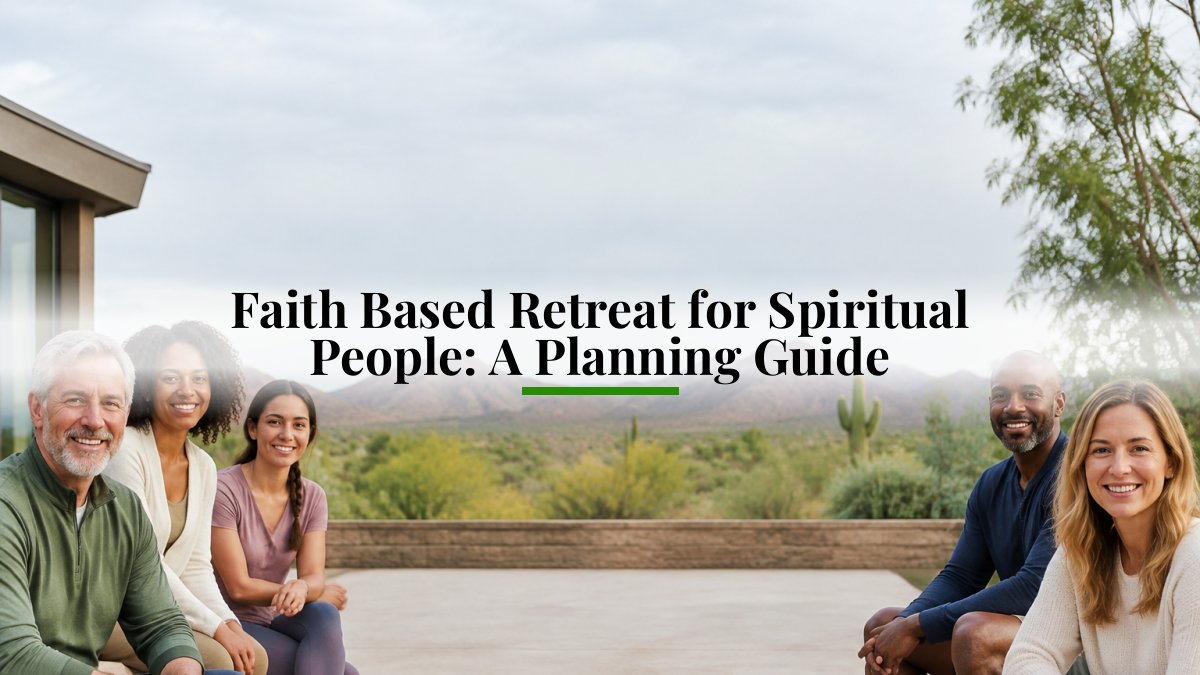
Faith Based Retreat for Spiritual People: A Planning Guide
Last Updated: November 12, 2026
Quick Summary
A faith based retreat gives spiritual people a set stretch of time away from daily routines to focus on prayer, reflection, and renewal. Blisstopia Retreats hosts these experiences at its Sonoran Desert sanctuary near Peoria, Arizona, with a focus on quiet time, guided practice, and honest reflection rather than a packed schedule.
- Blisstopia builds retreats from 3 to 14 days so guests can match length to their availability.
- The first day is usually spent settling in, so shorter stays leave less time for retreat work.
- Choose one book, psalm, or theme for the stay and return to it several times.
- Confirm whether a retreat is Christian-centered, inclusive, or multi-traditional before booking.
- Plan a day or two after returning home to rest and integrate the experience.
Table of Contents
- What a Faith Based Retreat Offers Spiritual People
- Christian Retreats for Individuals Seeking Renewal
- Christian Retreat for Adults: Choosing a Format That Fits
- Spiritual Retreat Activities and a Sample Daily Schedule
- How to Prepare for a Spiritual Retreat
- Questions to Ask Before You Book a Faith Based Retreat
- Booking Your Next Step With Blisstopia Retreats
- Frequently Asked Questions
What a Faith Based Retreat Offers Spiritual People
A faith based retreat gives spiritual people a set stretch of time away from daily routines to focus on prayer, reflection, and renewal.
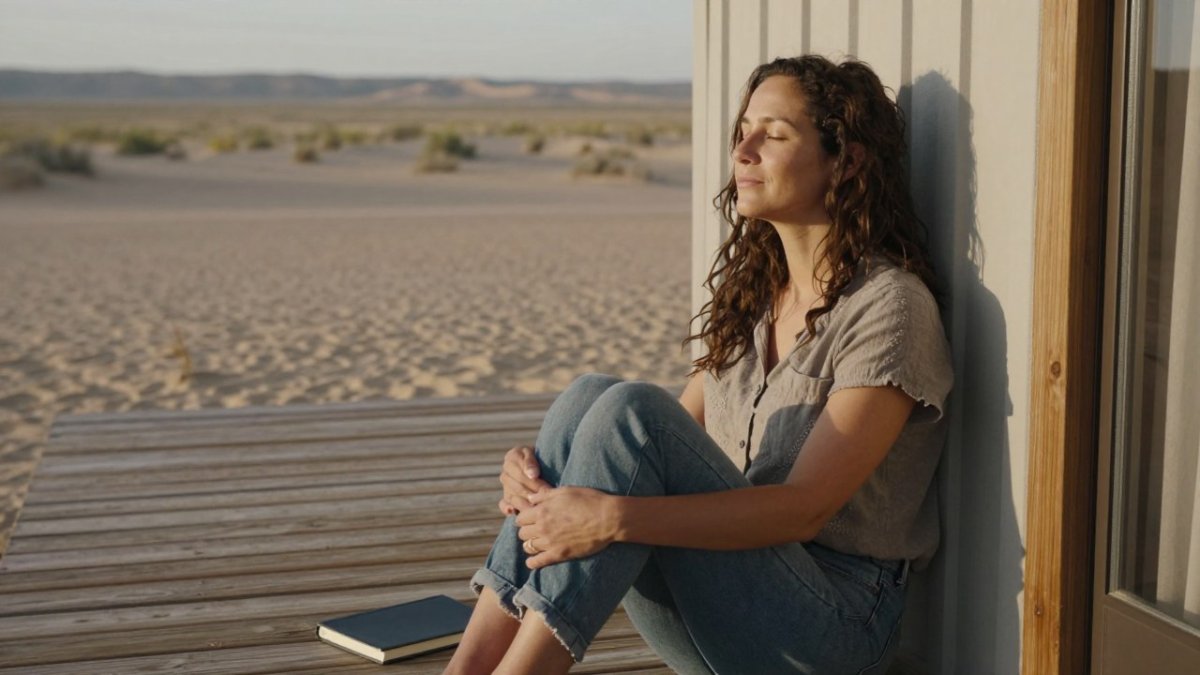
Many people arrive spiritually dry, after a season of loss, a career change, or simple exhaustion. A well-planned retreat gives them room to notice what they are carrying and what they want to set down.
Here is what a retreat with our approach offers:
- Protected time for prayer and meditation
- Solitude and quiet in a peaceful, natural setting
- Guided practices such as breathwork, sound healing, and meditation
Pew Research Center's religion and spirituality research has documented that many Americans describe themselves as spiritual without belonging to a formal congregation, which is one reason retreats with an open, inclusive approach are growing in demand.
Christian Retreats for Individuals Seeking Renewal
Christian retreats for individuals focus on renewing faith through prayer, worship, and time with God.
Renewal usually comes slowly. Readers weighing the advantages of quiet, contemplative stays can learn more about the benefits of Catholic silent retreats. Participants often describe the first day as restless, the mind still busy with work and obligations.
At our sanctuary, we blend faith-centered intention with wellness practices so people can approach renewal from both a spiritual and physical side.
Prayer, Worship and Scripture Study
Prayer and scripture study form the core of most Christian retreats. A retreat gives people unhurried time to read a passage, sit with it, and let it speak to their situation.
Worship at a retreat can take many forms, including silent prayer and contemplative practice.
A common mistake is trying to cover too much scripture in one visit. For practical preparation before a silent retreat, see the steps in a dedicated guide.
Solitude, Silence and Reflection
Solitude and silence are often the most challenging and most valuable parts of a retreat. Many people have not sat quietly with their own thoughts in years. At first, silence can feel uncomfortable; over time, it often becomes the place where people recognize what they have been avoiding and begin to hear God more clearly.
Reflection works best when it is supported. Journaling prompts, short guided pauses, and time outdoors help people process what surfaces.
Christian Retreat for Adults: Choosing a Format That Fits
Not every adult needs the same kind of retreat. Some want a weekend of quiet and rest. Others want a longer, structured program with teaching, group discussion, and guided practice. Choosing the right format begins with an honest look at your current season of life, your schedule, and what you hope to leave with.
This section starts with what you need, then matches the format to it.
Start With Your Season, Not the Brochure
Ask yourself three questions before you compare any listings:
- What am I carrying right now? Grief, burnout, a major transition, and simple fatigue call for different levels of structure. Grief and burnout usually need more support and open time; a transition often benefits from guided reflection and teaching.
- How much structure can I actually tolerate? Some people relax into a full daily schedule; others shut down when every hour is assigned. Be honest about which one you are.
- What do I want to leave with? Rest, clarity, a decision, a restored relationship, or a new practice are five different goals that point to different formats.
Match the Format to the Goal
| Format | Best For | Typical Pace | What to Confirm Before Booking |
|---|---|---|---|
| Silent or solitary stay | Rest, prayer, personal reflection | Slow, self-directed | Whether meals are provided and whether anyone is on site for support |
| Guided group retreat | Teaching, shared worship, community | Structured daily schedule | Group size, facilitator background, and how much free time is built in |
| Short weekend or day retreat | Busy adults with limited time | Focused, condensed | Whether one day is enough to settle in, or whether you will leave still restless |
| Multi-day immersion | Deep transformation, major life transitions | Full, with time for integration | Whether integration support continues after you return home |
| Couples or men's/women's themed retreat | Relationship work or gender-specific healing | Varies by theme | Whether the theme matches your actual situation, not just your demographic |
First-time retreat guests often overbook themselves. A packed weekend can feel productive and still leave nothing settled. If you have never done a retreat, a shorter stay with real open time is usually a better test than a long immersion.
Check the Theological and Spiritual Fit
This is the question most listings answer vaguely, and it matters more than the amenities. Before you book, find out:
- Is the retreat explicitly Christian, broadly faith-based, or open to multiple traditions? These are different experiences, and a retreat that blends traditions may not give you the scripture-centered time you are looking for.
- Is there a statement of faith or a stated tradition? If a provider does not publish one, ask directly.
- How is prayer handled? Is it led, silent, communal, or optional?
If the answer is unclear, that is useful information. A provider who cannot describe their own spiritual framework in plain language is unlikely to hold yours well.
Ask About Accessibility and Accommodations Up Front
Practical details decide whether a retreat works for you, and they are rarely prominent in listings. Confirm mobility access (steps, uneven terrain, distance from lodging to session spaces), dietary needs and how far in advance they must be shared, whether private rooms are available, and whether the venue can accommodate sensory needs such as quiet spaces away from group activity.
A retreat can be spiritually well suited and still a poor physical fit, so treat accessibility questions as part of the decision rather than an afterthought.
Consider Length Realistically
Blisstopia builds retreats from 3 to 14 days, so guests can choose a length that matches their availability. As a rule of thumb, the first day is usually spent settling in, so a short stay leaves less time for retreat work. For deep work, plan for a longer stay; for rest, a shorter stay may be enough.
Spiritual Retreat Activities and a Sample Daily Schedule
Most spiritual retreats combine several types of activity across the day. A sample schedule might look like this:
- Early morning: Quiet meditation or prayer before breakfast
- Late morning: Teaching session or guided scripture reading
- Midday: Shared meal and free time for rest or a walk
This rhythm balances structure with open time. Participants who want more solitude can skip optional sessions, while those who prefer community can join group practices.
Common retreat activities at our sanctuary include:
- Meditation and breathwork
- Sound bath healing sessions
- Time outdoors
How to Prepare for a Spiritual Retreat
Preparation makes a significant difference in how much a retreat gives you. Most guides stop at packing lists. A better approach is to plan the retreat in four stages: before you book, the week before, during the stay, and after you return home. A step-by-step planning guide walks through each of these stages in order.
Stage 1: Before You Book
Set one or two clear intentions, such as "I want to rest" or "I want to pray for clarity about my career," and write them down so you can return to them during the stay. Then check the logistics hardest to change later: travel dates, what the retreat includes, and whether the schedule leaves room for the kind of time you actually want.
This is also the stage to plan a gentle re-entry. Block a day or two after returning home to rest and integrate what you experienced. The transition back to daily life can be harder than expected, and most people do not plan for it.
Stage 2: The Week Before
-
Tell people you will be unavailable. Let your employer or family know, and set an out-of-office reply.
-
Switch off notifications for the duration of the stay. Decide this in advance so you are not negotiating with yourself on day one.
-
Read the schedule and choose your optional sessions in advance. Deciding ahead of time keeps you from defaulting to every session out of guilt.
-
Pack for both quiet practice and outdoor activity. Comfortable clothing for sitting, walking, and changing temperatures matters more than anything formal.
Bring a journal and any medications you need. If you use a prayer or reading plan at home, bring it; continuity helps the retreat feel like part of your life rather than a pause from it.
Stage 3: During the Stay
Protect the first day. Most people arrive restless, with the mind still busy with work and obligations, and try to force depth too early. Let the first day be slow. By the second or third day, the pace usually softens on its own.
A few practices that help:
- Return to your written intention each morning rather than setting a new one.
- Choose one book, one psalm, or one theme for the stay and come back to it several times. Depth usually matters more than volume.
- Use the open time on purpose. Journaling prompts, short guided pauses, and time outdoors help people process what surfaces.
Watch out: if you fill every open hour with activity, you can leave a well-designed retreat without ever having had the quiet you came for.
Stage 4: After You Return
Renewal fades quickly without a plan. Before your last day, write down two or three practices you want to keep, and make them small enough to survive a normal week: a short morning prayer, one passage read slowly, a weekly walk without your phone.
Reflection after the fact matters too. Set aside twenty minutes within the first week home to reread your journal and notice what changed.
A Sample Weekend Schedule You Can Adapt
If you are planning your own retreat or comparing schedules, this rhythm balances structure with open time:
- Friday evening: Arrival, a shared meal, and a short opening circle or prayer
- Saturday morning: Quiet prayer or meditation before breakfast, then a teaching or scripture session
- Saturday midday: Shared meal and free time for rest, a walk, or journaling
Participants who want more solitude can skip optional sessions, while those who prefer community can join group practices.
Questions to Ask Before You Book a Faith Based Retreat
Before committing to any retreat, ask specific questions. The answers will tell you whether the experience fits your needs.
- Who leads the retreat, and what is their background? Look for facilitators with real training and experience in the practices they teach.
- What does the schedule look like? Ask how much time is structured and how much is open for solitude.
- How is the retreat handled for different beliefs? A good retreat states clearly whether it is Christian-centered, inclusive, or open to multiple traditions.
- What is included in the price? Ask about lodging, meals, sessions, and any extra costs.
- What support is available during the stay? Find out who is on site and how emotional or spiritual concerns are handled.
- How accessible is the venue? Ask about mobility, dietary accommodations, and any physical demands.
- What is the cancellation policy? Understand refund terms before you book.
For current availability and enrollment details, contact Blisstopia Retreats directly.
Booking Your Next Step With Blisstopia Retreats
If you are ready to take the next step toward renewal, Blisstopia Retreats offers faith-based wellness experiences for people at many points in their spiritual journey. Explore our retreats to find the experience that fits your season of life. Our team is happy to answer questions and help you choose the right stay.
Call us at 623-986-2899 to ask about availability and what each retreat includes.
Frequently Asked Questions
How much does a spiritual retreat cost?
Cost depends on the length of the retreat, the type of lodging, whether meals are included, and whether sessions are led by facilitators. Retreats can range from a single day to several days, and the included items vary from one program to the next. Contact Blisstopia Retreats directly through its website or by phone for current offerings and enrollment details, since the current pricing for its programs is not published here.
What does a spiritual retreat consist of?
Most spiritual retreats combine time for prayer, worship, scripture reading, and reflection with periods of rest and quiet. Many also include guided sessions, shared meals, and free time for walking or journaling. The balance between structured activities and unstructured solitude differs by program, so review the daily schedule before you commit.
Can adults attend a faith-based retreat on their own?
Yes. Many faith-based retreats welcome adults who attend alone, and some are designed specifically for individuals seeking personal renewal. Ask the retreat provider how individual attendees are supported during the stay.
What should I bring to a spiritual retreat?
Bring a journal, comfortable clothing for walking and sitting, and any personal medications. Pack a reusable water bottle and layers, since desert temperatures can shift sharply between day and night. Ask the retreat in advance whether you should bring specific items for any sessions.