
 how-to
Spiritual Growth Through Silent Prayer: A 2026 Guide
Table of Contents
- What Silent Prayer Actually Is (And What It Isn't)
- The Benefits of Silent Retreats for Spiritual Growth
- How to Practice Centering Prayer: A Step-by-Step Beginner Guide
- Building a Daily Discipline of Prayer That Lasts
- Troubleshooting: What to Do When Distraction, Dryness, or Doubt Sets In
- How Silence Shapes Your Daily Actions and Relationships
- Frequently Asked Questions
Last Updated: September 24, 2026
What Silent Prayer Actually Is (And What It Isn't)
Spiritual growth through silent prayer happens when you stop talking and start listening. At Blisstopia Retreats, guests can discover that silence isn't empty. It's full.
Silent prayer is the practice of sitting in quiet attentiveness before God without words, petitions, or agenda. You show up. You wait. You listen.
That's it. No formula. No perfect posture.
But here's what most guides get wrong: they treat silence as a technique to master rather than a relationship to enter. The goal isn't a blank mind. The goal is presence.
Silent Prayer vs. Meditation: A Clear Distinction
Meditation often focuses on calming the self. Silent prayer focuses on connecting with the divine.
Both quiet the mind. Both slow the breath. But silent prayer carries an intention of communion, not just relaxation. You're not just settling your thoughts. You're opening your heart to something bigger.
This distinction matters because it shapes how you practice. Meditation asks, "How do I feel?" Silent prayer asks, "What is God saying?"
Why Solitude Makes Room for Divine Presence
Solitude removes the noise that drowns out divine guidance. When you step away from notifications, conversations, and constant input, your interior life gets space to breathe.
The desert teaches this well. In wide-open silence, you stop performing. You stop managing. You simply exist in the presence of something sacred.
Many people find that solitude feels uncomfortable at first. That discomfort is often just the sound of your own soul finally getting a word in.
The Benefits of Silent Retreats for Spiritual Growth
Silent retreats can offer a focused period for spiritual formation. The benefits may show up in your body, mind, and spirit.
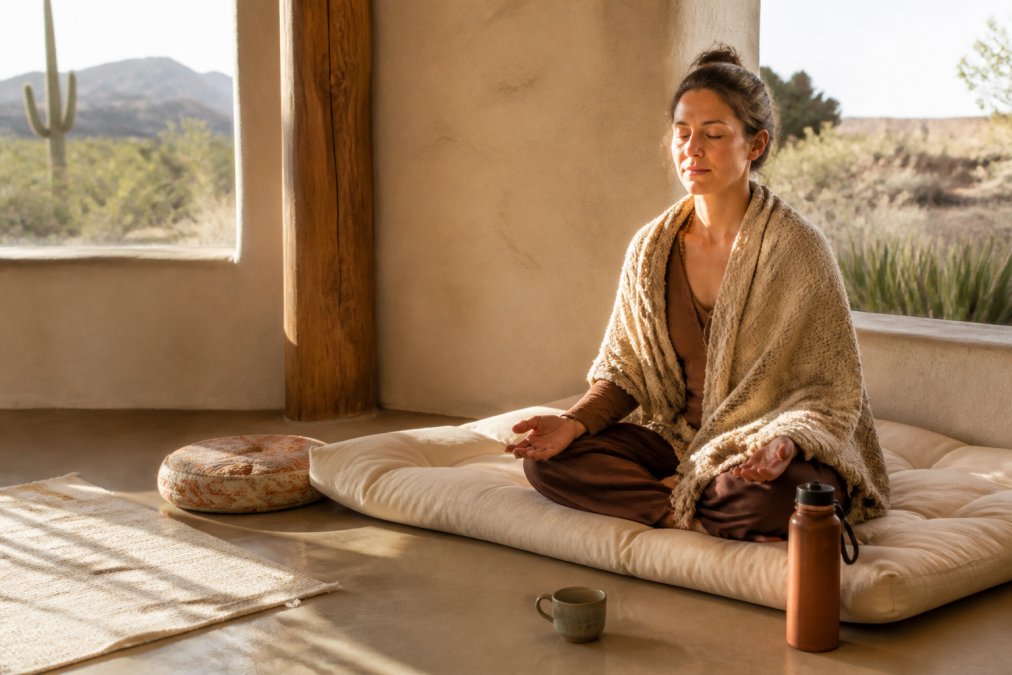
When you remove conversation, screens, and schedules, something may shift. Guests at Blisstopia may find a sense of "coming home to themselves."
Common benefits include:
- Mental clarity as mental noise settles
- Emotional release when defenses finally drop
- Spiritual sensitivity to divine guidance
- Deep rest that sleep alone can't provide
- Renewed sense of purpose and direction
The National Center for Complementary and Integrative Health overview of meditation and mindfulness notes that quiet contemplative practices can support overall well-being, though experiences vary by person.
What Happens to the Mind and Body in Sustained Quiet
Sustained quiet changes how your nervous system operates. Breath slows. Heart rate steadies. Muscle tension releases.
The brain shifts out of constant problem-solving mode. Many practitioners describe this as moving from doing to being. It can be a different kind of alertness.
In practice, this means you may notice:
- Thoughts arriving more slowly
- Emotions surfacing without overwhelm
- A felt sense of peace that lingers
That's soul care at work.
How to Practice Centering Prayer: A Step-by-Step Beginner Guide
Centering prayer is an accessible entry point into silent prayer. It uses a single sacred word to anchor attention, and it can be helpful for those new to silent practices.
Here's the full method, plus what to do when it goes sideways, because it will.
The Five-Minute Starter (Do This First)
Before you commit to 20 minutes, prove to yourself you can do five. Set a timer for five minutes. Sit upright in a chair with both feet on the floor. Close your eyes. Say nothing. Do nothing. Just sit.
That's the whole exercise. Most people find it harder than expected. That's the point, you're establishing a baseline.
The Full Centering Prayer Method
- Choose a quiet space. Sit comfortably with your spine upright. Close your eyes gently. Silence your phone, not just the ringer.
- Select a sacred word. Pick one word, "peace," "Jesus," "love," "Abba," or "mercy." The word is not a mantra to repeat. It's a signal of your intention to be present.
- Introduce the word silently. Let it rise once, gently, as a statement of consent. Then let it go.
- Release thoughts as they come. When you notice a thought, and you will, dozens of times, don't fight it. Don't analyze it. Gently return to your sacred word. The return is the practice.
- Stay for 20 minutes. Set a timer so you're not watching the clock. If 20 feels impossible, start at 10 and add five minutes each week.
- Close slowly. Sit in stillness for one full minute before opening your eyes. Rushing the close undoes much of the settling.
The goal isn't to empty your mind. It's to consent to divine presence, again and again, every time you return.
Your First Seven Days: A Simple Practice Schedule
| Day | Practice | Time |
|---|---|---|
| 1 | Sit in silence, no word | 5 min |
| 2 | Add your sacred word | 10 min |
| 3 | Notice thoughts without judgment | 10 min |
| 4 | Extend to full practice | 15 min |
| 5 | Practice twice daily | 10 min each |
| 6 | Add a short journal reflection | 20 min |
| 7 | Full centering prayer session | 20 min |
What to Do When It Goes Wrong
This is the part most guides skip, and it's the part that determines whether you'll still be practicing in a month.
"My mind won't stop." It won't, and that's fine. Every return to your sacred word is a repetition of the practice, not a failure of it. If you return 60 times in 20 minutes, you practiced 60 times.
"I feel nothing." Emptiness is not absence. It can be a new experience for many. Stay with it. Don't manufacture a feeling to fill the space.
"I got sleepy." This can be common. Sitting upright rather than reclining and practicing earlier in the day may help. If you nod off, it can be an indication of sleep debt.
"I lost track of time and panicked." Use a timer. The point of the timer is to remove the clock from your mind so the silence can do its work.
"I skipped three days." Start again today. Missing days is not failure. Quitting is the only failure.
If you want to learn this method in a setting built for it, Blisstopia's guided meditation, breathwork, and sound healing sessions create the conditions for this kind of interior work, and our facilitators can sit with you through the first uncomfortable sessions so you don't have to white-knuckle them alone.
Building a Daily Discipline of Prayer That Lasts
A daily discipline of prayer can grow from consistency. Consistent, shorter practices may be more effective than infrequent, longer ones.
Anchor your practice to something you already do. Right after coffee. Before your shower. The habit sticks when it attaches to an existing routine.
A common mistake is waiting for the perfect moment. There isn't one. Distraction is part of the practice, not a sign you're doing it wrong.
Keep these principles in mind:
- Same time, same place, when possible
- Short and steady beats long and rare
- Missing a day isn't failure; quitting is
- Silence gets easier with repetition
Many people find that accountability helps. A quiet group or retreat setting can carry you through the early weeks when motivation fades.
Troubleshooting: What to Do When Distraction, Dryness, or Doubt Sets In
Distraction, dryness, and doubt are not obstacles to silent prayer. They are part of it.
Distraction is the most common barrier. Your mind will wander to your to-do list, old arguments, and random memories.
How Silence Shapes Your Daily Actions and Relationships
Silence changes how you show up in the world. The quiet you cultivate in prayer follows you into traffic, meetings, and hard conversations.
Frequently Asked Questions
What happens to the mind and spirit during silent prayer?
Silent prayer shifts your attention away from mental noise and toward attentive stillness. Many people describe a settling of internal chatter within the first few minutes, followed by a growing sense of receptivity. Over time, this practice builds what contemplative traditions call inner stillness, a state where you are fully present and listening rather than speaking. The result is often greater clarity, emotional calm, and a felt sense of divine presence that carries into the rest of your day.
How is silent prayer different from meditation?
Both practices involve quieting the mind, but their aim differs. Meditation often focuses on awareness, breath, or a mantra for its own sake. Silent prayer is relational: you are intentionally opening yourself to God, waiting in divine communion rather than seeking a mental state. Centering prayer, a well-known contemplative method, uses a single sacred word to return your attention gently when thoughts wander, keeping the focus on receptivity and surrender rather than achievement.
How can I incorporate silent prayer into my daily routine?
Start with ten to twenty minutes at the same time each day, ideally in the morning before the day's demands begin. Choose a consistent spot, sit comfortably, close your eyes, and settle into a simple intention to be present. When thoughts arise, return to a single word or your breath without judgment. Consistency matters more than duration. Many people find that pairing silent prayer with a brief walk or a few minutes of breathwork deepens the practice.
Can silent prayer help with spiritual dryness or burnout?
Yes, and it is often most valuable during dry seasons. When words feel empty or faith feels distant, silent prayer removes the pressure to perform. You simply show up and wait. This act of surrender and detachment can soften the heart over time. For those experiencing deep burnout, an extended period of guided quiet in a supportive setting, such as a silent retreat, can provide the structure and space that daily life rarely allows.