 ultimate-guide
Luxury Wellness Centers: How to Choose the Right One
Table of Contents
- What Separates Luxury Wellness Centers from Ordinary Spas
- Core Wellness Retreat Vetting Criteria You Should Apply Before Booking
- How to Choose a Wellness Retreat That Matches Your Health Goals
- Benefits of Faith-Based Wellness Retreats vs. Commercial Resort Spas
- Solo Traveler Safety, Logistics, and Post-Retreat Integration
- What Luxury Wellness Centers Should Offer Retreat Facilitators
- Frequently Asked Questions
Last Updated: September 2, 2026
Most people choosing luxury wellness centers make the same mistake: they choose based on aesthetics. Beautiful photos, a famous location, a glossy brochure. Then they arrive and realize the program is generic, the staff rotates every week, and the "personalized" experience means picking from three preset packages.
At Blisstopia Retreats, we've spent years watching this pattern play out, and we built our sanctuary specifically to address it. This guide cuts through the marketing language and gives you a practical framework for evaluating any luxury wellness center before you book. Below, we'll show you exactly what separates transformative retreats from overpriced resort spas, which vetting criteria actually predict outcomes, and what solo travelers and retreat facilitators need to know before committing.
Luxury wellness centers are high-end, immersive health environments that combine personalized programming, expert-led therapies, and restorative facilities to address physical, mental, and emotional well-being. According to the Global Wellness Institute's research on wellness tourism, wellness tourism is one of the fastest-growing travel segments, driven by demand for experiences that deliver measurable health outcomes.
The difference between a good retreat and a forgettable one comes down to three things: program depth, practitioner credentials, and the ratio of personalization to group programming.
What Separates Luxury Wellness Centers from Ordinary Spas
Ordinary spas treat symptoms. Luxury wellness centers address root causes.
A day spa can relieve tension with a 90-minute massage. A genuine luxury wellness center builds a multi-day arc that integrates physical recovery, nutritional support, mindfulness practice, and therapeutic consultation into a cohesive experience.
Integrative Wellness Programs and Expert-Led Health Consultations
An integrative wellness program addresses the whole person, combining physical therapies, mental health support, nutritional guidance, and spiritual practices rather than treating each in isolation. The best centers design these programs around individual health goals, not a fixed menu.
In practice: an initial consultation on arrival maps your current health status, stress levels, sleep quality, and intentions. Practitioners then build a daily schedule that evolves across your stay. This differs fundamentally from booking a massage and yoga class separately.
Look for centers where practitioners hold verifiable credentials: licensed therapists, certified yoga instructors with recognized training hours, nutritionists with clinical backgrounds, and wellness specialists who can speak to evidence-based outcomes. A smaller center with three deeply qualified practitioners will outperform a large resort with twenty generalists almost every time.
Spa, Hydrotherapy, and Restorative Facilities That Actually Deliver
Hydrotherapy is the therapeutic use of water at varying temperatures and pressures to promote circulation, reduce inflammation, and support nervous system recovery. Genuine restorative facilities include infrared saunas, cold plunge options, therapeutic hot tubs held at precise temperatures, and quiet integration spaces.
The physical infrastructure only matters if the programming around it is intentional. A 104-degree hot tub used as part of a structured hydrotherapy sequence produces different results than the same tub used recreationally.
Core Wellness Retreat Vetting Criteria You Should Apply Before Booking
The biggest mistake people make when choosing a wellness retreat is trusting marketing language over verifiable evidence. "Transformative," "holistic," and "restorative" appear on nearly every wellness property's website. None of those words mean anything without specifics behind them.
Here are the criteria that actually predict whether a retreat will deliver on its promises.
| Vetting Criterion | What to Look For | Red Flag |
|---|---|---|
| Practitioner credentials | Verifiable certifications, years of experience | Vague bios with no specific training |
| Program customization | Intake assessment, personalized schedule | One-size-fits-all packages only |
| Evidence-based modalities | Therapies with documented outcomes | Trend-driven treatments with no clinical basis |
| Facilitator continuity | Same practitioners throughout your stay | High staff rotation or outsourced contractors |
| Post-retreat support | Integration resources, follow-up guidance | No contact after checkout |
| Physical infrastructure | Dedicated wellness facilities on-site | Rented space or off-site amenities |
Credentials, Experience, and Evidence-Based Outcomes
Evidence-based outcomes in wellness mean that therapies offered have documented support from research, clinical practice, or measurable results. Ask direct questions before booking: How many years has the lead practitioner worked in their specialty? What training did they complete, and where? Can they share examples of what past guests have worked through? A credible center answers these questions readily.
Longevity-focused and preventative care programs increasingly pair ancient healing traditions with modern health assessment tools rather than offering one or the other in isolation.
Mindfulness, Meditation, and Daily Fitness Programming
Daily fitness and mindfulness programming is the structural backbone of any serious wellness retreat. Effective mindfulness programming goes beyond a morning meditation session to include breathwork, guided body-scan practices, and structured reflection that builds across the retreat arc. Guests should leave with techniques they can continue at home.
Daily fitness programming at a credible center is similarly intentional. Movement classes should match your current capacity and adapt as your body responds. Yoga, martial arts, and structured walking all serve different therapeutic functions and should be offered with that context explained.
According to the American Institute of Stress's resources on stress reduction, consistent mindfulness and movement practices are among the most well-supported interventions for chronic stress.
How to Choose a Wellness Retreat That Matches Your Health Goals
Choosing the right retreat starts with honest self-assessment. What are you actually trying to address? Burnout, physical recovery, spiritual disconnection, and skill development in yoga are all legitimate goals, but they point toward different program types.
Define your primary outcome first, then evaluate retreats against that specific goal rather than overall reputation or aesthetic appeal.
Nutritional Planning, Detox, and Longevity Treatments
A genuine wellness-focused center employs or partners with qualified nutritionists or Ayurvedic practitioners who build meal plans around your health profile, not just dietary preference.
Detox programming, when done responsibly, supports the body's natural elimination processes through nutrition, hydration, reduced toxic load, and restorative sleep. Be skeptical of centers that market extreme detox protocols without clinical supervision. Effective detoxification is gradual, personalized, and supported by whole-food nutrition. genuine wellness workshops.
Longevity treatments blend preventative care, biohacking approaches, and traditional wellness modalities. The most credible programs combine Ayurveda assessment, nutritional optimization, sleep quality work, and movement therapy into a structured protocol.
Outdoor Adventure, Nature Activities, and Budget-Conscious Luxury Planning
Nature-based activities are a core therapeutic element in the most effective wellness retreats. Time in natural environments has documented effects on cortisol levels, nervous system regulation, and psychological well-being, as referenced in research compiled by the American Psychological Association on nature and mental health.
Desert landscapes offer a specific quality of stillness and scale that urban and coastal environments rarely match. Hiking, labyrinth walking, fire ceremonies, and sunrise observation are structured opportunities for reflection and integration.
Budget-conscious luxury planning matters: centers that own their property outright can offer genuinely high-end experiences at more accessible price points than resort properties with high overhead. Ask whether any center you're considering owns or leases its facility.
Benefits of Faith-Based Wellness Retreats vs. Commercial Resort Spas
Faith-based wellness retreats offer something that commercial resort spas structurally cannot: a coherent philosophy that runs through every element of the experience.
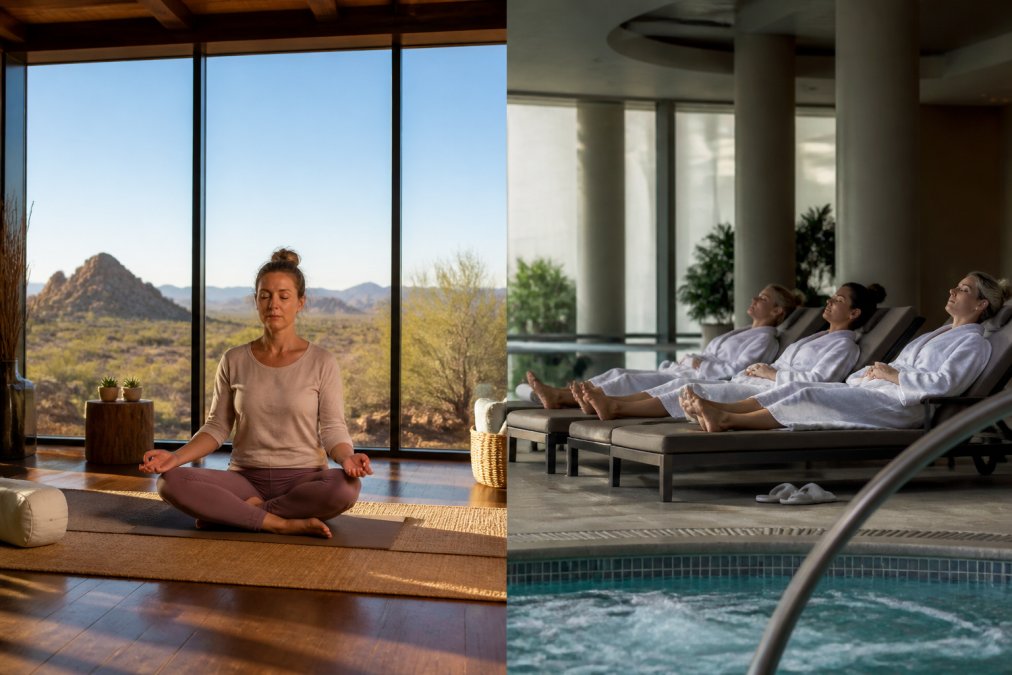
Commercial resort spas are designed for broad appeal. That breadth is their strength for casual guests and their limitation for anyone seeking depth. When a property serves hundreds of guests with varied expectations, programming tends toward the universally palatable rather than the genuinely transformative.
Faith-based wellness centers operate from a different premise. The spiritual or philosophical foundation isn't a product feature; it's the organizing principle that gives every practice its context and meaning. Meditation isn't just stress reduction. Breathwork isn't just respiratory exercise. Nutritional choices connect to a broader understanding of the body as sacred.
The best faith-based centers hold their spiritual foundation lightly, welcoming guests from all belief backgrounds without expectation or judgment.
Solo Traveler Safety, Logistics, and Post-Retreat Integration
Solo travelers have specific needs worth addressing directly. Safety, logistics, and the quality of the post-retreat experience all land differently when you're arriving alone.
On safety: small, owner-operated centers with on-site caretakers offer a fundamentally different environment than large resort properties. When founders live on the property and personally oversee every detail, solo guests have a level of accountability and attentiveness that larger operations cannot replicate.
On logistics: confirm transportation options, arrival protocols, and what happens if your schedule changes. A high-touch center will have clear answers and flexible accommodation.
Post-retreat integration is the most consistently underserved element of the wellness retreat experience. The best centers provide integration resources: journaling prompts, practice guides, nutritional recommendations, and follow-up contact in the weeks after your stay. The retreat itself is the catalyst; integration is where lasting change happens.
Shorter stays, including long weekends of three to four days, can produce meaningful shifts when the programming is dense and intentional. A well-designed three-day retreat outperforms a poorly structured week-long one.
What Luxury Wellness Centers Should Offer Retreat Facilitators
Wellness practitioners, yoga teachers, and coaches looking to host retreats have specific requirements that differ from individual guests. The right venue partnership can make or break the retreat experience for their clients.
Infrastructure requirements are non-negotiable: a dedicated yoga or movement studio with professional equipment, sleeping accommodations that support the group size, a kitchen capable of producing the nutritional program, and outdoor space for nature-based activities. Facilitators need flexibility. A venue that insists on rigid programming formats or limits facilitator autonomy will create friction.
The best venue partnerships offer a spectrum of support, from pure venue rental to full co-hosting arrangements that include meals, marketing support, and on-site assistance. Ask specifically about group size capacity, kitchen access, customization options, and whether the venue team will be present during the retreat.
According to Yoga Alliance's standards for yoga teacher training programs, the quality of the training environment, including the physical space, supporting infrastructure, and continuity of on-site support, significantly affects outcomes of both 200-hour and 300-hour teacher training programs.
Blisstopia Retreats is built around exactly this kind of facilitator partnership. The 7,000-square-foot villa accommodates groups of up to 17 guests, the fully equipped yoga studio holds 20 mats, and Mark and Lana Royce live on-site to provide continuous, high-touch support. Retreat customization runs from 3 to 14 days, with options ranging from solo venue rental to full co-hosted partnerships.
Choosing among luxury wellness centers is genuinely difficult when every property uses the same language to describe fundamentally different experiences. The criteria in this guide, practitioner credentials, program coherence, facility ownership, post-retreat integration, and the philosophical foundation of the center, give you a practical way to cut through the noise. Blisstopia Retreats was built to meet every one of these standards: faith-based intention, on-site caretaker presence, 75+ years of combined wellness expertise, and a fully owned desert sanctuary designed for both individual guests and retreat facilitators. Call us at 623-986-2899 to talk through your goals and find out whether Blisstopia is the right fit for your retreat.
Frequently Asked Questions
What amenities define a true luxury wellness experience?
Genuine luxury wellness centers go beyond high-thread-count linens. The defining features are personalized programming, expert-led health consultations, integrative modalities like breathwork, hydrotherapy, infrared sauna, and sound healing, plus nutritional planning tailored to each guest. On-site caretakers or wellness specialists who oversee every detail, rather than rotating hotel staff, signal a true high-touch environment. The difference shows up in how curated and attentive your experience feels from arrival to departure.
How do faith-based wellness retreats differ from commercial spa resorts?
Faith-based wellness retreats are typically built around a specific philosophy or spiritual framework rather than a commercial hospitality model. That usually means smaller guest counts, more intentional programming, and hosts who are personally invested in your transformation. They tend to blend ancient healing practices with modern wellness modalities. Importantly, 'faith-based' does not mean denominationally exclusive, many welcome guests of all spiritual backgrounds and focus on inner peace, holistic health, and personal clarity rather than religious instruction.
What is the typical duration for an effective wellness retreat?
Research on stress recovery and behavioral change suggests that meaningful shifts require more than a single weekend. Most wellness specialists recommend a minimum of three to five days for noticeable stress-reduction and restorative benefits, with seven to fourteen days allowing time for deeper work like detoxification, nutritional recalibration, and mindset change. That said, a well-structured three-day retreat with focused programming can still produce real results, especially when paired with a post-retreat integration plan to maintain momentum at home.
How much do luxury wellness retreats typically cost?
Pricing varies significantly based on duration, location, group size, and what's included. All-inclusive programs that cover accommodations, meals, programming, and expert consultations generally cost more than venue-only stays. Private sanctuaries that own their facilities can often offer more competitive pricing than resort-based programs without sacrificing quality or intimacy. For accurate pricing at any specific center, contact them directly, most will customize a package based on your dates, group size, and goals.
This article was written using GrandRanker