 listicle
Holy Name Passionist Retreat Center: A 2026 Guide
Table of Contents
- What Is the Holy Name Passionist Retreat Center?
- What Happens During a Catholic Silent Retreat
- How to Prepare for a Religious Retreat
- Spiritual Retreat Cost: What to Expect and Budget For
- Blisstopia Retreats: A Faith-Based Spiritual Retreat Center in the Sonoran Desert
- Spiritual Growth Opportunities and Retreat Programs
- Location, Contact Information, and Event Registration
- Frequently Asked Questions
Last Updated: September 1, 2026
What Is the Holy Name Passionist Retreat Center?
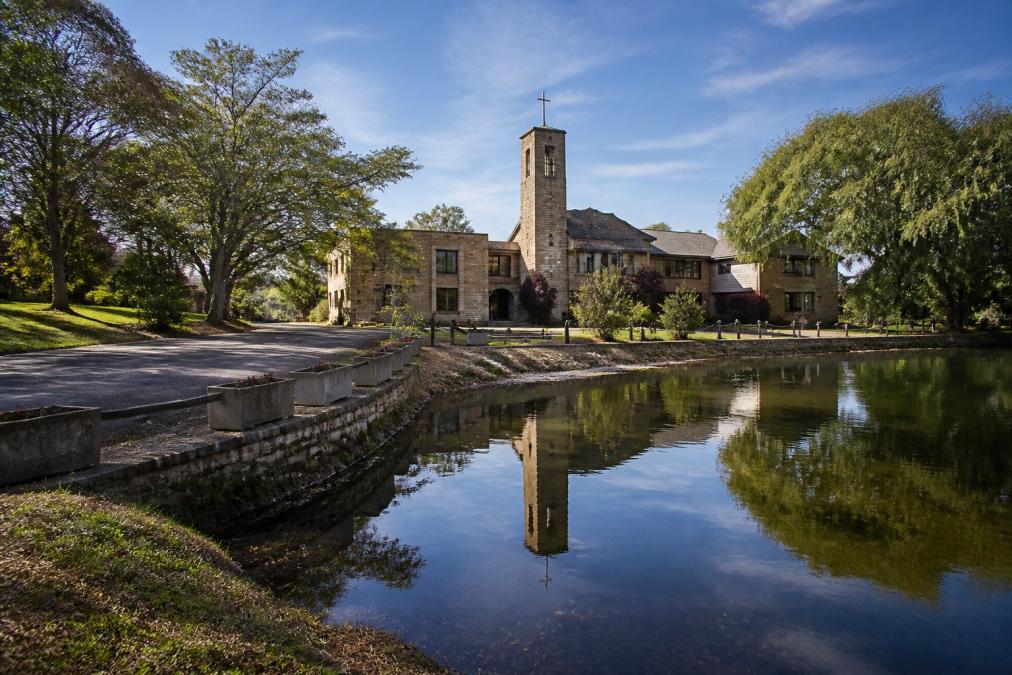
The holy name passionist retreat center represents a Catholic retreat tradition rooted in the Passionist order's commitment to contemplative prayer, spiritual direction, and inner renewal. This guide explores the Passionist tradition, what happens during a Catholic silent retreat, and how to find or prepare for a spiritually grounded experience that transforms.
A Catholic silent retreat is a structured period of prayer, reflection, and contemplation guided by a spiritual director in a dedicated sacred space away from ordinary life. The goal is encounter, with silence, with the divine, and with the deeper self that ordinary noise drowns out.
Mission, Vision, and Ministry Overview
Passionist retreat centers carry forward the ministry of St. Paul of the Cross, the 18th-century founder of the Passionist order, whose spiritual exercises centered on meditating on Christ's suffering as a path to inner transformation. The mission is creating conditions where people can stop, listen, and receive healing they cannot manufacture alone.
The vision is hospitality as a spiritual act. Guests are welcomed as pilgrims, not customers. Every element, campus, schedule, liturgy, meals, is ordered toward creating space for God to work.
History and Foundation of the Passionist Tradition
The Passionist congregation was founded in Italy in 1720 and established significant presence across the United States through the 19th and 20th centuries. Passionist retreat houses became known for their silence, structured spiritual exercises, and quality spiritual direction. According to the United States Conference of Catholic Bishops' overview of retreat ministry, retreat experiences grounded in structured prayer and spiritual accompaniment remain among the most effective forms of faith formation for Catholic adults.
The tradition emphasizes that healing comes through honest contemplation of suffering, not escape from it. This theological conviction shapes the schedule, silence, pastoral care, and physical environment.
What Happens During a Catholic Silent Retreat
A Catholic silent retreat is a multi-day experience of structured silence, liturgy, personal prayer, and one-on-one spiritual direction. Most participants arrive with unanswered questions and leave with clarity they could not have manufactured alone.
The silence is the point, not punishment or performance, but the condition for genuine reflection that conversation prevents.
Spiritual Direction, Liturgy, and Contemplative Prayer
Spiritual direction is the relational heart of any serious Catholic retreat. A trained spiritual director meets with each participant individually, typically once daily, to listen, ask questions, and help the retreatant discern what is happening in their interior life. The director accompanies rather than prescribes.
Liturgy anchors the day. Morning Mass, the Liturgy of the Hours, evening prayer, and Eucharistic adoration create a rhythm that holds the retreatant in a larger story. Contemplative prayer practices, including lectio divina and Ignatian meditation, fill spaces between communal worship. This combination of structured liturgy and personal prayer distinguishes a Passionist retreat from a generic wellness weekend.
As the Contemplative Outreach network's resources on centering prayer documents, structured contemplative practice produces measurable shifts in attentiveness, emotional regulation, and spiritual connectedness when sustained over multiple days.
Sample Daily Itinerary for a Silent Retreat
A typical day at a Catholic silent retreat center follows this pattern:
| Time | Activity | Duration |
|---|---|---|
| 6:30 AM | Morning prayer / Lauds | 30 min |
| 7:00 AM | Mass / Eucharist | 45 min |
| 8:00 AM | Breakfast (in silence) | 30 min |
| 9:00 AM | Personal prayer / lectio divina | 90 min |
| 10:30 AM | Spiritual direction session | 45 min |
| 12:00 PM | Midday prayer / Sext | 20 min |
| 12:30 PM | Lunch (in silence) | 30 min |
| 2:00 PM | Walking meditation or rest | 60 min |
| 3:00 PM | Guided conference or reflection | 45 min |
| 5:00 PM | Evening prayer / Vespers | 30 min |
| 6:00 PM | Dinner | 45 min |
| 7:30 PM | Eucharistic adoration or night prayer | 45 min |
The silence between activities is not empty, for most participants, it is the most productive part of the day.
How to Prepare for a Religious Retreat
Most people arrive underprepared in one way: they expect the retreat to feel peaceful from the first hour. It rarely does. The first day is often disorienting as the mind resists stillness. Knowing this changes everything.
Preparation creates the internal and logistical conditions for genuine openness.
Practical Packing and Mindset Tips
Pack simply. A silent retreat is not a spa weekend. Bring:
- Comfortable, modest clothing for prayer and walking
- A journal and pen (not a laptop)
- A physical Bible or prayer book (not a phone app)
- Prescription medications and basic personal care items
- A warm layer, even in warm climates
- An open posture toward silence, not a plan for what to receive
Leave your phone in your car or ask the retreat center to hold it. This is essential if you want the retreat to work.
Release the expectation of a particular outcome. Many retreatants arrive hoping for clarity on a specific decision and receive something more foundational instead.
Accessibility and Special Needs Accommodations
Most established retreat centers actively work to ensure guests with mobility challenges, dietary restrictions, or sensory needs can participate fully.
When booking, ask about ground-floor accessibility, dietary accommodations, campus terrain navigability, and spiritual directors experienced with particular health or trauma contexts.
The ADA National Network's guidance on accessible religious facilities provides a framework for what to ask and expect from any retreat facility in the United States.
Ask directly and early.
Spiritual Retreat Cost: What to Expect and Budget For
Spiritual retreat cost varies based on the type of center, length of stay, programming level, and whether the facility is a nonprofit religious community or private wellness sanctuary. Many Catholic retreat centers operate on sliding-scale or suggested-donation models. Private faith-based wellness centers typically charge market rates reflecting facility quality and personal attention.
Most people underestimate the full cost: not just registration, but travel, time off work, and opportunity cost. Framed correctly, a retreat is one of the highest-return investments in personal clarity and wellbeing.
Blisstopia Retreats: A Faith-Based Spiritual Retreat Center in the Sonoran Desert
Blisstopia Retreats is a private, faith-based wellness ministry on 2.5 secluded, off-grid acres at the base of Sunrise Mountain in the Sonoran Desert. Founded by Mark and Lana Royce, whose combined experience in wellness, psychotherapy, martial arts, yoga, and natural health spans more than 75 years, Blisstopia operates as a Private Membership Association. Every guest receives high-touch, personally curated care rather than a standardized package.
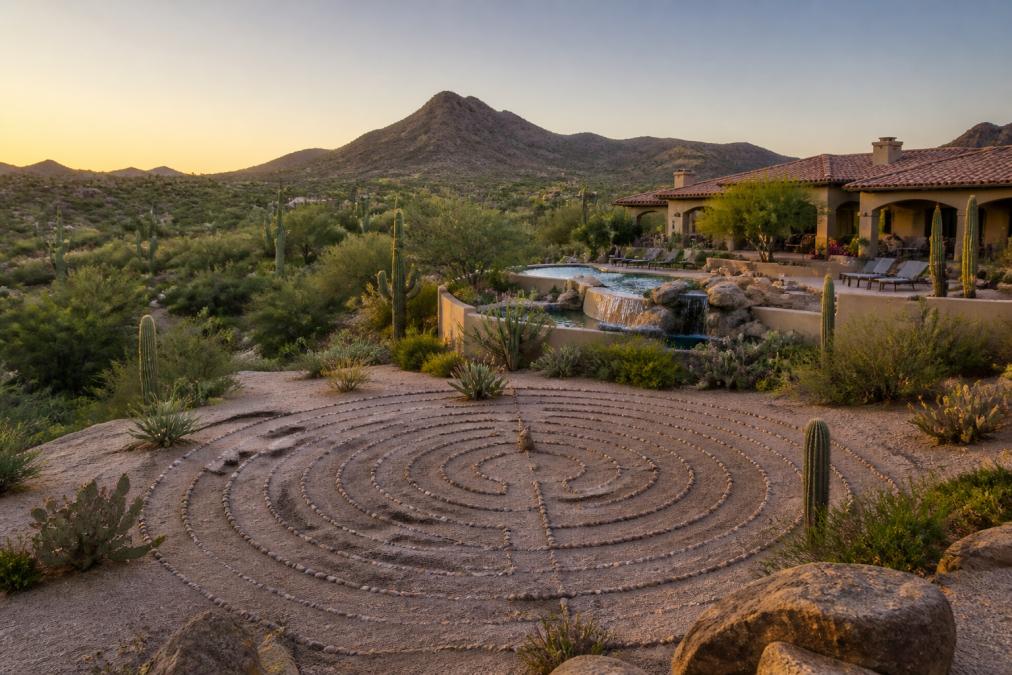
For those drawn to the Passionist retreat center tradition of intentional sacred space and compassionate hospitality, Blisstopia offers a desert parallel where silence, healing, and spiritual growth are the entire point.
Facility Amenities and Sacred Spaces
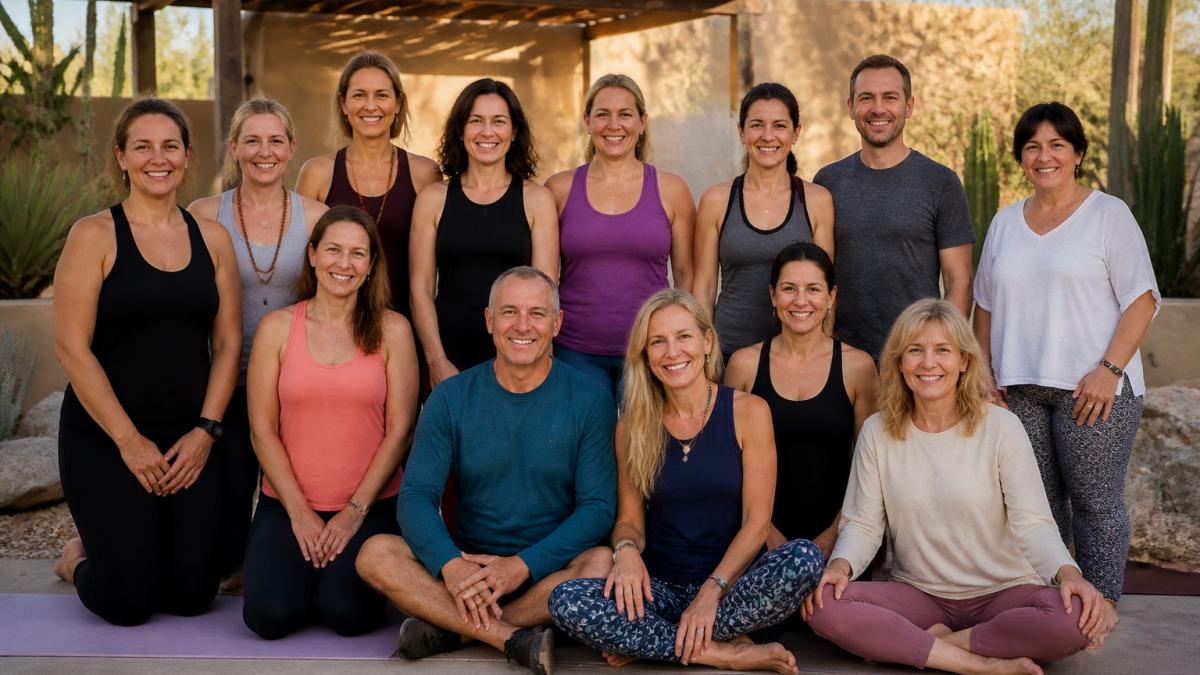
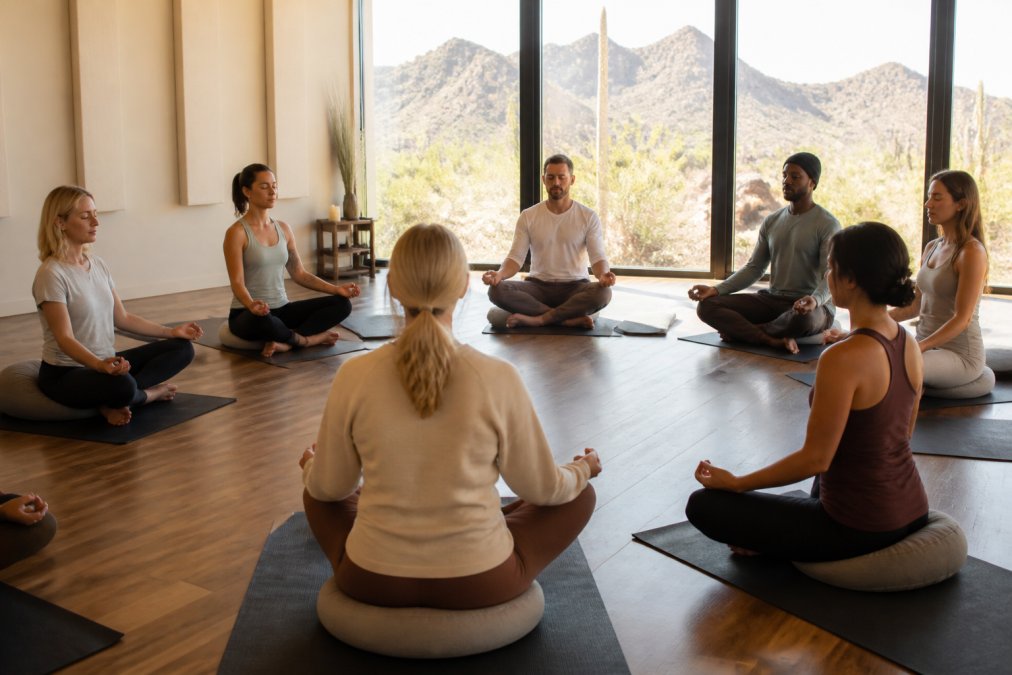
The approximately 7,000-square-foot villa includes five bedrooms, six bathrooms, and 17 beds, accommodating solo retreatants and groups up to 15. A fully equipped yoga studio holds 20 mats. A pool with waterfall, 104-degree hot tub, and infrared sauna support physical restoration. A natural labyrinth, fire ring, and direct hiking trail access create conditions for walking meditation and contemplative outdoor practice.
The facility runs on well water, solar power, septic, and propane, genuinely off-grid in a way that reinforces the retreat's purpose of disconnection from ordinary life.
Hospitality, Compassion, and On-Site Pastoral Care
Mark and Lana live on-site as full-time caretakers. This is not a managed property with rotating staff. The people who designed the retreat experience are present for every stay.
Lana brings 25-plus years as an HR psychotherapist. Mark's background spans more than 30 years leading martial arts and boxing programs. Together, they bring human experience most retreat facilitators cannot match, no judgment, no expectations, no prior experience required.
Spiritual Growth Opportunities and Retreat Programs
Programs at Blisstopia are built on the conviction that genuine spiritual growth requires intentional structure, skilled accompaniment, and enough time for the process to work.
Offerings include guided meditation and breathwork, sound bath healing, Reiki, past life regression, Ayurveda testing, and martial arts alongside yoga and 200-hour and 300-hour Yoga Teacher Training programs. An Ayurvedic chef provides meal plans for hosted retreats. Custom retreats run from three to fourteen days, built around specific goals.
Weekend Programs, Day Retreats, and Extended Stays
A common objection is that a long weekend cannot produce real transformation. A poorly designed week-long retreat produces less than a well-designed three-day stay. The key variables are facilitation quality, intention clarity, and absence of distraction, all controlled for at Blisstopia.
Blisstopia custom-builds retreats from three to fourteen days, making a long weekend a legitimate entry point. For retreat facilitators, partnership arrangements range from solo venue rental to full co-hosting, including shared marketing and meals. Groups of 12 to 15 can be accommodated without losing the high-touch character.
What Past Participants Have Experienced
Blisstopia Retreats has been featured by City Skyline, Blurred Lines, Birthday Sparks, and Fashion Magazine. Participants consistently describe renewal, clarity, and a restored sense of self that persists beyond the stay.
Most participants do not expect how quickly the environment does its work. The desert silence, intentional schedule, and experienced hosts create conditions for inner peace most people have not encountered.
Location, Contact Information, and Event Registration
Blisstopia Retreats is located near Peoria, Arizona, adjacent to the Peoria Sunrise Mountain Preserve in the Sonoran Desert, at the base of Sunrise Mountain with direct access to hiking trails and uninterrupted natural landscape.
For those seeking a holy name passionist retreat center experience or comparable faith-based sanctuary in the desert, Blisstopia offers a private, high-touch alternative.
To inquire about availability, discuss custom programming, or register for an upcoming retreat, contact Blisstopia Retreats:
Phone: 623-986-2899 Website: blisstopiaretreats.com
Booking is by prior arrangement only. Reach out early, especially for weekend programs and extended stays, as availability is limited by the intentionally small-scale, intimate nature of the facility.
For broader context on faith-based retreat ministry and spiritual direction in the United States, Spiritual Directors International's directory and resources provides a useful reference for understanding qualified spiritual accompaniment across traditions.
Burnout, disconnection, and the sense that ordinary life has crowded out everything that matters are not small problems and do not respond to small solutions. Blisstopia Retreats was built to meet that depth. With on-site hosts bringing more than 75 years of combined wellness and therapeutic experience, a fully equipped desert sanctuary, and programs custom-built from three to fourteen days, Blisstopia offers the structure, space, and personal care genuine transformation requires. Call us at 623-986-2899 to start the conversation.
Frequently Asked Questions
Q: What is a Passionist retreat center?
A: A Passionist retreat center is a faith-based facility operated within or inspired by the Passionist religious congregation, which emphasizes reflection on the Passion of Christ, contemplative prayer, and spiritual renewal. These centers typically offer silent retreats, spiritual direction, liturgy, and structured programs designed to deepen faith formation. Guests are guided through periods of silence, meditation, and pastoral care in a sacred space set apart from everyday distractions.
Q: How much does a spiritual retreat cost?
A: Spiritual retreat cost varies widely based on duration, accommodations, and included services. A weekend program at a faith-based center generally costs less than a fully all-inclusive multi-day stay with meals, wellness sessions, and spiritual direction. Some centers operate on a suggested donation model; others charge fixed program fees. For accurate pricing at Blisstopia Retreats, contact the team directly at 623-986-2899, as rates depend on retreat length, group size, and selected offerings.
Q: What happens during a silent Catholic retreat?
A: A Catholic silent retreat typically follows a structured schedule of morning prayer, Mass or liturgy, silent meals, individual spiritual direction sessions, and periods of personal contemplation. Participants refrain from casual conversation to create space for deeper inner listening. Evenings often include group reflection or Lectio Divina. The silence is not isolating, it is guided by a spiritual director who meets with each retreatant individually to support their spiritual growth and faith formation throughout the stay.
Q: How do I prepare for a religious retreat?
A: Preparation makes a meaningful difference. Before arriving, reduce screen time and social obligations in the days leading up to your retreat. Bring a journal, comfortable clothing suitable for reflection and light walking, and any personal prayer materials. Set a clear intention for what you hope to receive, whether healing, clarity, or renewal. If the retreat involves silence or spiritual exercises, review the schedule in advance so the structure feels familiar rather than jarring when you arrive.
This article was written using GrandRanker