 how-to
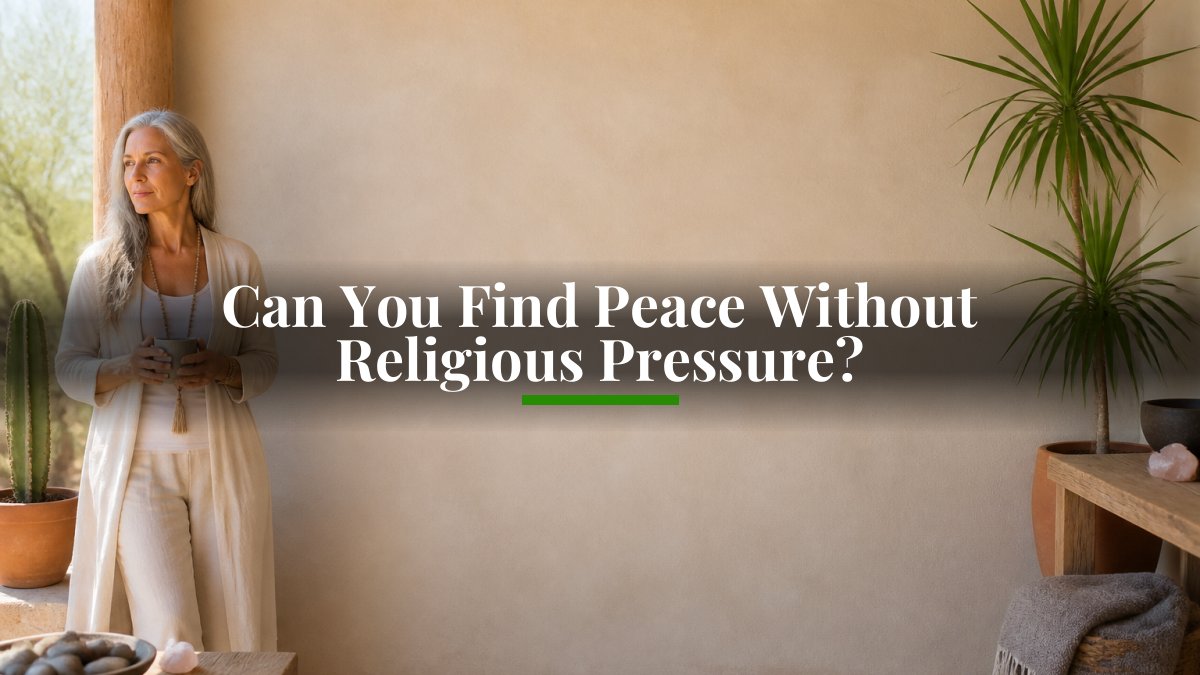
Can You Find Peace Without Religious Pressure?
Last Updated: October 25, 2026
Quick Summary
Finding peace without religious pressure is possible by naming the exhaustion that pressure creates, asking yourself honest private questions about what you actually believe, and setting calm boundaries with family and friends. Peace grows through nonreligious meditation, self-designed practices, and support from people who respect your answers.
- Religious pressure is any demand to believe or present yourself a certain way, backed by fear of judgment or loss.
- A genuine invitation respects your answer, while pressure treats choice as a problem to fix.
- Set boundaries by naming the behavior, stating it plainly, and deciding in advance what you will do.
- Try a five-minute practice: breathe in for four, hold for four, out for six.
- Consider a licensed therapist if worry interferes with sleep, work, or eating for more than a couple of weeks.
Table of Contents
- Why Religious Pressure Makes Peace Feel Out of Reach
- Questions to Explore Personal Beliefs Without Outside Demands
- How to Set Boundaries About Religion With Family and Friends
- Nonreligious Meditation for Inner Peace You Can Start Today
- Spirituality Without Organized Religion: What It Can Look Like
- Managing Anxiety and Overthinking While You Sort It Out
- Finding Support From Mentors and Trusted People
- Planning a Quiet Reset at a Desert Sanctuary
- Frequently Asked Questions
Why Religious Pressure Makes Peace Feel Out of Reach
Finding peace without religious pressure is possible, and it starts with naming what has been weighing on you. At Blisstopia Retreats, we meet people every week who carry quiet exhaustion from years of being told what to believe, how to worship, and who to become.
That exhaustion has a name. Many counselors and spiritual directors describe it as pressure, not faith.
What Religious Pressure Actually Looks Like
Religious pressure is any demand to believe, practice, or present yourself a certain way, backed by fear of judgment or loss. It rarely arrives as a loud command. More often it shows up as small, constant nudges:
- Questions about why you missed a service
- Comments about your clothes, your partner, or your choices
- Guilt wrapped in concern ("We just worry about your soul")
The result is a nervous system stuck on alert. Peace feels far away because you are always bracing for the next comment.
The Difference Between Pressure and Genuine Invitation
A genuine invitation respects your answer. Pressure does not.
Pressure says, "Come, or else." Invitation says, "Here is what we offer. Take your time." One leaves room for choice. The other treats choice as a problem to fix.
That distinction matters because many people are not against faith at all. They are against being pushed. You can honor your own beliefs, whatever they are, while refusing the push.
Questions to Explore Personal Beliefs Without Outside Demands
Questions to explore personal beliefs work best when you ask them privately, on your own timeline, with no one grading the answers. This is your ground to walk, not a test to pass.
Try journaling with prompts like these:
- What do I actually believe, separate from what I was taught?
- Which practices feed me, and which drain me?
- When do I feel most at peace?
There are no wrong answers. Sit with one question for a week if you like. The goal is honesty, not resolution.
How to Set Boundaries About Religion With Family and Friends
Learning how to set boundaries about religion protects your peace and your relationships at the same time. Boundaries are not walls. They are instructions for how you want to be treated.
Start with three simple steps:
- Name the specific behavior you want to change.
- State it plainly, without attacking anyone's faith.
- Decide in advance what you will do if the boundary is crossed.
Keep your language calm and short. You are not asking permission. You are describing how you will engage.
Scripts for the Conversations You Keep Avoiding
Use these as starting points and adjust the wording to sound like you:
- "I love you, and I'm not going to debate my beliefs at dinner. Let's talk about something else."
- "I hear that you're worried about me. I'm not open to advice on this right now."
- "I'd rather not discuss church today. If it comes up again, I'll step out for a bit."
Say it once, calmly. Repeating the same sentence is more effective than arguing.
When Boundaries Get Tested
Expect pushback. That is normal, and it does not mean you failed.
Hold the line without raising your voice. Follow through on the consequence you named. If a conversation turns into an ambush, end it kindly and leave the room.
Over time, most families settle into a new normal. Some do not. Either way, your peace is not up for negotiation.
Nonreligious Meditation for Inner Peace You Can Start Today
Nonreligious meditation for inner peace is simply the practice of settling your attention without any doctrine attached. No prayer required. No membership. Just you and a few quiet minutes.
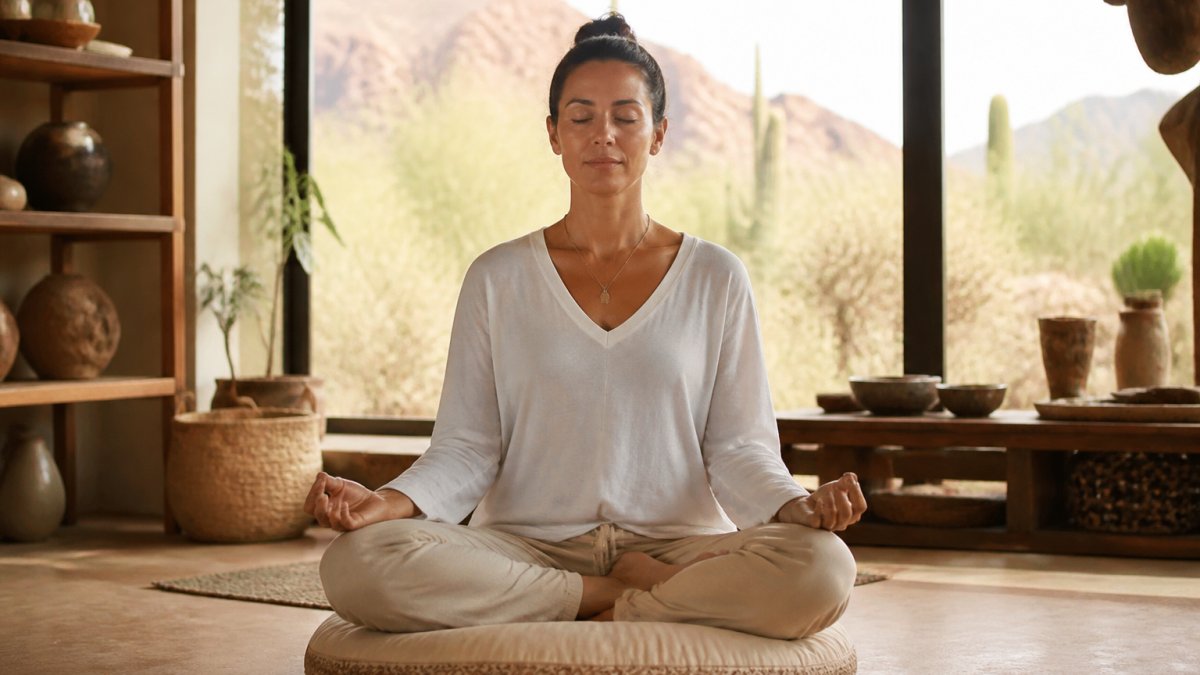
Try this five-minute practice:
- Sit comfortably and let your shoulders drop.
- Breathe in for a count of four, hold for four, out for six.
- When your mind wanders, notice it and return to the breath.
The National Center for Complementary and Integrative Health's overview of meditation explains that meditation is a widely used practice for calming the mind and easing stress.
Spirituality Without Organized Religion: What It Can Look Like
Spirituality without organized religion is a personal search for meaning and connection that does not run through a building, a leader, or a rulebook. It can be quiet, private, and entirely your own. But "spirituality" gets used loosely, and the looseness is part of why people feel lost. Clear definitions help. Grounding this search in the physical world often requires stepping away from abstract concepts to engage with peaceful outdoor escapes where the silence itself provides the structure that human institutions often fail to offer.
Three Different Things People Mean
- Religion is an organized tradition, shared texts, rituals, leadership, and community, usually with stated beliefs about the divine. It offers structure and belonging, and it can also carry the pressure you are trying to step back from.
- Spirituality is your personal sense of meaning, awe, and connection, to nature, to other people, to something larger than yourself, or simply to your own deepest values. It does not require a tradition, a leader, or a belief in a specific god.
- Secular meaning is purpose built from this life alone, relationships, work, service, creativity, learning, and care for the world. It is not a lesser option. Many people find it fully sufficient.
You do not have to pick one and stay there. You can hold a spiritual sense of awe and a secular sense of purpose at the same time. The point is that none of these is required, and none is forbidden.
What It Can Look Like in Practice
For some people it looks like time in nature. For others it is music, art, service, or stillness at sunrise. Concrete forms people commonly describe:
- A weekly walk somewhere quiet, treated as protected time
- A journaling practice focused on gratitude and values
- Volunteering or service that connects you to other people
A common misperception is that leaving organized religion means losing all meaning. It does not. Many people find their sense of the sacred grows sharper once the pressure lifts.
A Simple Way to Explore Without Committing
You do not need a belief system to start. Try a two-week experiment:
- Pick three candidate practices from the list above.
- Try one each week and note how you feel afterward, calmer, more connected, more yourself, or none of those.
- Keep the one that helped and drop the rest. There is no obligation to continue anything.
Our article on three common misperceptions about attending a yoga or meditation retreat clears up a few more of those worries before you consider one.
Managing Anxiety and Overthinking While You Sort It Out
Managing anxiety and overthinking while you sort out your beliefs takes steady, small tools, not one big breakthrough. Uncertainty is uncomfortable, but it is not dangerous. The goal is not to eliminate doubt. It is to stop doubt from running your whole day.
Name What Is Actually Happening
Most people lump three different experiences under "anxiety." Separating them makes each one easier to work with:
- Worry is future-focused and verbal, "What if my family cuts me off?" It responds well to writing things down and testing whether the fear is a fact.
- Rumination is past-focused and repetitive, replaying an argument or a sermon you heard years ago. It responds to interruption and a change of scene, not to more thinking.
- Physical activation is the body's alarm, tight chest, shallow breath, restless sleep. It responds to breath, movement, and cold, not to reasoning.
Match the tool to the experience. Reasoning with a racing body rarely works, and breathing through a looping thought rarely works either.
A Structured Daily Practice
A practical pattern many counselors suggest is a short, repeatable routine rather than a heroic one-time effort:
- Morning (5 minutes): Write down the one belief question that is loudest today. Put it on paper so it stops circling in your head.
- Midday (2 minutes): Do a paced breathing round, inhale for four, hold for four, exhale for six. The longer exhale is the part that signals safety to your nervous system (The relaxation effect of prolonged expiratory breathing).
- Evening (5 minutes): Write one thing you did today that matched your own values, however small. This builds evidence that you are living on purpose, not just reacting.
- Weekly (15 minutes): Review the week's notes. Look for patterns, which situations spike the pressure, and which ones leave you calm.
Interrupting a Loop in the Moment
When your mind starts circling, change the channel before you try to solve anything:
- Write the worry down and ask, "Is this a fact or a fear?"
- Move your body for ten minutes, a walk, stairs, stretching.
- Limit how much you read or watch about the topic each day. Set a cap and keep it.
When Self-Help Is Not Enough
There is a line between ordinary uncertainty and anxiety that needs professional support. Consider reaching out to a licensed therapist if any of these are true:
- The worry is interfering with sleep, work, or eating for more than a couple of weeks.
- You are avoiding people or places you used to enjoy.
- You notice panic symptoms, racing heart, shortness of breath, a sense of doom, that come without a clear trigger (Panic Disorder).
A licensed therapist is worth the call. For everyday tools, our guide on powerful lessons and tools for managing stress offers practical next steps, and our reflection on finding balance through yoga, meditation, and Ayurveda speaks directly to fear and worry.
Here is how the article matches each kind of anxious experience to the tool that actually helps.
| Experience | What it feels like | What helps |
|---|---|---|
| Worry | Future-focused and verbal | Writing it down and testing if the fear is a fact |
| Rumination | Past-focused and repetitive | Interruption and a change of scene |
| Physical activation | Tight chest, shallow breath, restless sleep | Breath, movement, and cold |
Finding Support From Mentors and Trusted People
Support from mentors and trusted people can make the difference between isolation and steady progress. You do not have to sort this out alone.
Look for people who listen more than they advise. A good mentor asks questions and respects your answers. A good friend does not flinch when you say something honest.
Where to look:
- A licensed counselor or therapist
- A trusted friend outside your faith community
- A coach or spiritual director who does not push an agenda
One conversation with the right person can loosen months of knots.
Planning a Quiet Reset at a Desert Sanctuary
A quiet reset works best when you step out of the environment that keeps triggering the old pressure. The desert is good at that.
Start with a simple plan:
- Pick a window of three to five days.
- Choose a place with space and quiet.
- Leave the debate behind, including your phone for a few hours a day.
Our guide to finding peace at a desert retreat walks through what to expect, and our seven steps for planning a personal spiritual retreat help you shape the time around your own needs.
At Blisstopia Retreats, our sanctuary sits at the base of Sunrise Mountain, with a pool, hot tub, infrared sauna, hiking trails, and a natural labyrinth.
Frequently Asked Questions
Can you find inner peace without following a religion?
Yes. Inner peace comes from practices like meditation, breathwork, time in nature, and honest self-reflection, not from membership in a group. Many people build a steady sense of calm while holding no formal religious belief at all. What matters is consistency and choosing practices that fit your values. If religious pressure has made peace feel conditional, start small: ten minutes of quiet breathing each morning is a real beginning.
How do I know whether I am exploring faith freely or out of pressure?
One signal is how you feel before and after. Free exploration tends to bring curiosity and room to say no. Religious pressure tends to bring dread, guilt, or fear of consequences for questioning. Try asking yourself whether you could walk away from the group or practice without losing your sense of safety. If the answer is no, that is worth examining with a trusted counselor or mentor before you make any decisions.
How can I set boundaries with family about religion?
Be clear, brief, and consistent. A sentence like "I love you and I am not discussing this today" works better than a long defense. Expect pushback at first and repeat the same line without escalating. You can also set limits on timing, such as ending a call when the topic keeps coming up. Boundaries are not rejection; they protect the relationship by removing a recurring source of conflict.
What are some ways to feel spiritually grounded without organized religion?
Many people find grounding through nonreligious meditation, breathwork, journaling, walking in nature, sound healing, or yoga. Others mark seasons and milestones with personal rituals they design themselves. The common thread is intention rather than doctrine. A quiet morning practice, a weekly walk, or a retreat focused on rest can all serve the same purpose: giving you space to hear your own thoughts without anyone telling you what to conclude.
The pressure to believe a certain way can follow you for years, even after you have stepped away. It does not have to run your life. At Blisstopia Retreats, we offer a private, faith-based sanctuary where no one is pushed toward a specific creed, and where breathwork, sound healing, meditation, and time in the desert help you hear your own voice again. Get started with Blisstopia Retreats and give yourself the quiet you have been missing. Call us at 623-986-2899.