 listicle
Finding Peace at a Desert Retreat: A 2026 Guide
Table of Contents
- Why the Desert Creates Space for Finding Peace
- Benefits of a Desert Retreat for Burnout and Emotional Well-Being
- What a Typical Day Looks Like at a Desert Retreat
- Choosing a Spiritual Wellness Retreat in Arizona
- How to Prepare for a Spiritual Retreat
- Budget-Friendly DIY Desert Retreats and Accessibility Options
- Bringing the Peace Home: Post-Retreat Integration
- Frequently Asked Questions
Last Updated: September 18, 2026
Why the Desert Creates Space for Finding Peace
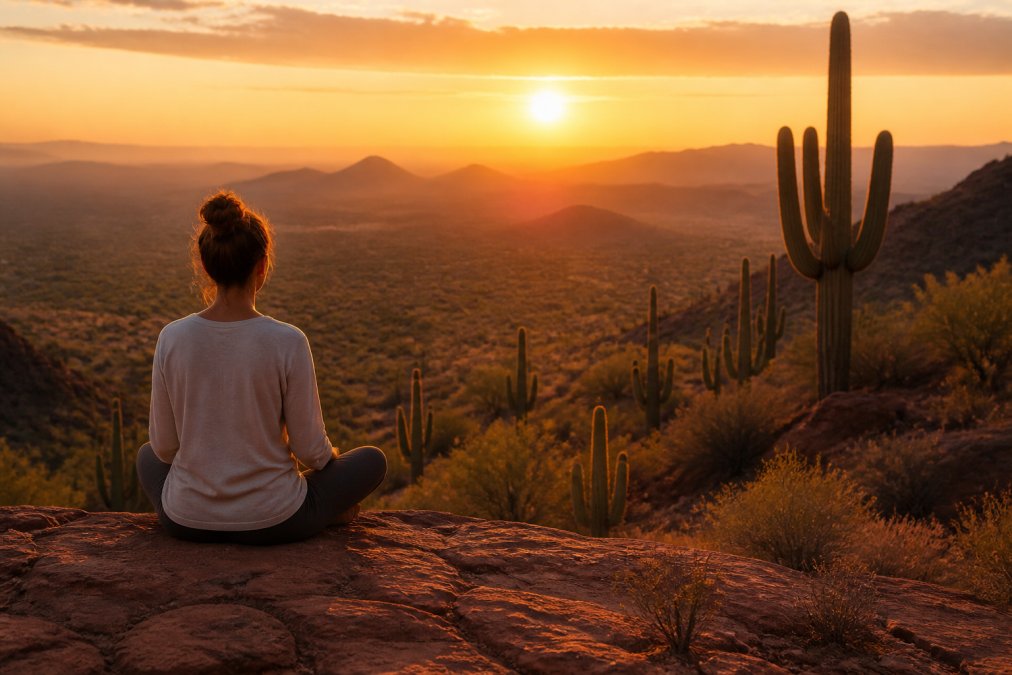
Finding peace at a desert retreat works because the landscape removes the two things that keep most people restless: noise and distraction. The Sonoran Desert, where Blisstopia Retreats hosts its sanctuary, offers wide horizons, dry air, and a silence you can feel in your chest. This guide from Blisstopia Retreats explains why that setting changes your nervous system, what a day there actually looks like, and how to bring the calm home.
The Science Behind Nature Immersion and Stress Reduction
Time in natural settings lowers the body's stress response. Research from the American Psychological Association on nature and stress points to reduced cortisol and improved mood after sustained exposure to green and desert environments. The effect is not mystical. It is physiological.
Desert landscapes add something forests do not: scale. Standing at the base of a mountain with nothing between you and the horizon shrinks the problems you carried in.
How Silence and Solitude Reset the Nervous System
Noble silence, the practice of intentional quiet, gives your mind room to stop performing. When you remove conversation, notifications, and small talk, the nervous system shifts out of vigilance.
Benefits of a Desert Retreat for Burnout and Emotional Well-Being
A desert retreat addresses burnout at the source rather than masking it with rest. Burnout is not solved by a weekend of sleep. It is solved by removing the inputs that caused it and rebuilding your baseline.
Mental Clarity, Grounding, and Spiritual Renewal
Grounding practices, from walking a natural labyrinth to standing barefoot on warm earth, anchor attention in the body. Spiritual renewal follows when the mind quiets enough to hear itself.
Digital Detox and Unplugging From Daily Noise
A digital detox is the deliberate removal of screens and notifications for a set period. Most people underestimate how much energy their phone consumes until it is gone.
| Practice | Time Needed | What It Restores |
|---|---|---|
| Digital detox | Full stay | Focus, sleep quality |
| Daily meditation | 20-30 minutes | Mental clarity |
| Breathwork | 15 minutes | Nervous system calm |
| Nature immersion | 1-2 hours | Grounding, perspective |
| Journaling | 10 minutes nightly | Self-reflection |
What a Typical Day Looks Like at a Desert Retreat
A typical day blends structured practice with open, unscheduled time. The rhythm matters more than the individual activities.
- Sunrise sadhana - Gentle movement, breathwork, and intention-setting before the heat builds.
- Morning yoga - Kundalini, yin, or restorative sessions suited to your energy that day.
- Nourishing breakfast - Organic, Ayurvedic-informed meals served communally.
- Midday silence or meditation - Solo contemplation, journaling, or a guided sound bath.
- Afternoon nature immersion - Hiking trails, labyrinth walking, or a cold plunge.
- Evening ceremony - Cacao, fire circle, or sound healing under the desert sky.
Choosing a Spiritual Wellness Retreat in Arizona
A spiritual wellness retreat in Arizona should match your beliefs, your schedule, and your definition of transformation. Not every retreat is built for deep work. Some are spas with yoga attached, and the difference shows up in the first two hours.
A Vetting Framework You Can Actually Use
Before you book, run any retreat through five filters. Each one has a concrete signal you can check.
- Facilitator credentials and presence. Ask who leads each session and whether they sleep on-site.
- Group size and composition. Intimate groups (often capped around 8-16 guests) allow for personal attention. Ask the maximum headcount and whether the group is mixed or single-gender.
- Setting privacy. A private sanctuary means your group has the property to itself. A shared venue means you may overlap with corporate events or other retreats. Ask whether other groups will be on-site during your stay.
- Program structure vs. free time. Deep-work retreats usually publish a daily arc with structured morning and evening blocks plus open afternoon space. If the schedule is vague, ask for a sample day.
- Post-retreat support. The strongest programs offer integration, follow-up calls, group check-ins, or written practices. Ask what happens after you leave.
Red Flags to Watch For
Matching Philosophy to Your Own Beliefs
A faith-based or spiritually grounded retreat should welcome you without requiring you to adopt a doctrine. Ask how the facilitators handle guests of different beliefs.
A Quick Comparison Checklist
| What to Ask | Why It Matters |
|---|---|
| Who leads each session? | Determines depth and safety |
| Max group size? | Affects personal attention |
| Private or shared venue? | Affects distraction and confidentiality |
| Sample daily schedule? | Reveals structure vs. filler |
| Post-retreat integration? | Predicts lasting change |
| Accessibility and dietary accommodations? | Determines whether you can actually attend |
How to Prepare for a Spiritual Retreat
Knowing how to prepare for a spiritual retreat starts with intention, not packing. Decide what you want to release before you decide what to bring.
What to Pack for a Desert Retreat
Pack for temperature swings. Desert mornings are cool, afternoons are hot, and evenings drop fast.
- Loose, breathable layers in light colors
- A wide-brimmed hat and UV sunglasses
- Reusable water bottle and electrolytes
- Comfortable walking or hiking shoes
- A journal and pen for reflection
- Sunscreen and lip balm
- A light jacket or wrap for evening ceremonies
Climate-Specific Health and Safety Considerations
Desert heat is dry and deceptive. Drink more than you think you need, and add electrolytes rather than plain water alone.
- Hydrate before you feel thirsty; aim for steady intake through the day
- Schedule strenuous activity before 10am or after 4pm
- Watch for signs of heat exhaustion: dizziness, headache, nausea (the CDC)
- Never hike alone without telling a facilitator your route
Budget-Friendly DIY Desert Retreats and Accessibility Options
You do not need a formal program to find peace in the desert. A self-guided retreat works if you build structure into it, and Here is how to design your own, plus what to ask any retreat about accessibility.
Designing a Self-Guided Desert Retreat
Step 1: Choose a base near public desert land. Look for rentals within a short drive of protected desert areas so you can walk out the door into quiet. Verify that the land is open to the public and check seasonal access rules.
Cost-Control Levers
- Travel in shoulder seasons when lodging demand drops.
- Choose a base slightly outside the most popular desert towns.
- Skip add-on services and let silence, walking, and breathwork do the work.
- Bring your own journal, mat, and electrolyte packets rather than buying on-site.
- Share a rental with one trusted friend to split costs without losing solitude.
Accessibility and Inclusivity Considerations
Accessibility is the most overlooked topic in retreat content, and it matters. Before you book, or before you plan a DIY trip, ask these questions:
- Mobility: Are there ground-floor rooms, paved paths, or mobility-friendly trails? What is the distance from lodging to the main gathering space?
- Sensory needs: Is there a quiet room available? Are sessions held in spaces with controllable lighting and sound?
- Dietary needs: Can the kitchen accommodate allergies, medical diets, or religious restrictions?
- Neurodivergence: Are guests allowed to step out of sessions without explanation? Is there a written schedule available in advance?
- Age and fitness: Are practices adaptable for beginners, older guests, or those recovering from injury?
- Virtual options: Can you begin the work remotely before traveling?
Bringing the Peace Home: Post-Retreat Integration
Post-retreat integration is what separates a good week from a lasting change.
Protect your gains with three habits:
- Keep one daily practice, even if it is five minutes of breathwork.
- Schedule a buffer day before returning to full work.
- Reconnect with someone from your retreat group within two weeks.
Frequently Asked Questions
What makes the desert an ideal environment for finding peace and spiritual healing?
The desert strips away distractions. No traffic noise, no screens competing for attention, no crowded schedules. That emptiness creates room for contemplation and self-reflection. The Sonoran Desert in particular has drawn seekers for generations because its wide horizons and dramatic light shifts naturally slow racing thoughts.
How do I prepare for a spiritual retreat if I've never done one before?
Start by clarifying your intention. Are you seeking stress reduction, emotional healing, or simply stillness? Then adjust your routine beforehand: reduce caffeine, practice short daily meditations, and set boundaries with work email. Pack layers for temperature swings, a journal, refillable water bottle, and sun protection. Arriving rested and open matters more than arriving with a perfect plan.
How much does a spiritual wellness retreat in Arizona typically cost?
Pricing varies widely depending on length, inclusions, and whether the retreat is a commercial resort or a smaller private sanctuary. All-inclusive retreats usually bundle accommodations, meals, and programming into one rate. Blisstopia Retreats offers custom-built stays from three to fourteen days; contact them directly for current availability and enrollment details rather than relying on outdated online figures.
What should I do after a desert retreat to keep the peace I found?
Plan your first 48 hours home deliberately. Keep your morning routine from the retreat, whether that's breathwork, journaling, or a slow walk. Schedule one check-in with yourself a week later to notice what shifted. Many retreat centers, including Blisstopia, offer post-retreat integration support through virtual sessions or mentorship.