 how-to
Is a Short Wellness Retreat Effective?
Last Updated: October 24, 2026
Quick Summary
A short wellness retreat is effective for resetting your nervous system, interrupting a stress cycle, and starting one repeatable practice, but it cannot undo years of burnout. Most gains depend on what you do in the two weeks after returning home.
- A short wellness retreat is a structured stay of one to three days built around rest and guided practice.
- Define effectiveness before booking by rating stress, sleep, mood, habit consistency, and body signals.
- A one-day retreat is effective for interrupting a stress cycle but not for deep emotional work.
- A weekend retreat can deliver a measurable drop in felt stress by the final morning.
- Keep one practice going for fourteen days after you return to make benefits last.
Table of Contents
- What a Short Wellness Retreat Can and Cannot Do
- What the Evidence Says About Short Retreats
- Is a One-Day Wellness Retreat Effective?
- What a Weekend Wellness Retreat Can Realistically Deliver
- Wellness Retreat Activities That Drive Results
- How to Choose a Wellness Retreat That Fits Your Goal
- Who Benefits Most, and Who Needs Something Different
- How to Make the Benefits Last After You Go Home
- Frequently Asked Questions
What a Short Wellness Retreat Can and Cannot Do
A short wellness retreat is a structured stay of one to three days built around rest, guided practice, and deliberate time away from your normal routine. At Blisstopia Retreats, we host stays that range from three to fourteen days, and we have watched what a brief stay actually changes. It changes less than the brochure promises and more than the skeptic expects.
Here is the honest split. A short retreat can reset your nervous system, break a bad pattern, and show you what calm feels like in your body. It cannot undo years of burnout or rebuild a habit you have never practiced.
Below, we break down what the research says, how to choose a format, and how to make the benefits survive the drive home.
What the Evidence Says About Short Retreats
The evidence base for short retreats is thinner than the marketing suggests, but it is not empty, and the honest version is more useful than either the hype or the dismissal.
The problem with most retreat claims is that "effective" is never defined. Before you book, decide what effective would mean for you. The indicators below are the ones practitioners and researchers most often use, and each can be checked before and after a stay:
- Perceived stress, a simple 0-10 rating of how overloaded you feel on a typical day
- Sleep quality, how long it takes to fall asleep, how many times you wake, and how rested you feel at 10 a.m.
- Mood and irritability, a daily one-word check-in or a 1-5 rating logged in a notes app
- Habit consistency, how many days in the last week you did the one practice you intend to keep
- Body signals, jaw tension, shoulder height, resting breath rate, or how often you catch yourself holding your breath
Write those five down the week before you go. Re-check them one week and four weeks after. That is a far better test of whether a retreat worked for you than any testimonial, including ours.
Here is what the evidence can and cannot establish by duration:
| Format | What evidence can reasonably support | What it cannot establish |
|---|---|---|
| Half-day | A same-day shift in felt tension and attention; a low-risk trial of whether retreat formats suit you | Lasting habit change or emotional processing |
| One day | Interruption of a stress cycle; introduction to one or two repeatable practices | Deep work on grief, trauma, or long-standing patterns |
| Weekend (two nights) | A measurable drop in felt stress by the final morning; a first routine practiced, not just described | A rebuilt life, a cured condition, or durable change without follow-through |
| Three to five days | More room for sequenced emotional or spiritual work with skilled facilitation in small groups | Clinical treatment, or outcomes that hold without integration afterward |
| Week or longer | The deepest immersion most programs offer, with the most time for integration | A guarantee, duration raises the ceiling, it does not remove the need for aftercare |
Two cautions belong here. First, most retreat studies are small, self-selected, and self-reported, people who pay to attend and finish a program are not a random sample, so effect sizes should be read as promising rather than proven. Second, the strongest predictor of benefit in the follow-up literature is not the retreat itself but what happens in the two weeks after it.
Watch out: the biggest mistake is treating a weekend as a cure. For a deeper look at what the research says about brief formats and mental health, read is a 3 day wellness retreat effective for mental health.
Is a One-Day Wellness Retreat Effective?
A one-day retreat is effective for one specific job: interrupting a stress cycle. It gives you a full day of guided meditation, movement, breathwork, and quiet meals without the disruption of an overnight stay.
It is not effective for deep emotional work. Grief, trauma, and long-standing patterns need more time and more support than a single day allows. If you are coming from serious burnout, a half-day or one-day retreat can be a first step, but it should not be the only one.
What a one-day retreat does well:
- Lifts you out of your daily environment for long enough to notice how tense you were
- Teaches one or two practices you can repeat at home
- Gives you a low-risk way to test whether retreats suit you at all
What a Weekend Wellness Retreat Can Realistically Deliver
A weekend wellness retreat is where the format starts to earn its reputation. Two nights give your body time to drop out of work mode.
Realistically, a weekend can deliver:
- A measurable drop in felt stress by the final morning
- One clear insight about what is draining you
- A short daily routine you have already practiced, not just read about
- A genuine sense of rest and recovery
It cannot deliver a rebuilt life. If you are mapping out what a three-day stay actually looks like hour by hour, this guide on how to structure a 3 day retreat itinerary walks through the shape of a well-built program.
Wellness Retreat Activities That Drive Results
The activities matter less than the structure around them. The formats that work share three traits: they are sequenced, they are repeated, and they leave room to process.
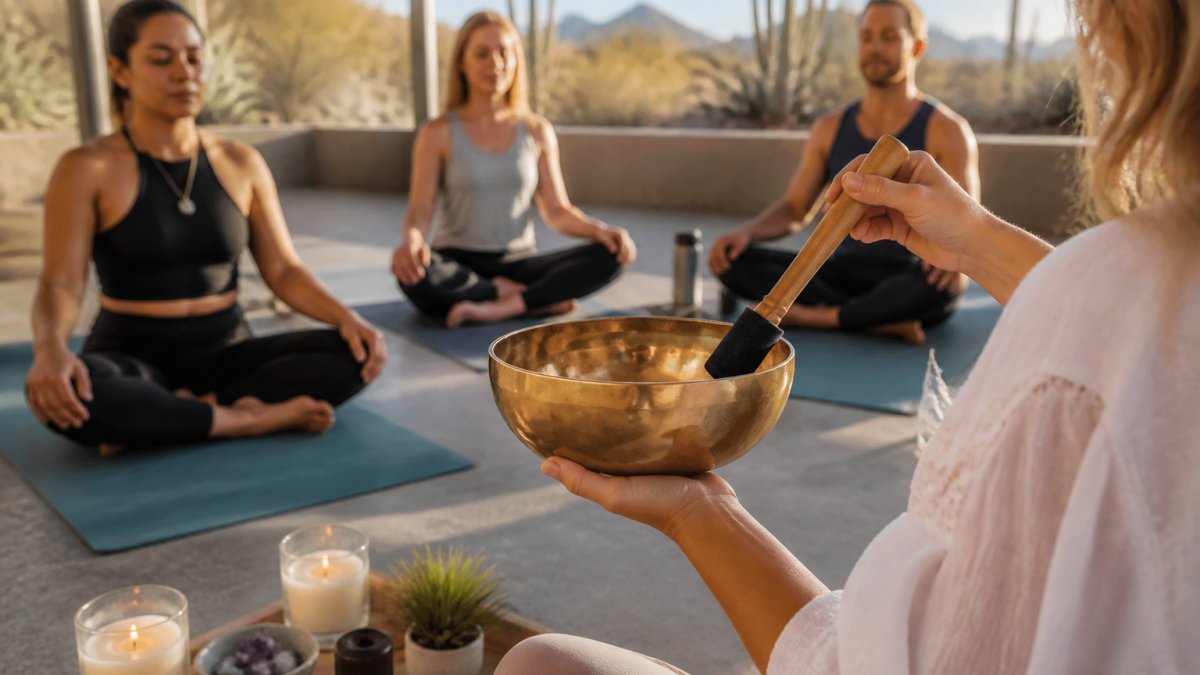
The activities that tend to move the needle:
- Guided meditation and breathwork for settling the nervous system
- Gentle movement and yoga for releasing stored tension
- Sound bath healing for deep rest and stress relief
- Time outdoors for the reset that only comes from being away from screens
How to Choose a Wellness Retreat That Fits Your Goal
Start with the outcome, not the location. Ask yourself what you want to be different on the last morning, then pick the format that matches it.
| Format | Time commitment | Likely goal | Trade-off you accept |
|---|---|---|---|
| Half-day | 3-4 hours, no overnight | A first taste; a same-day reset | No sleep-away break from routine; minimal processing time |
| One day | A full day, no overnight | Interrupting a stress cycle; learning one or two practices | No overnight drop out of work mode; limited depth |
| Weekend (two nights) | Friday evening to Sunday | Rest plus a first routine you have already practiced | Enough to start, not to finish; integration is on you |
| Three to five days | Three to five nights | Deeper emotional or spiritual work in a held container | Higher cost and more time off; re-entry can be jarring |
| Week or longer | Seven or more nights | Immersion and facilitator training pathways | The largest time and budget commitment; diminishing returns if you arrive without a goal |
A simple filter by goal:
- Quick stress reset → one day. Look for guided sessions and a quiet setting.
- Rest and habit start → weekend. Look for overnight stays and routine practice built into the schedule.
- Deeper healing work → three to five days. Look for skilled facilitators, small groups, and trauma-informed sequencing.
- Teacher or practitioner training → five days or more. Look for a structured curriculum and mentorship.
Preparation is where most people leave value on the table. Three things reliably raise the return on a short stay:
- Name one goal in a sentence before you book, "I want to sleep through the night" beats "I want to feel better."
- Clear the calendar for the day after you return. Re-entry is where gains are lost; a soft landing protects them.
- Tell the facilitator what you are working with, injuries, grief, anxiety, medication, so the program can be adapted rather than generic.
Budget and access matter too, and it is easy to underestimate the full cost once travel and time off are counted. For help planning the numbers, see this guide to wellness retreat costs and what to budget.
Who Benefits Most, and Who Needs Something Different
Short retreats reward a specific kind of person: someone who is stretched but still functioning, who needs a pause and a plan more than a rescue.
Some people need something different. If you are in acute crisis, a retreat is not a substitute for clinical care.
Plenty of people hesitate because they assume retreats are only for the already-calm or the spiritually advanced. This read on three misperceptions about attending a yoga or meditation retreat tackles the most common fears directly.
How to Make the Benefits Last After You Go Home
The retreat ends. The work does not have to. The single best predictor of lasting benefit is whether you keep one practice going in the first two weeks after you return.
Try this simple plan:
- Pick one practice from the retreat, not five
- Anchor it to something you already do, like morning coffee
- Keep it short, five to ten minutes
- Track it for fourteen days on a calendar
- Add a second practice only after the first is automatic
A common mistake is trying to recreate the retreat at home. You cannot, and chasing that feeling sets you up to fail.
Most people who ask whether a short wellness retreat works are really asking whether it will work for them. The answer depends on the goal you bring and the follow-through you commit to.
Frequently Asked Questions
Can a one-day wellness retreat be effective?
Yes, for specific goals. A single day can lower stress levels, break a screen habit, and give you enough distance from your routine to see what needs changing. What it cannot do is build a new habit on its own. Treat a one-day wellness retreat as a reset and a planning session: you leave calmer, with two or three concrete practices to carry into the following week. The day works when you arrive with a clear intention rather than expecting a full transformation in eight hours.
What can you realistically gain from a weekend wellness retreat?
Two to three days gives you enough time for the nervous system to settle. In practice, guests often report better sleep, a clearer head, and a noticeable drop in the tension they arrived with. A weekend wellness retreat also allows for deeper work: breathwork sessions, sound healing, and time in nature that a single day cannot fit. The realistic gain is a genuine reset plus a short list of habits you can repeat at home.
How do you make the benefits of a short retreat last?
Plan the return before you leave. Book one class or session for the week you get home, keep one meal habit from the retreat, and protect a short daily practice such as ten minutes of breathwork or meditation. Write down the two or three things that helped most while they are fresh. Guests who schedule follow-up support, whether a class, a coaching call, or a repeat visit, tend to hold onto the changes longer than those who rely on memory alone.
Is a short retreat enough time to reduce stress?
For most people, yes. Stress reduction is one of the fastest benefits to appear, and a well-designed short wellness retreat can produce a measurable drop in tension within a day or two. Structured activities such as guided meditation, breathwork, and time away from screens do most of the work. If you are dealing with deep burnout or grief, a short stay can help, but pairing it with ongoing professional support gives you a better chance of lasting change.