 comparison
Desert Wellness Retreats vs Mountain Yoga Retreats
Table of Contents
- Desert Wellness Retreats vs Mountain Yoga Retreats: A Quick Comparison
- Climate and Physiology: High Desert Heat vs Mountain Altitude
- Seasonal Suitability: Best Time of Year for Each Environment
- Yoga Styles and Wellness Activities in Desert vs Mountain Settings
- Logistics, Accessibility, and Packing Essentials
- Finding Yoga Retreats Near Me: Desert vs Mountain Options
- Choosing a Wellness Retreat Center: Key Factors to Weigh
- Frequently Asked Questions
Last Updated: September 17, 2026
Desert Wellness Retreats vs Mountain Yoga Retreats: A Quick Comparison
Desert wellness retreats trade cool mountain air for dry heat, wide horizons, and mineral-rich landscapes, while mountain yoga retreats lean on altitude, forest, and cooler temperatures. Neither wins outright. The right pick depends on what your body needs and when you can travel. This guide from Blisstopia Retreats breaks down climate, seasonality, programming, and logistics so you can choose with confidence.
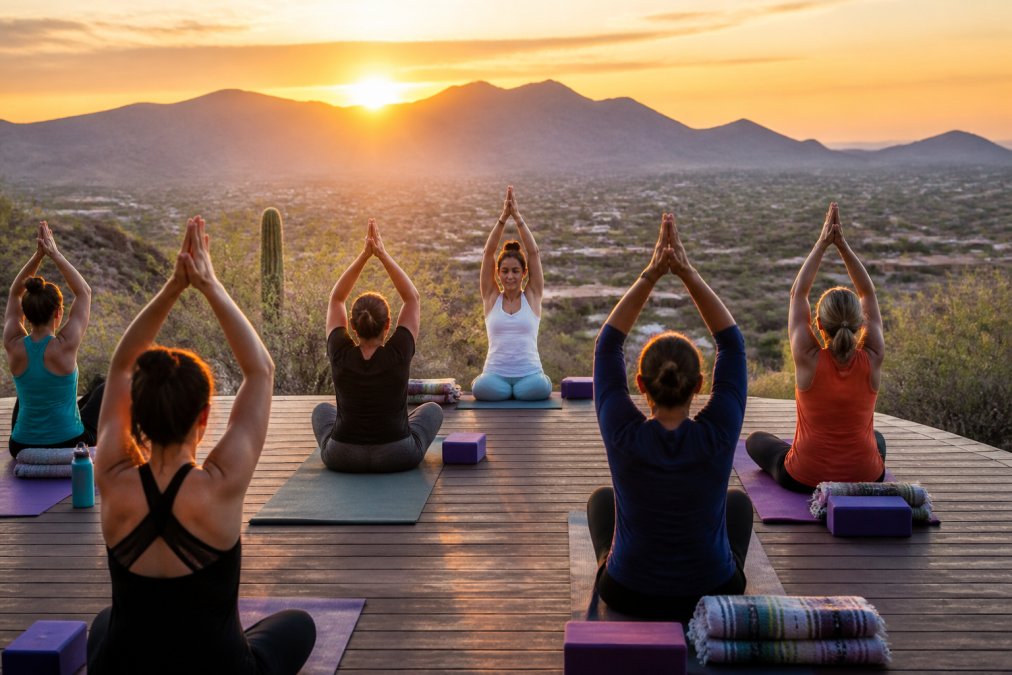
Here is the short version before we go deeper:
| Factor | Desert Retreat | Mountain Retreat |
|---|---|---|
| Climate | Dry heat, big temperature swings | Cool, humid, thinner air |
| Best Season | Late fall through early spring | Late spring through early fall |
| Signature Activity | Sound healing, breathwork, mineral pools | Hiking, forest bathing, altitude training |
| Main Challenge | Afternoon heat, sun exposure | Altitude adjustment, uneven terrain |
| Best For | Burnout recovery, warmth seekers | Fitness-focused, cool-weather lovers |
Climate and Physiology: High Desert Heat vs Mountain Altitude
Most comparisons stop at how each landscape looks. The real difference is what each environment does inside your body, and the two stress your physiology in nearly opposite directions.
What dry desert heat does. In low-humidity desert air, sweat evaporates almost immediately, so you often don't notice how much fluid you're losing. That evaporation is also why dry heat frequently feels more tolerable than the same temperature in a humid climate. As your core temperature rises, blood vessels near the skin widen and your heart works harder to move that blood, a mild, sustained cardiovascular load. Many practitioners find this warmth loosens tight muscles and eases joint stiffness, which is why desert programs tend to build around slower, longer holds: yin, restorative sequences, guided breathwork, and mineral-pool soaking. The trade-off is that the same dry air that feels pleasant also dehydrates you faster, and sun exposure at elevation adds up quickly even on mild days.
What mountain altitude does. Above roughly 5,000 feet, the air still contains about the same percentage of oxygen, but lower atmospheric pressure means each breath delivers fewer oxygen molecules. Your body compensates by breathing faster and deeper, raising heart rate at rest, and, over days, producing more red blood cells. The first 24 to 48 hours are typically the hardest: headaches, poor sleep, and breathlessness on stairs are common. That acclimation window is exactly why altitude-based programs front-load gentle sessions before hard hikes. Once adjusted, many people report the thinner air feels crisp and energizing, and the cardiovascular demand becomes part of the appeal.
Here is the side-by-side on the mechanisms that actually matter:
| Physiological Factor | Desert (Dry Heat) | Mountain (Altitude) |
|---|---|---|
| Primary stressor | Heat + dehydration | Lower oxygen pressure |
| Heart rate effect | Rises with core temperature | Rises at rest during acclimation |
| Adjustment window | 1-2 days to tolerate heat | 1-3 days to tolerate thin air |
| Muscle and joint feel | Loosened, warmed | Stiff until warmed up |
| Sleep impact | Disrupted if room stays hot | Commonly disrupted first 1-2 nights |
| Hydration demand | Very high (sweat evaporates unseen) | High (dry air + faster breathing) |
| Best-matched practice | Yin, restorative, breathwork, soaking | Hiking, vinyasa, cardio, forest meditation |
Who should think twice. Neither environment is neutral. Heat exposure puts strain on the cardiovascular system, and older adults and people on certain medications are more vulnerable, the CDC guidance on heat and health covers hydration, pacing, and warning signs. Altitude, meanwhile, can aggravate heart and lung conditions and is worth a conversation with your doctor before booking. A common pattern is that people who thrive in one environment struggle in the other on their first visit, simply because they didn't plan an adjustment day.
Seasonal Suitability: Best Time of Year for Each Environment
Timing decides more than location. A desert center in April and the same center in July are effectively two different retreats, and the same is true for a mountain lodge in September versus February. The month-by-month matrix below is the fastest way to match an environment to the dates you can actually travel.
| Month | Desert Suitability | Mountain Suitability | Notes |
|---|---|---|---|
| January | Good | Limited | Desert days are mild and nights cold; many mountain programs shift indoors or to snow sports |
| February | Excellent | Limited | Prime desert window opens; mountain trails often snowbound |
| March | Excellent | Fair | Desert wildflowers begin; mountain trails turn muddy at thaw |
| April | Excellent | Good | Peak desert comfort; mountain access improving |
| May | Good | Excellent | Desert heat building, book early-morning programming; mountains hit prime season |
| June | Fair | Excellent | Desert afternoons too hot for outdoor sessions; mountains ideal |
| July | Poor | Excellent | Desert monsoon season adds humidity and afternoon storms; mountains at their best |
| August | Poor | Excellent | Same pattern holds; desert programs move indoors or to dawn |
| September | Fair | Excellent | Desert still hot but cooling; mountains still prime |
| October | Excellent | Good | Desert season reopens; mountain weather turns unpredictable |
| November | Excellent | Fair | Prime desert month; mountain trails begin closing |
| December | Good | Limited | Desert comfortable by day, cold at night; mountain programs go indoor |
Reading the matrix. Desert suitability runs roughly October through April, with February, March, and April as the sweet spot, comfortable daytime temperatures, cool nights, and reliable sun.
Yoga Styles and Wellness Activities in Desert vs Mountain Settings
Both environments host the same core styles, but the setting changes how they feel. Vinyasa flows suit mountain studios with cool air and open windows. Yin yoga, restorative sequences, and meditation fit desert settings, where slower pacing matches the heat.
Logistics, Accessibility, and Packing Essentials
Getting there matters as much as what you do once you arrive. Desert retreats near major metro areas often sit within an hour of an airport, which suits short trips and long weekends. Mountain retreats frequently require a longer drive, sometimes on winding roads, and remote locations may limit cell service.
Packing lists diverge sharply:
- Desert: breathable layers, wide-brim hat, high-SPF sunscreen, refillable water bottle, light jacket for cool nights
- Mountain: moisture-wicking layers, broken-in hiking boots, rain shell, warm fleece, insect repellent
- Both: comfortable yoga wear, journal, personal medications, electrolyte packets
Finding Yoga Retreats Near Me: Desert vs Mountain Options
Searching for yoga retreats near me usually surfaces two things: big resorts and small independent centers. The difference matters more than the terrain. Large resorts offer polished amenities and predictable schedules. Smaller centers offer intimacy, custom programming, and direct access to the people running the place.
Choosing a Wellness Retreat Center: Key Factors to Weigh
Choosing a wellness retreat center comes down to five factors: program fit, group size, facilitator credentials, total inclusions, and honest reviews. Skip any one of these and you risk paying for a spa weekend instead of real transformation.
Use this checklist before you commit:
- Does the program match your goal (rest, fitness, grief work, spiritual growth)?
- How many guests attend, and what is the facilitator-to-guest ratio?
- What are the credentials of the people leading sessions?
- Are meals, accommodations, and activities included, or added later?
- Do reviews mention lasting change, not just a pleasant week?
Frequently Asked Questions
What are the primary benefits of a desert wellness retreat?
Desert wellness retreats offer dry, warm climates that support outdoor yoga, hiking, and mineral pool soaking. The stable weather and open landscapes often promote mental clarity and stress relief. Many programs include spa treatments, meditation, and holistic wellness activities tailored to the environment.
How does the environment impact a yoga retreat experience?
Desert settings provide heat and dryness, which can enhance stretching and detoxification, while mountain altitudes offer cooler air and lower oxygen levels that may boost cardiovascular fitness. Both environments support mindfulness and nature immersion, but the physical demands and comfort levels differ.
Is a desert or mountain retreat better for beginners?
Desert retreats are often more accessible for beginners due to stable terrain and warmer temperatures, making outdoor activities less strenuous. Mountain retreats may involve altitude adjustments and steeper hikes, which can be challenging for those new to fitness routines. Beginners should choose based on comfort with climate and physical activity.
What should I pack for a desert vs mountain wellness retreat?
For desert retreats, pack light, breathable clothing, a wide-brimmed hat, sunscreen, and a refillable water bottle. For mountain retreats, bring layers, a waterproof jacket, sturdy hiking boots, and insect repellent. Both require comfortable yoga attire and personal toiletries.
How do I choose between a desert and mountain retreat for stress relief?
If you prefer warmth, dry air, and expansive scenery, a desert retreat may offer better stress relief. If you find cool, crisp air and forested landscapes more calming, a mountain setting might suit you. Consider your tolerance for heat, altitude, and desired activities like hiking or mineral pool soaking.