 listicle
Alternatives to Commercial Desert Resorts for Wellness
Table of Contents
- Why Seek Alternatives to Commercial Desert Resorts
- Faith-Based Wellness Ministry as a Transformational Model
- Mountain and Geothermal Wellness Retreats Beyond the Desert
- Transformational Yoga Retreats in Private Settings
- Private Membership Associations for Personalized Healing
- Small Group Healing Retreats vs. Large Commercial Complexes
- How to Choose the Right Wellness Retreat Alternative for You
- Conclusion
- Frequently Asked Questions
Last Updated: September 8, 2026
Why Seek Alternatives to Commercial Desert Resorts
Commercial desert resorts often deliver polished amenities but miss the deeper work of personal transformation. The search for alternatives to commercial desert resorts for wellness usually begins after a guest realizes a luxury spa day cannot untangle years of burnout, disconnect, or quiet unhappiness. A genuine retreat should reset the nervous system, not just the schedule.
At Blisstopia Retreats, we have watched guests arrive exhausted from careers and caretaking, only to rediscover their footing within days. The difference comes down to intention, scale, and who is actually holding the space. Large complexes run on volume; true sanctuaries run on presence.
Most people do not need more treatments. They need a therapeutic environment where holistic healing, mindfulness, and genuine rest are woven into every hour. That distinction shapes every alternative worth considering, from mountain springs to private faith-based ministries.
Faith-Based Wellness Ministry as a Transformational Model
A faith-based wellness ministry offers something a commercial resort cannot: a framework of meaning around your healing. Rather than a menu of services, guests receive a covenant of care rooted in spiritual and physiological reset, where practices like meditation, breathwork, and sound healing serve a larger purpose of reconnection.
This model resonates with people who feel spiritually open but institutionally wary. Operating under 26 U.S.C. Section 508(c)(1)(a), Blisstopia Retreats functions as a private membership association and religious ministry, not a transactional business (irs.gov). Founders Mark and Lana Royce live on-site, bringing over 75 years of combined experience in psychotherapy, yoga, martial arts, and regenerative health directly to each guest's journey.
The practical result is radical transparency. You know exactly who is guiding you, why they created the space, and what they believe transformation requires. That level of accountability is rare in an industry often built on surface impressions.
Mountain and Geothermal Wellness Retreats Beyond the Desert
Most commercial desert resorts are built around a single asset: the dry heat. But for many seekers, that heat is precisely the problem. It can feel draining, dehydrating, and monotonous. The search for alternatives to commercial desert resorts for wellness often leads to biomes that offer a more varied sensory and physiological experience, places where the landscape itself becomes an active participant in healing.
The Therapeutic Contrast of Temperate and Alpine Climates
A mountain setting provides a fundamentally different physiological environment than a desert floor. The cooler air is denser with oxygen, which supports cardiovascular recovery and mental clarity. The temperature swings between day and night naturally regulate circadian rhythms, improving sleep architecture, a cornerstone of any genuine physiological reset. Forested trails offer soft, uneven terrain that engages stabilizing muscles and reduces joint impact, a stark contrast to the hard, flat surfaces of desert landscapes.
Consider the specific benefits of a forest immersion:
- Phytoncides: Trees release these airborne compounds, which have been shown to support immune function (peer-reviewed research).
- Negative Ions: Moving water, streams, waterfalls, and rain, generates negative ions, which many find uplifting and clarifying.
- Natural Shade: Forest canopies provide a reprieve from direct sun, allowing for longer, more comfortable periods of outdoor activity and reflection.
A geothermal spring adds another layer. The mineral content, often including silica, sulfur, and magnesium, varies by source. Soaking in naturally heated water promotes vasodilation, easing muscle tension and supporting the body's natural detoxification pathways. The ritual of moving from a hot soak to a cool plunge, repeated in a natural setting, is a form of hydrotherapy that commercial desert pools rarely replicate.
The Trade-Off: Scenery vs. Structure
The critical gap in most mountain or coastal retreats is the absence of intentional, guided inner work. A beautiful vista can soothe the nervous system, but it does not, by itself, untangle a lifetime of patterns. A hot spring resort can relax your body, but it rarely challenges your beliefs or guides you through the process of emotional release.
This is the distinction that matters. A landscape provides the container; a skilled facilitator provides the catalyst. The ideal alternative to a commercial desert resort is not simply a change in scenery, but a change in the quality of attention you receive within that scenery. The most effective retreats pair the restorative power of a non-desert biome with a structured program of breathwork, somatic therapy, and guided reflection, ensuring that the calm you feel on day one becomes a lasting state of being, not just a vacation memory.
Transformational Yoga Retreats in Private Settings
Transformational yoga retreats move beyond asana practice into nervous system regulation, breathwork, and embodied leadership. The setting matters as much as the sequence. Private sanctuaries allow for trauma-informed sequencing and personalized attention that crowded resort studios cannot offer.
Yoga teacher training at Blisstopia Retreats exemplifies this depth. The 200 and 300 hour certifications blend Kundalini-inspired practices, Yin yoga, restorative work, and somatic methods (yogaalliance.org). The signature immersion retreat includes morning sadhana, kriyas, sound healing, chakra work, and practice-teaching labs, all hosted in a fully equipped studio.
What most guides miss is the ratio of support to participants. A transformational retreat succeeds when facilitators can actually see each student's energy shift. In a private villa with on-site caretakers, that intimacy is structural, not incidental. For yoga teachers seeking mentorship rather than mere credentialing, this environment proves decisive.
Private Membership Associations for Personalized Healing
A private membership association changes the entire dynamic of a wellness stay. Instead of being a customer in a queue, you become a member of a community with direct access to its stewards. This structure supports personalized wellness planning, from Ayurvedic meal preparation to custom retreat durations of three to fourteen days.
The distinction matters for guests who have felt processed by larger operations. At Blisstopia Retreats, the 7,000 square foot villa sits on 2.5 secluded acres powered by solar, well, and propane. Amenities like the 104-degree hot tub, infrared sauna, natural labyrinth, and hiking trails are shared by a handful of guests, never a hundred.
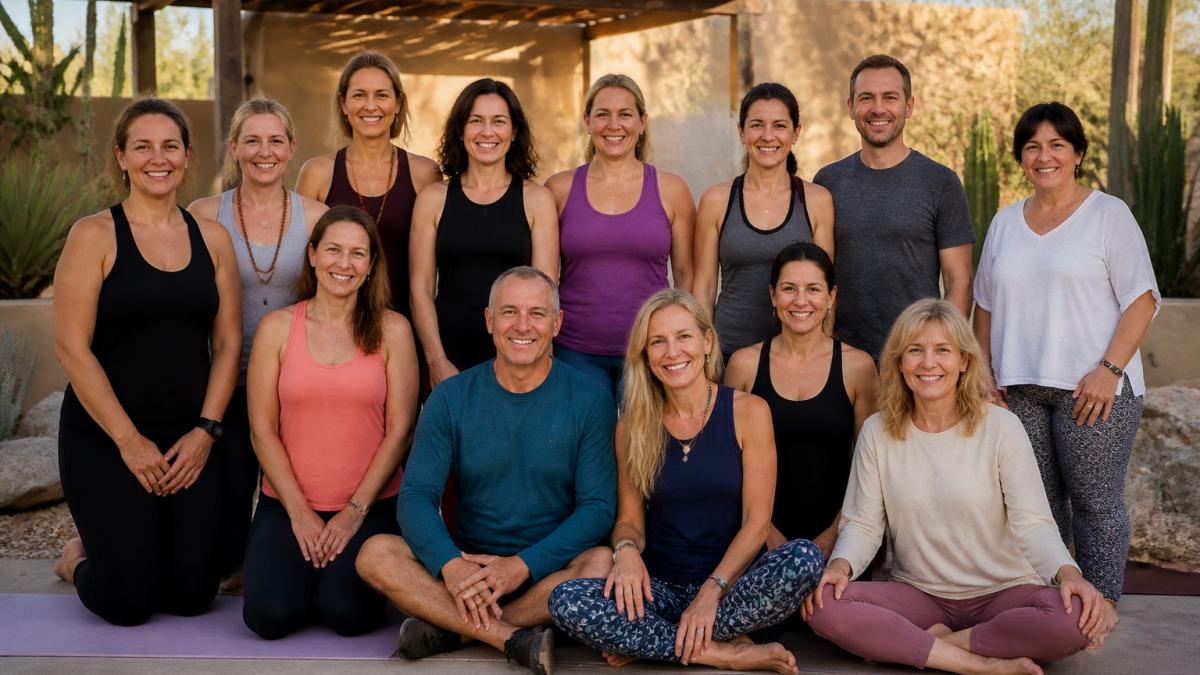
That scale allows for genuine flexibility. Facilitators can host groups of twelve to fifteen without losing high-touch care, because the founders live in the on-site Casita and oversee every detail. This is personalized healing by design, not by exception.
Small Group Healing Retreats vs. Large Commercial Complexes
The most significant difference between a healing retreat and a commercial complex is group size. Small group healing retreats create containers where trust forms quickly, silence is respected, and vulnerability feels safe. Large complexes, by contrast, often disperse energy across hundreds of guests, making deep connection accidental rather than intentional.
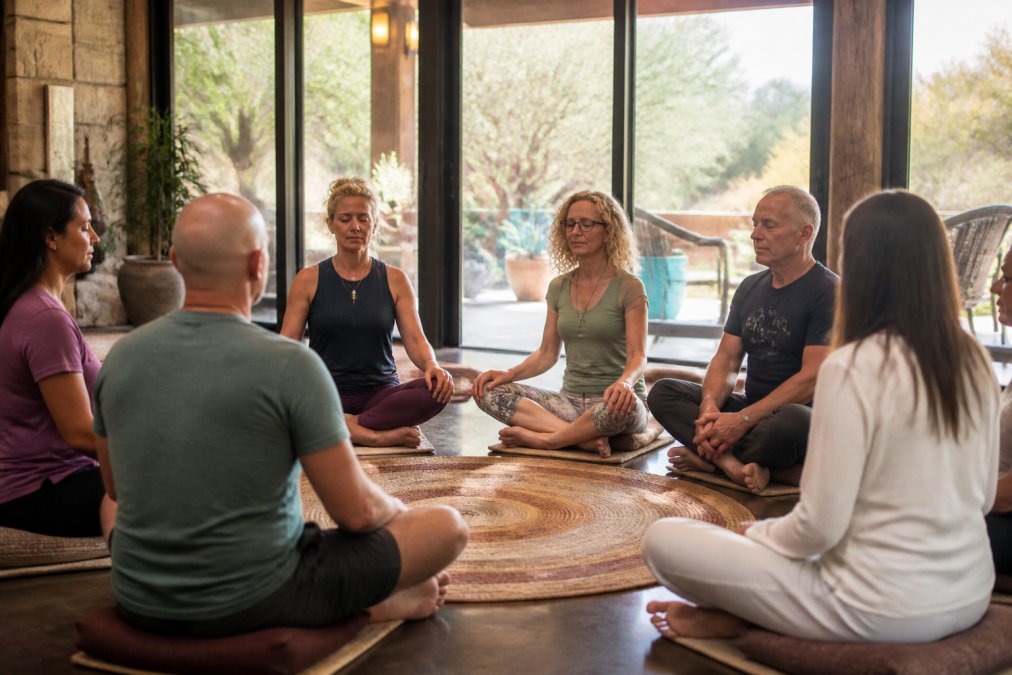
Consider the practical logistics of your healing. Solo travelers often find small groups essential for feeling held without being overwhelmed. Group retreats offer shared meals, collective ceremonies, and the quiet validation of witnessing others do their own work. The choice depends on whether you need solitude or solidarity to go deep.
A useful comparison for decision-making:
| Factor | Small Group Retreat | Large Commercial Complex |
|---|---|---|
| Group size | 5-15 guests | 50-500 guests |
| Facilitator access | Direct, daily | Scheduled, limited |
| Programming | Customized | Fixed schedule |
| Environment | Private, secluded | Public, amenity-focused |
| Outcome focus | Transformation | Relaxation |
How to Choose the Right Wellness Retreat Alternative for You
Choosing among alternatives to commercial desert resorts for wellness is not about picking the most beautiful location. It is about matching the environment, the programming, and the group dynamic to your specific psychological and physiological needs. A misaligned retreat, no matter how luxurious, can leave you feeling more disconnected than when you arrived.
Step 1: Diagnose Your Primary Intention
The first filter is not location; it is intention. Different retreat structures serve different outcomes. Be honest about what is driving you:
- For Nervous System Overload: If you are running on adrenaline and cannot sleep, you need a retreat focused on down-regulation. Look for programs centered on breathwork, gentle yoga, sound healing, and extended silence. A high-intensity fitness retreat would be counterproductive.
- For Emotional or Spiritual Disconnection: If you feel numb or lost, you need a program that includes facilitated inner work, group processing, guided journaling, or one-on-one sessions with a therapist or spiritual counselor. Scenery alone will not suffice.
- For Physical Detoxification or Burnout: If your body is depleted, prioritize retreats with a strong nutritional component, daily movement, and ample rest. A geothermal or forest setting can powerfully support this physical reset.
- For Creative or Strategic Clarity: If you are seeking a breakthrough on a project or life decision, you need a retreat that balances deep focus with unstructured time. A private, secluded setting with few distractions is more valuable than one with a packed activity schedule.
Step 2: Assess the Social Container: Solitude vs. Solidarity
A common mistake is ignoring the social dynamic. Your need for solitude or solidarity is a critical variable.
- Solo Seekers: If you are traveling alone, a small group retreat (5-15 people) offers a crucial safety net. It provides a container of support without the pressure of constant interaction. You can retreat to your room when needed but have the option of shared meals and group sessions. This is often the safest and most productive format for deep personal work.
- Couples or Friends: If you are attending with a partner, ensure the program offers both joint and separate activities. A retreat that forces constant togetherness can create friction. Look for a balance of shared experiences and individual reflection time.
- Group Cohorts: If you are going with a team or a club, a private rental of a sanctuary can be more effective than booking into a larger retreat. This allows the programming to be tailored to your group's specific dynamic.
Step 3: Evaluate the Facilitation Model
This is the most under-weighted factor in choosing a retreat. The credentials on a website matter less than the operational reality on the ground.
- Who is present? Are the founders or lead facilitators on-site for the entire duration, or do they fly in for a single workshop? In a commercial resort, you may never meet the person who designed the program. In a private sanctuary, the founders are often the ones cooking your meals and leading your morning practice.
- What is the staff-to-guest ratio?
- What is their philosophy of care? Do they see you as a client to be serviced or a whole person on a journey? Ask about their approach to emotional crises or physical discomfort. A retreat that lacks a clear protocol for these moments is not a safe container.
Step 4: The Budget Reality Check
Commercial desert resorts carry massive overhead, marketing budgets, large staffs, and investor returns. This cost is passed directly to you. Private, owner-operated sanctuaries often have a fundamentally different cost structure. Because the facility is owned and the founders live on-site, they can offer a more accessible price point without cutting corners on the quality of the experience.
When comparing costs, do not just compare the nightly rate. Scrutinize what is included:
- Are all meals, sessions, and activities included, or are they a la carte?
- Is airport transfer included?
- Are there hidden fees for using amenities like the sauna or pool?
A retreat that appears cheaper on the surface may end up costing more once you add in the extras. Conversely, a private sanctuary that lists a single, all-inclusive price often provides significantly more value. The goal is not to find the cheapest option, but the one with the highest integrity of value, where your investment translates directly into the quality of the facilitation, the food, and the space.
Conclusion
Choosing an alternative to a commercial resort is an act of self-respect. It says you value depth over decor and genuine healing over surface comfort. Whether you find that in mountain springs, a private ministry, or a small group sanctuary, the common thread is intention.
Blisstopia Retreats embodies that intention through its faith-based approach, on-site founders, and commitment to personalized, holistic care. From transformational breathwork and sound bath healing to Ayurvedic nutrition and 200-hour yoga teacher training, every offering is designed for real change. Call us at 623-986-2899 to begin your journey toward clarity and renewal.
Frequently Asked Questions
What are the main differences between a faith-based wellness ministry and a commercial desert resort?
Faith-based wellness ministries operate as spiritual sanctuaries with on-site caretakers who prioritize deep personal transformation over profit margins. Unlike commercial resorts focused on luxury amenities and high volume, faith-based approaches emphasize intimate, intentional healing through guided breathwork, meditation, and spiritual practice. Many are structured as private membership associations, allowing them to offer personalized programming and maintain smaller group sizes. The emphasis shifts from surface-level relaxation to authentic inner work.
Are small group healing retreats more effective than large commercial wellness resorts?
Small group healing retreats create conditions for deeper transformation by fostering genuine connection and individualized attention. With fewer participants, facilitators can address specific needs and create a therapeutic environment where vulnerability feels safe. Large commercial resorts, while offering diverse amenities, often prioritize volume and standardized programming.
How do transformational yoga retreats in private settings differ from commercial yoga resort programs?
Transformational yoga retreats in private settings typically emphasize advanced practices like breathwork, energetic embodiment, and somatic healing rather than general fitness classes. Private sanctuaries often include specialized training, personalized meal planning through Ayurvedic nutrition, and trauma-informed sequencing. Commercial resorts tend to offer broader yoga classes alongside spa services and entertainment. Private settings allow facilitators to create cohesive curricula that build progressively over the retreat duration, supporting deeper nervous system regulation and lasting integration.
What should I look for when vetting a non-commercial wellness retreat?
Evaluate the credentials and on-site presence of founders or lead facilitators. Verify whether the retreat operates as a private membership association or faith-based ministry, which often indicates intentional governance. Review testimonials focusing on lasting transformation rather than just feeling relaxed. Ask about retreat customization, group size, and what happens after the program ends for integration support. Confirm that programming aligns with your specific goals, whether that's yoga training, breathwork, or spiritual healing.
Can a shorter retreat at a private wellness sanctuary produce real transformation, or do I need a full week?
Transformation timelines vary based on your starting point and the retreat's design. Three-to-five-day intensive programs at private sanctuaries can catalyze significant shifts when they include structured breathwork, guided meditation, and personalized coaching. However, longer stays (seven to fourteen days) allow for deeper nervous system reset, integration of insights, and sustained practice. Many private sanctuaries offer custom programming, so discuss your schedule and goals directly. The quality of facilitation and your willingness to engage deeply matter more than duration alone.