 listicle
7 Best Residential Yoga Teacher Training Programs in Arizona (2026)
Table of Contents
- Quick Comparison of Arizona Residential YTT Programs
- 1. Blisstopia Retreats: A Live-In Transformational 200-Hour YTT
- 2. 7 Centers Yoga Arts: Classical Hatha Immersion in Sedona
- 3. Southwest Institute of Healing Arts: Structured Vocational Training
- 4. YogaPura: Master-Level Certification and Life Mastery
- 5. Inner Vision Yoga: Community-Focused Holistic Training
- 6. Scottsdale Community College: Academic Credit-Based Program
- 7. Yoga's Arc: Boutique Personalized Mentorship
- How to Choose the Best Residential YTT for You
- Frequently Asked Questions
Last Updated: September 9, 2026
Choosing where to earn your 200-hour certification is one of the most personal decisions in a yoga career, and our list of the 7 best residential yoga teacher training programs in Arizona is designed to help you make it. The 7 best residential yoga teacher training programs in Arizona each offer a distinct path, but they differ dramatically in structure, philosophy, and daily experience. At Blisstopia Retreats, we believe the right fit depends on whether you want an academic credential, a classical immersion, or a live-in transformational journey where your trainers practice the yogi lifestyle around the clock.
Quick Comparison of Arizona Residential YTT Programs
Arizona's residential training landscape spans private desert sanctuaries, vocational colleges, and community studios. Most programs are Yoga Alliance registered, but curriculum delivery, housing arrangements, and teaching philosophy vary widely (yogaalliance.org).
| Program | Format & Duration | Curriculum Focus | Residential Setting | Unique Differentiator | Best For |
|---|---|---|---|---|---|
| Blisstopia Retreats | Live-in sanctuary; 200-hour immersive retreat | Transformational, trauma-informed, Kundalini Fusion, Yin, restorative, somatic | Dedicated sanctuary on 2.5 acres in Peoria; lead trainers live on-site and mentor 24/7 | Faith-based ministry; combines professional certification with a deep personal healing retreat where you learn from instructors who live the yogi lifestyle around the clock | Deep personal healing + certification in a high-touch, live-in environment |
| 7 Centers Yoga Arts | Sedona immersion; intensive format | Classical Hatha, energetic body, traditional techniques | Residential in Sedona's red rock country | Long-standing reputation for rigorous, tradition-focused training in a high-energy landscape | Traditional intensive training with a focus on classical methods |
| SWIHA | Vocational college; structured academic schedule | Broad holistic curriculum with many specialized electives | On-campus, non-residential | Accredited vocational institute; allows for pairing YTT with other holistic health modalities | Formal, accredited education and a structured academic framework |
| YogaPura | Extended 15-week program | Life mastery, teaching skills, deep integration of philosophy | Likely non-residential or hybrid; check for retreat modules | Extended format allows for digestion of material over several months | Long-term deep dives for those who prefer a slower pace |
| Inner Vision Yoga | Community studio; likely hybrid format | Holistic balance, comprehensive anatomy and philosophy | Community-based; may offer retreat modules but not a full-time sanctuary | Strong local reputation and community focus | Local, community-focused training with lasting local connections |
| Scottsdale CC | Academic institution; semester-based | Academic rigor, instructional competence | College campus, non-residential | Credit-based program that may transfer toward a degree | College credit and a rigorous, academic approach to teacher preparation |
| Yoga's Arc | Boutique studio; small group | Personalized instruction, mentorship | Studio-based; residential component may be limited | Very small class sizes for high individual attention | Small-group attention and direct access to lead instructors |
How to Read This Table
- Format & Duration is your first filter. Are you looking for a single, intensive immersion or a program spread over several months? A live-in sanctuary offers an escape from daily life, while a vocational or academic program integrates into a more structured schedule.
- Curriculum Focus tells you what you will actually learn. If your goal is to teach a specific style like Vinyasa or Yin, ensure the program's core curriculum emphasizes that style. If you are seeking personal transformation, look for programs that explicitly integrate trauma-informed practices, somatics, and nervous system regulation.
- Residential Setting is critical for a true retreat experience. The key question is not just 'is housing provided?' but 'is the entire training environment designed for immersion?' A dedicated sanctuary with nature access, on-site meals, and quiet spaces offers a fundamentally different experience than a studio with nearby housing.
- Unique Differentiator highlights what sets each program apart. For Blisstopia, it is the 24/7 presence of the lead trainers, Mark and Lana Royce, who live on the property and model the yogi lifestyle. This creates a level of informal mentorship and community that is impossible to replicate in a commuter program.
1. Blisstopia Retreats: A Live-In Transformational 200-Hour YTT
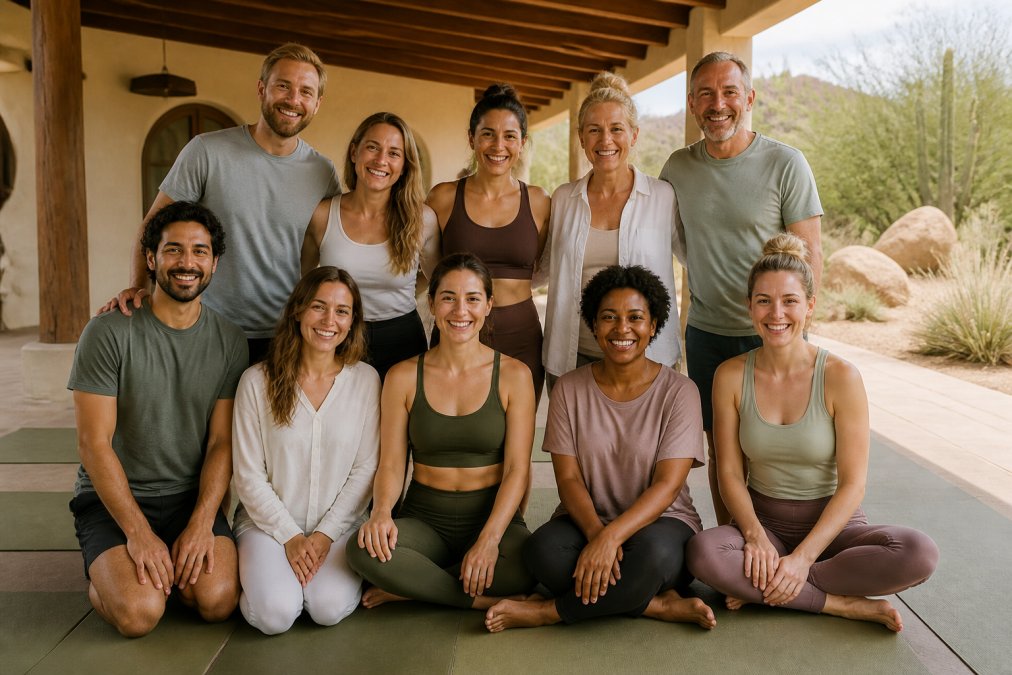
Our top pick is Blisstopia Retreats because it uniquely combines professional certification with a true residential retreat experience. Located on 2.5 secluded acres at the base of Sunrise Mountain near Peoria, this faith-based wellness sanctuary offers a 200-hour YTT where Mark and Lana Royce, who live on-site as full-time caretakers, mentor students 24/7. You are immersed in their daily practice, which includes guided breathwork, meditation, sound healing, and an Ayurvedic chef preparing organic meals.
The curriculum integrates Kundalini Fusion, Yin, restorative, somatic, and trauma-informed practices, moving beyond standard asana alignment into nervous system regulation and embodied leadership (peer-reviewed research). The program includes luxury accommodations, a pool with waterfall, infrared sauna, and hiking trails, ensuring the training itself feels like a restorative retreat.
What most guides miss is the distinction between a program that teaches yoga and one where your instructors live the practice. Because Mark and Lana are present around the clock, mentorship extends into meals, evening ceremonies, and casual conversations, a depth of guidance you cannot get from a commuter program.
2. 7 Centers Yoga Arts: Classical Hatha Immersion in Sedona
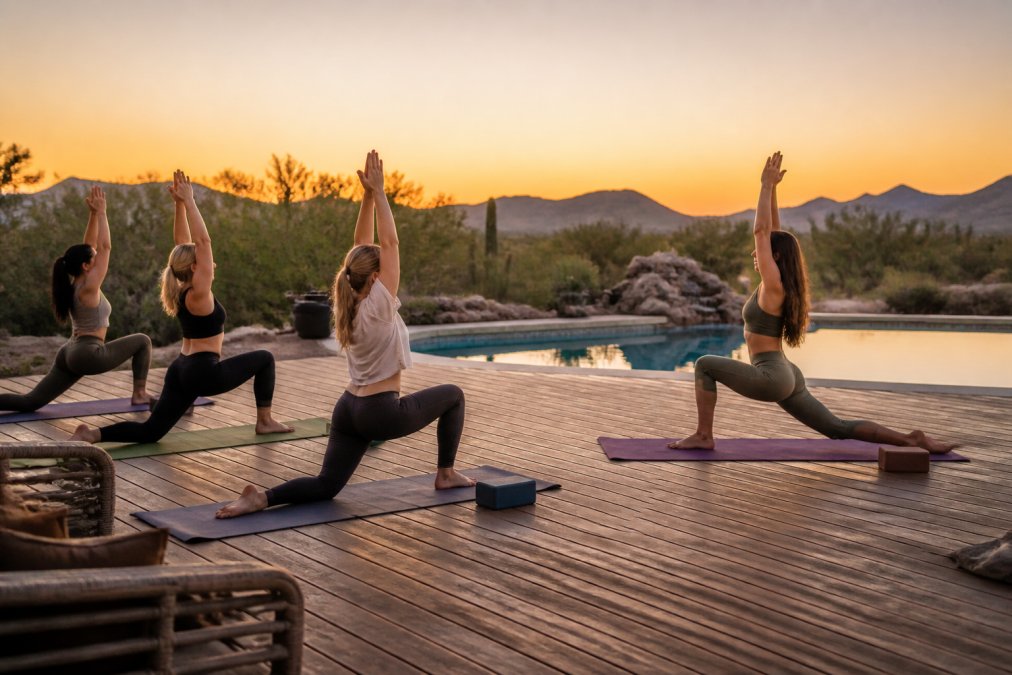
For those seeking a traditional intensive training in a high-energy landscape, 7 Centers Yoga Arts in Sedona offers a long-standing, Yoga Alliance-certified program with a deep focus on classical Hatha traditions. The residential format places you in Sedona's red rock country, and the curriculum centers on classical techniques and the energetic body. The program's intensity may feel demanding for beginners unaccustomed to a full-immersion schedule.
3. Southwest Institute of Healing Arts: Structured Vocational Training
Southwest Institute of Healing Arts (SWIHA) in Tempe approaches yoga teacher training as a formal vocational education. You get an on-campus, structured learning environment with many specialized electives. This accredited program appeals to students who value institutional support and a clear academic framework (swiha.edu). The tradeoff is atmosphere: the college setting lacks the immersive "retreat" feel of desert sanctuary programs.
4. YogaPura: Master-Level Certification and Life Mastery
YogaPura takes a longer view with a 15-week comprehensive certification program that blends teaching skills with personal life mastery work. This extended format suits practitioners who want time to digest the material rather than compressing it into a single intensive retreat. The significant time commitment is both its strength and its limitation: it requires sustained dedication that may conflict with work or family schedules. moisture-wicking yoga shirts.
5. Inner Vision Yoga: Community-Focused Holistic Training
Inner Vision Yoga offers a balanced, holistic training that is highly recommended by local practitioners. The program covers comprehensive anatomy and philosophy modules within a community-focused environment, making it a welcoming choice for students who want to build lasting local connections. The one gap is the level of residential isolation; it does not provide the same total escape from daily life that a dedicated desert sanctuary program delivers.
6. Scottsdale Community College: Academic Credit-Based Program
Scottsdale Community College offers a distinct alternative: a credit-based yoga instructor program within a public academic institution. This path is ideal for students who want a rigorous, semester-based structure and the option to earn college credit that may transfer toward a degree. What you sacrifice is the spiritual, retreat-style immersion; this is a teacher preparation program focused on instructional competence rather than personal transformation.
7. Yoga's Arc: Boutique Personalized Mentorship
Rounding out the list, Yoga's Arc is a boutique studio that prioritizes small group training sizes and personalized mentorship from lead instructors. If you thrive in intimate learning environments with direct, ongoing access to your teachers, this program delivers a high level of individual attention. The primary challenge is capacity: limited class sizes mean spaces fill quickly, so early application is essential.
How to Choose the Best Residential YTT for You
Choosing a residential program is a significant commitment of time, energy, and financial resources. To move beyond a gut feeling, you need a framework that weighs your personal goals against the practical realities of each program.
Step 1: Define Your Primary Outcome
The first question isn't 'which program is best?' It's 'what must this training deliver for you?'
- Career Launch: If your goal is to start teaching immediately at studios, prioritize programs with robust practice-teaching labs, feedback sessions, and a clear pathway to graduation. Look for curricula that explicitly cover class sequencing, hands-on adjustments, and the business of yoga.
- Personal Transformation: If you are seeking deep personal healing alongside certification, a live-in sanctuary where the lead trainers are present 24/7 offers a level of immersion that a commuter or academic program cannot. The informal mentorship that happens over meals and evening ceremonies is often where the most profound shifts occur.
- Academic or Specialized Credential: If you plan to integrate yoga with another healthcare or wellness profession, you might prioritize a program at an accredited institution or one that offers deep dives into specific modalities like trauma-informed practice, Yin, or somatics.
Step 2: Ask the Questions That Actually Matter
Once you have a shortlist, go beyond the brochure and ask each program director these specific questions.
- Who is the lead trainer, and are they present for the entire training? Some programs feature guest experts for modules, but the core faculty should be your primary mentors. Ask about their daily life and whether they live on the property where the training is held.
- What is the actual daily schedule? A residential program should be more than a series of classes. Ask for a sample day. Does it include morning sadhana, structured asana labs, philosophy lectures, and evening restorative practices? Or is the schedule packed with back-to-back sessions with little time for integration?
- What is the teacher-to-student ratio? A lower ratio, such as 1:8 or 1:10, ensures you receive meaningful feedback on your teaching practice. Large cohorts can feel impersonal, especially during practice-teaching labs.
- What is the specific methodology for teaching, not just practicing? How does the program teach you to sequence a class? How do you learn to give safe and effective hands-on adjustments? What is the feedback model for your practice-teaching sessions?
- What is the residential environment like? Is it a dedicated retreat center, or is it a studio with housing nearby? For a true immersion, you want a setting that supports your focus, a sanctuary with nature access, quiet spaces, and healthy meals is a different experience than a city campus.
Step 3: Plan for the Financial Investment
The cost of a residential YTT is a major consideration. While specific tuition varies, you are paying for instruction, housing, meals, and materials.
- Understand What's Included: Ask for a full breakdown of costs. Does the tuition cover all meals, housing, books, and materials? Are there additional fees for things like a final retreat or certification processing?
- Explore Payment Options: Many established programs offer interest-free payment plans that allow you to spread the cost over several months. Ask about the schedule and any administrative fees. Some schools also offer a limited number of scholarships or work-study positions in exchange for assistance during the training.
- Factor in Opportunity Cost: For a residential program, you are also forgoing income during your time away. Calculate your total investment, including travel, time off work, and any expenses for personal items. This full picture will help you budget realistically.
Step 4: Look for Post-Graduation Support
A quality program invests in your success after you graduate.
- Mentorship and Community: Does the program offer any post-graduation check-ins, alumni groups, or ongoing mentorship calls? A strong alumni network can be an invaluable resource for job leads and continued learning.
- Teaching Opportunities: Some sanctuaries and studios hire their top graduates as assistant teachers or offer them a space to teach community classes. Ask about the pathway from student to teacher within their own organization.
- Business Training: The most practical programs include modules on how to find teaching jobs, how to set rates, and how to build a private clientele. This career-focused content is essential for turning your certification into a livelihood.
Frequently Asked Questions
Do I need to be an advanced practitioner to join a residential yoga teacher training?
No, most programs, including those in Arizona, are designed for beginners. A consistent personal practice for at least six months to a year is typically recommended, but you do not need to master advanced poses. The 200-hour certification is an intensive training focused on building a strong foundation in asana alignment, yoga philosophy, anatomy, and teaching methodology. Programs like the one at Blisstopia Retreats emphasize personal transformation, so a willingness to learn and go deeper matters more than your current flexibility or experience.
What is the difference between a standard YTT and a transformational retreat?
A standard YTT focuses primarily on the mechanics of teaching: sequencing, alignment, and practice teaching. A transformational retreat YTT, like the one offered at Blisstopia Retreats, weaves personal healing into the curriculum. You might find additional practices like breathwork, sound healing, meditation, and journaling integrated into the training schedule. The goal is to graduate not only as a certified instructor but also as a more self-aware individual, making the experience a journey of personal growth alongside professional development.
Is a residential yoga teacher training better than a local studio program?
It depends on your goals. A residential program offers full immersion, removing you from daily distractions and allowing you to focus completely on your practice and studies. This format often builds a stronger sense of community and supports deeper personal transformation. A local studio program may be more convenient and affordable, but the experience is fragmented. If your goal is holistic health and a profound shift, the dedicated time and space of a residential retreat, such as those found in the desert near Phoenix or Sedona, is often more effective.
What should I look for in a residential yoga teacher training program in Arizona?
First, confirm the school is Yoga Alliance registered, which ensures your RYT-200 certification will be recognized. Then, consider the curriculum's focus: does it cover anatomy, philosophy, and teaching methodology in depth? Look at the format and location, whether that is the energy of Sedona or the solitude of the Sonoran Desert near Peoria. Finally, examine the instructors' credentials and the level of personal mentorship. Programs like Blisstopia Retreats, where founders live on-site, offer a high-touch experience that is unique to residential training.
How much does a residential yoga teacher training cost in Arizona?
Tuition varies significantly based on the program's length, location, and inclusions like accommodations and meals. Some established schools in Sedona list tuition, while others, including Blisstopia Retreats, require you to contact them for current pricing as it depends on the specific training dates and package. It is best to request detailed information from each program to compare what is included in the tuition, such as housing, food, and training materials, to understand the full value of your investment.
Choosing the right residential training is a personal journey that shapes your teaching voice and your practice. At Blisstopia Retreats, we offer a 200-hour YTT that blends professional certification with a transformative, live-in retreat experience in the Sonoran Desert, guided by founders with decades of experience in yoga, psychotherapy, and holistic health. Contact us at 623-986-2899 to learn more about our upcoming immersions.