 blog
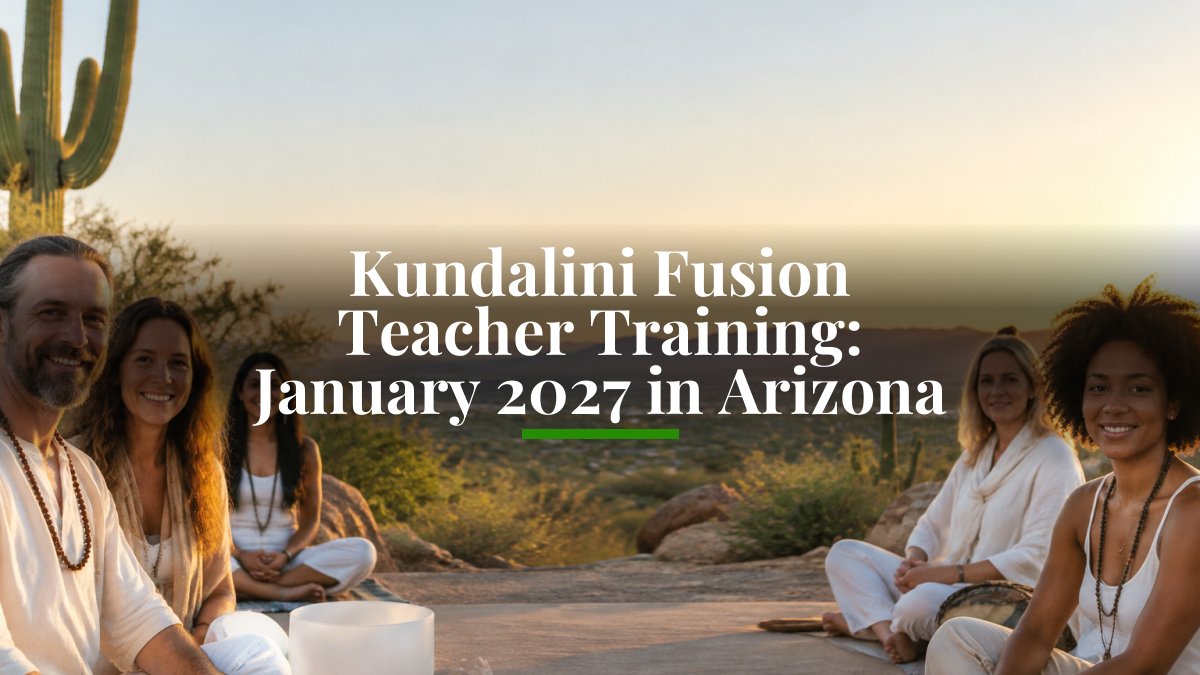
Kundalini Fusion Teacher Training: January 2027 in Arizona
Last Updated: November 4, 2026
Quick Summary
Kundalini Fusion is an advanced 100-hour training for certified yoga teachers, running January 21-25, 2027, at Blisstopia's sanctuary in Peoria, Arizona. It combines Kundalini-inspired practice, nervous system regulation, and embodied leadership to help teachers become transformational facilitators.
- The program totals 100 hours: 48 in-person and 52 virtual integration hours.
- The in-person immersion runs five days at the Blisstopia sanctuary in Peoria.
- Practice-teaching labs form the largest single strand of the in-person hours.
- The four-layer framework moves students through Settle, Awaken, Embody, and Integrate.
- Call 623-986-2899 for schedule questions and enrollment details.
Table of Contents
- What Kundalini Fusion Is and Who It Is For
- How the 100 Hours Are Structured
- Nervous System Regulation for Yoga Teachers
- Energetic Embodiment Yoga Techniques in Practice
- Trauma-Informed Yoga Facilitation for Your Own Classes
- Why Choose Advanced Yoga Teacher Training in Peoria, Arizona
- Booking Your Place in the January 2027 Training
- Frequently Asked Questions
Kundalini Fusion is an advanced training for certified yoga teachers who want to move beyond teaching postures and into facilitating real transformation. At Blisstopia Retreats, our Kundalini Fusion Method runs January 21-25, 2027, at our Peoria, Arizona sanctuary, and it blends Kundalini-inspired practice, nervous system regulation, subtle body awareness, and embodied leadership into one immersive program.
This page covers who the training is for, how its hours are structured, and what you will practice. It also explains why the setting matters and how to reserve your place.
What Kundalini Fusion Is and Who It Is For
Kundalini Fusion is an immersive training built for teachers who already hold a yoga certification and want more depth in their own practice and their students' experiences. Lana Royce, who leads the program, designed it to help teachers become transformational facilitators rather than instructors who simply run a class.
The training suits teachers who feel their classes have plateaued, who want to work with students dealing with stress or emotional strain, and who are drawn to breathwork, meditation, and energy-based teaching. It also suits wellness practitioners who already guide others and want a structured way to deepen that work.
How the 100 Hours Are Structured
The program totals 100 hours, split between a 48-hour in-person immersion and 52 hours of virtual pre- and post-training integration.
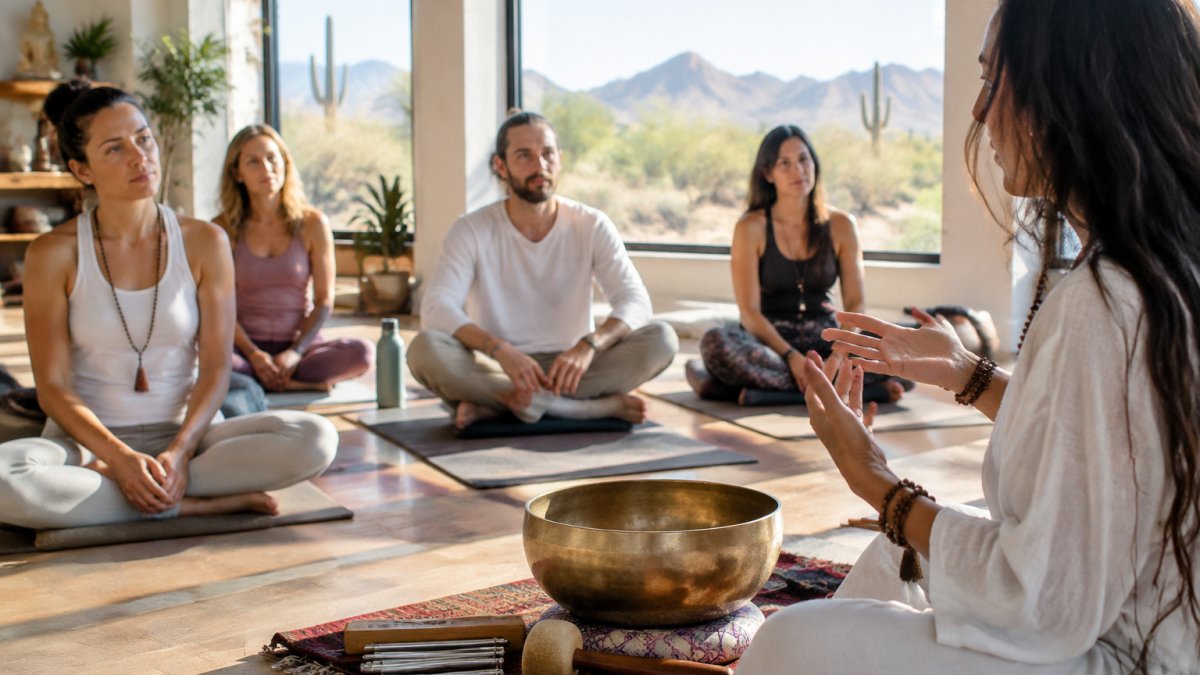
The 48 Hours of In-Person Immersion (January 21-25, 2027)
The in-person portion runs across five days at the Blisstopia sanctuary in Peoria. The in-person hours are organized around the following learning areas:
- Morning sadhana and kriya practice, daily guided practice so you experience the techniques as a student before you teach them.
- Subtle body and chakra work, structured sessions on the energy systems the Fusion method draws on, with practice in reading and responding to what students report.
- Sound healing, breathwork, and ceremony, including a fire ceremony and sound sessions integrated into the daily rhythm rather than offered as add-ons.
- Practice-teaching labs, the largest single strand. You teach short sequences to peers, receive structured feedback, and re-teach with adjustments.
The 52 Hours of Virtual Integration
The remaining 52 hours happen online as virtual pre- and post-training integration:
- Live Zoom sessions, live virtual sessions as part of the 52 hours of integration.
- Mentorship, mentorship as part of the program.
- Teaching labs, virtual teaching labs.
- Final practicum, a final practicum.
How the Hours Map to What You Leave With
By the end of the 100 hours, the structure is designed to produce four outcomes: a personal practice you can sustain, a working command of the four-layer Fusion framework, a trauma-informed teaching toolkit, and a practicum-tested ability to facilitate a full class from settle through integrate. The hour split reflects that, roughly half the program is spent practicing and teaching, not just listening.
Nervous System Regulation for Yoga Teachers
Many students arrive at class with a nervous system that is already activated by work, family, or money pressure. A teacher who understands regulation can help a room settle rather than add to the noise.
Box breathing, with its 4-4-4-6 count and extended retention, is one tool used in our classes (Brief structured respiration practices enhance mood and reduce physiological arousal).
Several techniques and regulation tools are named in this training's material, and the table below lists the ones the article states.
| Tool | Detail | Use |
|---|---|---|
| Box breathing | 4-4-4-6 count with extended retention | Used in our classes |
| Meridian line tapping | Supports organ health | Used in our classes |
| Lymphatic movement | Sessions included in classes | Used in our classes |
| Trauma-informed sequencing | Welcomes first-time and overwhelmed visitors | Used in our classes |
Energetic Embodiment Yoga Techniques in Practice
Energetic embodiment is the half of Kundalini Fusion that most Kundalini trainings leave implicit. Traditional Kundalini classes often move quickly through kriyas and breath counts, trusting that the energy work will land on its own. Embodiment work asks a different question: can the student actually feel what is happening, name it, and stay with it? The Fusion method treats those two aims as a single sequence rather than separate modules.
The Four-Layer Fusion Framework
- Settle, down-regulate the nervous system before any energy work begins. This layer draws on breath pacing, grounding contact points, and supported postures so a student arrives in a receptive state rather than a defended one.
- Awaken, introduce Kundalini-inspired kriya, breath retention, and sound to move energy. This is where traditional Kundalini technique enters, but only after the settle layer has done its work.
- Embody, slow the pace and invite the student to locate sensation in the body: where heat, tingling, emotion, or stillness shows up, and what it is asking for. Transitions lengthen, pauses become intentional, and the teacher's language shifts from cueing shape to cueing felt experience.
- Integrate, close the practice with grounding, journaling prompts, or restorative rest so the student leaves with something they can carry into the rest of their day rather than a peak experience that dissipates in the parking lot.
Most practitioners find that the settle and integrate layers are the ones students remember, because those are the layers that make the awaken layer tolerable for people with activated nervous systems.
What This Looks Like in a Class You Teach
Watch out: the most common mistake teachers make when first learning this framework is to skip the settle layer because the room seems calm. A calm-looking room can still be a dysregulated one, and Kundalini breathwork on an unsettled nervous system is where students get overwhelmed and stop coming back.
Why the Fusion Framing Matters for Your Teaching
Kundalini practice without embodiment can become a performance of intensity, bigger breath holds, longer kriyas, more dramatic experiences. Embodiment without Kundalini can become pleasant but inert. The Fusion method holds both: the energy work gives the practice its charge, and the embodiment work gives students a way to metabolize it. Teachers who complete the training leave with a repeatable structure they can apply to any class length, any student population, and any style they already teach.
Trauma-Informed Yoga Facilitation for Your Own Classes
Trauma-informed teaching means offering choice, clear language, and predictable structure so that no student feels forced or exposed. See how a faith-based approach to trauma-informed teaching is practiced in our reflections on retreat life. Many people who come to yoga have felt unwelcome or overwhelmed in other settings, and a trauma-informed approach helps them stay.
Why Choose Advanced Yoga Teacher Training in Peoria, Arizona
The Peoria sanctuary gives the training a setting built for focus and rest. The program is held at our desert sanctuary in Peoria, Arizona.
Lana Royce has more than 30 years as a psychotherapist and is a 500-RYT yoga teacher who trains other teachers. Mark Royce brings over 45 years of martial arts and self-defense practice and is a certified regenerative health and breathwork coach.
Booking Your Place in the January 2027 Training
The Kundalini Fusion training runs January 21-25, 2027, in Peoria, Arizona.
To reserve your place, call us at 623-986-2899. Our team can answer questions about the schedule and enrollment. Please reach out for current tuition and enrollment details before you commit.
Frequently Asked Questions
Is a 100-hour training suitable for those looking to specialize in somatic practices?
Yes, the Kundalini Fusion training is built for certified yoga teachers who want to add somatic and embodied depth to their teaching. The program combines 48 hours of in-person immersion with 52 hours of virtual pre- and post-training work, covering nervous system regulation, breathwork, subtle body awareness and practice-teaching labs.
What should I expect from a 5-day Kundalini-inspired immersion?
The five days in Peoria, Arizona, run from January 21 to January 25, 2027. Each day includes morning sadhana, kriyas, sound healing, chakra work and a fire ceremony, along with practice-teaching labs where you lead peers. Accommodations and meals are part of the immersion. Specific daily timing and enrollment details are available directly from Blisstopia Retreats.
How does nervous system regulation enhance yoga instruction?
Regulated teachers tend to read a room more accurately, pace a class with more intention and respond calmly when a student becomes overwhelmed.
What is the difference between traditional yoga teacher training and energetic embodiment?
Traditional yoga teacher training focuses mainly on asana, anatomy, sequencing and teaching methodology. Energetic embodiment training adds attention to subtle body awareness, breath, sound and the felt experience of practice, helping teachers lead from presence rather than only from technique. This Kundalini Fusion program is designed as an advanced layer for teachers who already hold certification, not as a replacement for it.