 how-to
Ayurvedic Meal Planning for Wellness Retreats: Worth It?
Table of Contents
- What Ayurvedic Meal Planning Actually Adds to a Wellness Retreat
- Ayurvedic Diet for Beginners: Doshas, Body Type, and Personalized Nutrition
- Ayurvedic Foods for Digestion: What Lands on the Plate
- Ayurvedic Meal Prep: A Sample Retreat Day From Morning to Evening
- Ayurvedic Retreat Food: How Meals Are Personalized and Who Creates Them
- How to Decide If Ayurvedic Meal Planning Is Worth the Cost
- Dietary Restrictions, Allergies, and Safety: What to Ask Before Booking
- Conclusion: Measuring Whether the Meals Delivered
- Frequently Asked Questions
Last Updated: October 13, 2026
What Ayurvedic Meal Planning Actually Adds to a Wellness Retreat
Ayurvedic meal planning is the practice of matching food to your body type, digestion, and the season, rather than following one diet for everyone.
The honest answer to whether ayurvedic meal planning is worth it for wellness retreats: it depends on what you want to change.
Below, we break down what these plans include, how they're built, and how to judge the value before you book.
Ayurvedic Diet for Beginners: Doshas, Body Type, and Personalized Nutrition
The Ayurvedic diet for beginners starts with one idea: people digest food differently.
- Vata types tend to run cold and dry. Warm, cooked, moist foods settle them.
- Pitta types run hot. Cooling foods and fewer spicy dishes help.
- Kapha types run heavy and slow. Light, warm meals with less dairy and oil work better.
Most people are a mix of two. A trained practitioner reads your patterns through an Ayurvedic consultation, sometimes called a medical intake, and builds a plan from there.
This is where a generic menu and a personalized one split apart. A buffet can't adjust for you. A plan can.
Ayurvedic Foods for Digestion: What Lands on the Plate
Ayurvedic foods for digestion center on fresh, warm, cooked meals that are easy on the stomach.
Retreat kitchens usually lean vegetarian and sattvic, a style of eating meant to keep the mind calm and clear.
What most guides miss is that timing matters as much as ingredients. Ayurveda pairs the biggest meal with peak digestion, usually midday, and keeps dinner early and small.
Ayurvedic Meal Prep: A Sample Retreat Day From Morning to Evening
A retreat day spaces meals to match digestion, not the clock on the wall. The goal is steady energy through morning practice, a full but not heavy midday meal when digestion is strongest, and an early, light dinner so sleep comes easily. Here is how a sample day can look, with the reasoning behind each stop.
| Time | Meal | Example | Why it's placed here |
|---|---|---|---|
| 6:15 am | Warm water, then ginger or cumin tea | Steeped fresh ginger with a squeeze of lime | Wakes up digestion before practice without loading the stomach |
| 8:00 am | Breakfast | Cooked oats with stewed apple, cinnamon, and a spoon of ghee; warm spiced milk on the side | Warm, moist, and easy to digest after breathwork and movement |
| 12:30 pm | Main meal | Lentil soup, basmati rice, steamed greens, house chutney, and a small serving of cooked beets | Largest meal lands at peak digestive strength |
| 3:30 pm | Snack | Soaked almonds, two dates, herbal tea | Bridges the afternoon gap without spiking and crashing |
| 6:00 pm | Light dinner | Vegetable khichdi (rice and mung dal) or a broth-based soup with soft-cooked vegetables | Early and small so the body can rest, not digest, overnight |
| 8:30 pm | Optional wind-down | Warm nut milk with cardamom, or plain warm water | Supports sleep without a heavy late meal |
How the day shifts by dosha
The skeleton above stays the same, but the plate changes. A vata-leaning guest usually gets more ghee, more cooked root vegetables, and warmer spices like ginger and cinnamon. A pitta-leaning guest gets less chili, more cilantro, fennel, and cucumber, and cooler cooked grains. A kapha-leaning guest gets lighter portions, less dairy and oil, more steamed greens, and stronger warming spices like black pepper and turmeric.
Portion logic, not calorie counting
Ayurvedic meal planning at a retreat typically uses hand-based portions rather than numbers: about two cupped hands of cooked grains or starch, one to two cupped hands of cooked vegetables, one cupped hand of protein like lentils or beans, and a thumb of fat like ghee or oil. This is a teaching tool, not a rule, the point is that guests leave knowing how to eyeball a balanced plate without an app.
Snacks and hydration between meals
Snacks are small and warm where possible. Soaked almonds, dates, stewed fruit, and herbal teas show up often. Cold drinks, raw salads, and ice are usually minimized during a retreat because they are harder on digestion, especially in the morning and evening.
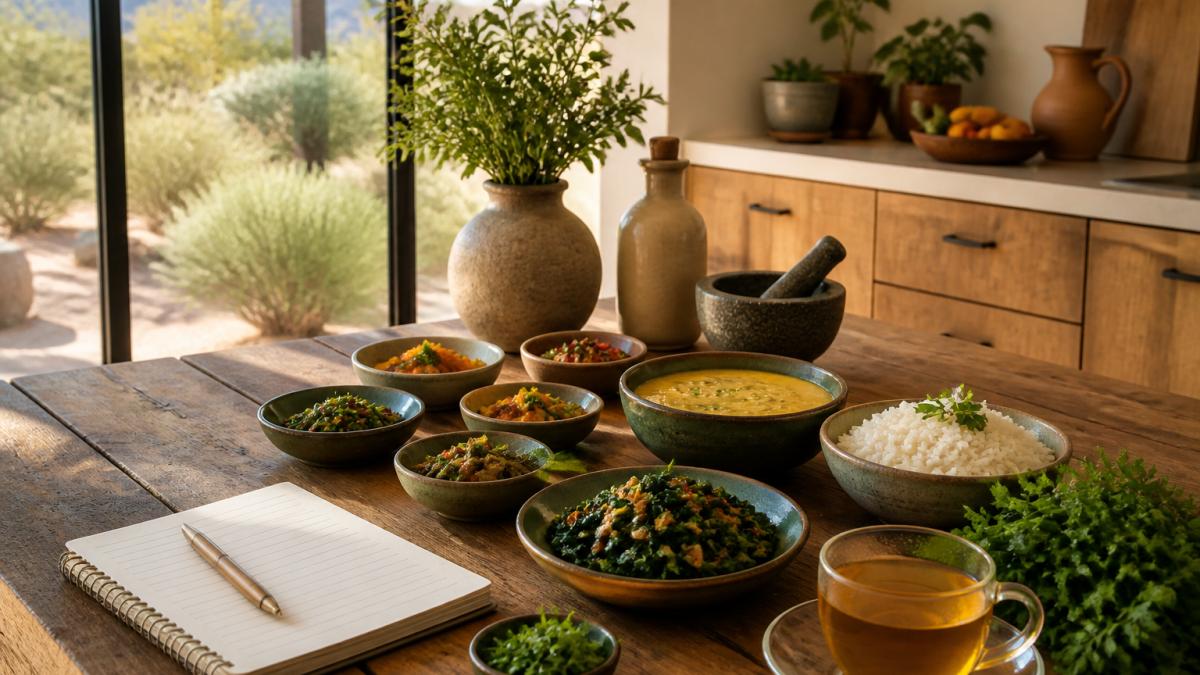
The pattern is simple: warm, cooked, spaced out, and adjusted to the person eating. No skipping, no late heavy meals, no one-size-fits-all plate.
Ayurvedic Retreat Food: How Meals Are Personalized and Who Creates Them
Ayurvedic retreat food should be built by someone trained in it, not adapted from a spa menu. Ask who runs the kitchen and what their background is.
At Blisstopia Retreats, our Ayurvedic chef works alongside Lana Royce, a 500-hour registered yoga teacher and Ayurvedic wellness chef, to shape menus around each guest's intake. Our Ayurveda testing and meal plan service start with a consultation, not a template.
Personalization usually covers:
- Your dosha and current imbalances
- Food preferences and dietary needs
- Health goals, from weight management to better sleep
- Seasonal and fresh ingredients available locally
If a retreat can't tell you who designs the meals or how they adjust for you, that's your answer.
How to Decide If Ayurvedic Meal Planning Is Worth the Cost
Most retreat pages describe the food and stop there. They don't help you decide whether paying for personalized meal planning is a better use of your money than booking a cheaper retreat with a standard menu and spending the difference on a few sessions with a nutrition professional at home. That is the real question, and it deserves a real framework.
The four-part value test
Run any retreat through these four questions before you compare it to another.
- Is there a real intake? A consultation, written questionnaire, or one-on-one conversation before you arrive is the minimum signal that the plan is personalized. A checkbox for "vegetarian / vegan / gluten-free" is not an intake.
- Who builds the plan, and what is their training? Ask for the name and credentials of the person designing meals. Look for a trained Ayurvedic practitioner, an Ayurvedic chef, or a registered dietitian nutritionist (RDN) working alongside the kitchen. "Our chef" with no further detail is a yellow flag.
- What do you take home? The value of a personalized plan compounds after you leave. A written plan, a dosha summary, a shopping list, or a follow-up call turns a week of good meals into a habit. A themed buffet does not.
- Are meals included, or an add-on? Some retreats bundle meals into the rate; others charge separately per day or per meal. Ask what is included before you compare two retreats side by side, because the sticker price rarely tells the whole story.
A simple scoring method
Give the retreat one point for each yes:
- A real intake happens before arrival.
- The person designing meals has Ayurvedic or clinical nutrition training you can verify.
- You receive a written plan or guidance to take home.
- Meals are included in the rate, or the add-on is clearly disclosed.
- The kitchen confirms it can handle your allergies and restrictions.
- You can see a sample day menu before booking.
Five or more yes answers: the meal planning is likely worth what you are paying for it. Three or four: it depends on how much you value the take-home plan. Two or fewer: you are paying for a label, not a service, and a standard-menu retreat plus a few sessions with a qualified nutrition professional at home may serve you better.
When it is clearly worth it
- You have a specific, ongoing issue, digestion, energy crashes, sleep, that has not responded to generic diet advice.
- You want to learn a repeatable way of eating, not just eat well for a week.
- You are willing to do the intake honestly and follow the plan after you leave.
When it is probably not worth it
- You want a restful week with good food and no homework.
- You are looking for a medical treatment for a diagnosed condition. Ayurvedic meal planning is supportive, not curative, and it does not replace care from your physician or a registered dietitian.
- The retreat cannot tell you who designs the meals or how they adjust for you. That silence is your answer.
Comparing two retreats fairly
When you compare, compare like for like. Line up: number of nights, meals included per day, whether a consultation is included, whether a take-home plan is included, and whether the kitchen handles your restrictions. A retreat that looks more expensive on the website is often cheaper per included meal once you add the a la carte items the other retreat charges for.
Pricing varies by retreat, length, season, and what is bundled, so ask directly rather than guessing from a website. A short, specific email to the retreat, asking the six scoring questions above, will tell you more than any brochure.
Dietary Restrictions, Allergies, and Safety: What to Ask Before Booking
Safety comes before philosophy. Any retreat serving personalized food should ask about your allergies and restrictions before you arrive, not at the table.
Ask these questions:
- How do you handle food allergies and cross-contact?
- Can you work with vegan, gluten-free, or dairy-free needs?
- Is there a medical intake, and who reviews it?
- What happens if a meal doesn't agree with me?
Be clear about medications and conditions too. Ayurvedic plans are supportive, not medical treatment, and they don't replace care from your doctor. A good retreat will say that plainly.
Conclusion: Measuring Whether the Meals Delivered
The real test comes after you leave. Did your digestion settle? Did your energy hold steady through the afternoon? Did you keep even one habit, like an earlier, lighter dinner?
If the answer is yes, ayurvedic meal planning earned its place in your stay. If nothing changed, the plan wasn't personalized enough.
Call us at 623-986-2899 to ask about current offerings and how we build meals around you.
Frequently Asked Questions
What is ayurvedic meal planning?
Ayurvedic meal planning organizes what you eat around your dosha, or body type, plus the season and time of day. Instead of a single fixed diet, it pairs six tastes (sweet, sour, salty, pungent, bitter, astringent) with warm, freshly cooked food suited to your digestion. On a wellness retreat, that usually means a consultation or intake form, a personalized menu, and scheduled meals built from fresh, seasonal ingredients rather than a one-size-fits-all plate.
Can Ayurvedic meals support digestion and overall well-being?
The approach centers on warm, cooked, lightly spiced food eaten on a regular schedule, which many people find easier on digestion than cold or heavy meals. Ayurvedic foods for digestion include ginger, cumin, coriander, fennel, and well-cooked vegetables and grains. Retreats pair this with a daily routine of yoga, breathwork, and rest, so the effect comes from the whole week rather than any single dish. Anyone with a medical condition should clear dietary changes with their physician first.
Do you need to follow an Ayurvedic diet before a retreat?
No. Most retreats are designed for beginners, and facilitators typically start with an intake form covering your current eating habits, food preferences, and health goals. Arriving with an open mind matters more than arriving with a clean slate. If you want a head start, try one simple change for a week beforehand, such as a warm cooked breakfast instead of a cold one, so the transition feels gradual rather than abrupt.
How can a retreat accommodate food allergies and dietary restrictions?
Ask before you book. A well-run retreat will document allergies, intolerances, and dietary needs during intake, then build menus around them rather than offering a stripped-down alternative plate. Questions worth asking: How are allergies tracked in the kitchen? Are vegetarian, vegan, gluten-free, and dairy-free options standard? Who confirms food suitability with you? At Blisstopia Retreats, an Ayurvedic chef plans meals and can discuss your needs directly before arrival.