
 how-to
Ayurvedic Meal Plans for Inflammation Management
Table of Contents
- How Ayurveda Approaches Inflammation Management
- The Ayurvedic Way of Eating: Core Principles
- Ayurvedic Anti-Inflammatory Foods to Build Your Plate Around
- Ayurvedic Meal Plan for Beginners: Your First Week
- 7-Day Anti-Inflammatory Meal Plan with Recipes
- Personalizing Your Plan: Dosha, Symptoms, and Season
- Shopping, Batch Cooking, and Smart Substitutions
- Safety, Evidence, and Realistic Expectations
- Frequently Asked Questions
Last Updated: October 9, 2026
How Ayurveda Approaches Inflammation Management
Ayurvedic meal plans for inflammation management start with a simple idea: chronic inflammation is a signal, not a life sentence. Ayurveda, the traditional medicine system of India, treats persistent swelling, joint pain, and fatigue as signs that digestion, sleep, and daily rhythm are out of balance.
This guide shows how to build an anti-inflammatory Ayurvedic diet: how to structure a week of meals, which foods calm systemic inflammation, and how to adjust it to your body type.
The core principle is agni, your digestive fire. When agni burns cleanly, food becomes energy; when it sputters, undigested material builds up and inflammation climbs.
The Three Doshas and Your Inflammation Type
Ayurveda sorts people into three functional patterns called doshas. Each one shows inflammation differently.
| Dosha | Elemental Nature | Common Inflammation Signs | Foods That Help |
|---|---|---|---|
| Vata | Air and ether | Dry joints, gas, anxiety, irregular digestion | Warm, moist, cooked foods |
| Pitta | Fire and water | Skin rashes, acid reflux, irritability | Cooling foods, less spice |
| Kapha | Earth and water | Congestion, heaviness, water retention | Light, warm, dry foods |
Most people are a mix of two. Don't treat your dosha as a fixed label, it shifts with season, stress, and sleep.
The Ayurvedic Way of Eating: Core Principles
The Ayurvedic way of eating is less about counting calories and more about how, when, and in what order you eat. These habits matter as much as the food itself.
- Eat your largest meal at midday, when digestion is strongest.
- Keep dinner light and finish it at least three hours before bed.
- Favor warm, cooked foods over cold, raw ones.
Cold and raw foods are hard on agni, but salads are fine paired with warming spices like ginger, cumin, and black pepper.
Ayurvedic Anti-Inflammatory Foods to Build Your Plate Around
Ayurvedic anti-inflammatory foods fall into a few clear groups: whole foods, nutrient-dense vegetables, healthy fats, and anti-inflammatory spices.
- Omega-3 fatty acids: walnuts, flaxseed, chia, and fatty fish
- Antioxidants: berries, leafy greens, beets, and pomegranate
- Fermented foods: yogurt, kefir, and house-made pickles
Turmeric deserves special mention. Its active compound, curcumin, is one of the most studied natural anti-inflammatory agents, and NIH research on turmeric and inflammation outlines how it interacts with the body's inflammatory pathways.
Limit or avoid processed foods, processed sugars, trans fats, deep-fried foods, and heavy red meat, the biggest drivers of chronic inflammation in most diets.
Heating vs. Cooling Foods by Season
Ayurveda adjusts food by season, where most generic plans fall short. In summer, favor cooling foods: cucumber, coconut, mint, melon. In winter, favor heating foods: ginger, cinnamon, root vegetables, warm soups.
Spring calls for lighter, drier foods to clear Kapha buildup. Fall, when Vata rises, calls for warm, moist, grounding meals. This seasonal rotation is the heart of an Ayurvedic diet.
Ayurvedic Meal Plan for Beginners: Your First Week
An Ayurvedic meal plan for beginners should be simple enough to repeat. Do not overhaul everything at once. Start with these steps.
- Pick one dosha to focus on for the week.
- Set three meal times and stick to them.
- Cook one pot of kitchari to eat for two days.
- Add one anti-inflammatory spice to every meal.
- Swap ice water for warm water.
- Cut processed sugar for the full seven days.
- Track how you feel each evening in one sentence.
7-Day Anti-Inflammatory Meal Plan with Recipes
A 7-day anti-inflammatory meal plan works best when it repeats a few core recipes. Here is a full week chart, followed by the recipes, portions, and prep notes.
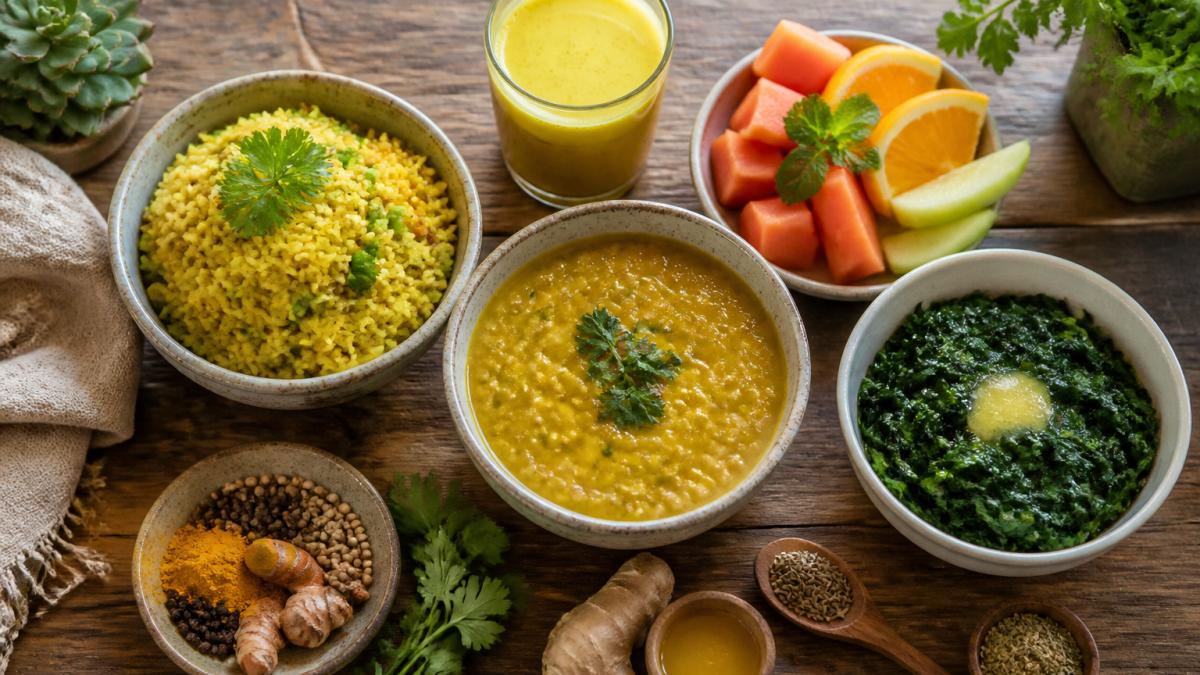
| Day | Breakfast | Lunch | Snack | Dinner |
|---|---|---|---|---|
| 1 | Warm oats with cinnamon | Kitchari with greens | Handful of walnuts | Lentil soup |
| 2 | Golden milk and fruit | Quinoa and roasted veg | Coconut yogurt | Mung bean stew |
| 3 | Stewed apples | Dal with brown rice | Soaked almonds | Vegetable khichdi |
| 4 | Turmeric eggs | Chickpea curry | Herbal tea and dates | Ginger carrot soup |
| 5 | Warm porridge | Lentil and spinach bowl | Fresh pear | Baked fish with fennel |
| 6 | Coconut rice pudding | Millet with squash | Kefir | Split pea soup |
| 7 | Stewed pears | Kitchari with ghee | Walnuts | Light vegetable broth |
Core Recipes with Portions and Prep
Kitchari (makes 4 servings; about 1.5 cups each)
- 1/2 cup split mung beans, rinsed until water runs clear
- 1/2 cup basmati rice, rinsed
- 1 tablespoon ghee
Heat ghee in a pot, add cumin seeds until they sizzle, then ginger and dry spices for 30 seconds.
Golden Milk (1 serving)
- 1 cup milk or unsweetened coconut milk
- 1/2 teaspoon turmeric, 1/4 teaspoon cinnamon, pinch of black pepper
- 1 teaspoon honey (stir in off heat)
Warm the milk with the spices over low heat 3-4 minutes; do not boil. Black pepper improves curcumin absorption (pubmed.ncbi.nlm.nih.gov).
Lentil Soup (makes 4 servings; about 1.5 cups each)
- 1 cup brown or green lentils, rinsed
- 1 tablespoon ghee or olive oil
- 1 small onion, 2 carrots, 2 celery stalks, all diced
Sauté onion, carrot, and celery in ghee 5 minutes.
Stewed Apples (2 servings)
- 2 apples, peeled and diced
- 1/2 cup water, 1/2 teaspoon cinnamon, 1/4 teaspoon cardamom, 1 teaspoon ghee
Simmer covered 10-12 minutes until soft. Serve warm.
Turmeric Eggs (1 serving)
- 2 eggs, 1/4 teaspoon turmeric, pinch of black pepper, 1 teaspoon ghee
Scramble over low heat until just set. Pair with 1/2 cup cooked greens.
Ginger Carrot Soup (4 servings)
- 1 pound carrots, chopped; 1 tablespoon grated ginger; 1 small onion
- 4 cups broth; 1 teaspoon ghee; pinch of cinnamon
Sauté onion and ginger in ghee, add carrots and broth, simmer 20 minutes, then blend smooth.
Sample Day: Breakfast, Lunch, Snack, and Dinner
Breakfast: Warm oats with one teaspoon of cinnamon and a cup of golden milk. Cook half a cup of oats in water, then stir in a quarter cup of milk and a pinch of turmeric.
Lunch: One and a half cups of kitchari, the classic Ayurvedic reset meal.
Snack: A small handful (about 10) of soaked almonds and a cup of ginger tea.
Dinner: One and a half cups of lentil soup with carrots, celery, and a squeeze of lemon.
Prep Schedule That Makes the Week Work
- Sunday (about 2 hours): Cook one large pot of kitchari and one pot of lentil soup. Roast a tray of vegetables. Soak almonds overnight.
- Wednesday (about 30 minutes): Cook a fresh pot of dal or mung bean stew so days 4-5 stay varied.
- Daily (about 15 minutes): Warm breakfasts, assemble snacks, and reheat lunches and dinners.
Portions are general starting points for an average adult. Adjust based on appetite, activity level, and guidance from your clinician or a registered dietitian.
Personalizing Your Plan: Dosha, Symptoms, and Season
Personalization separates an Ayurvedic meal plan from a generic diet chart. Three variables shape your plan: dosha, current symptoms, and season. Change one variable at a time so you can tell what's working.
Step 1: Identify Your Dominant Pattern
Use the self-check from earlier, or track these signals for one week:
- Vata-leaning: dry skin or joints, gas and bloating, irregular appetite, light sleep, racing thoughts.
- Pitta-leaning: runs hot, acid reflux, skin rashes or redness, irritability, strong appetite, loose stools.
- Kapha-leaning: heaviness, congestion, water retention, slow digestion, low appetite in the morning, deep sleep.
Most people are a mix of two. Write down your top two and treat the dominant one as your starting point.
Step 2: Match Meals to Your Pattern
| Pattern | Favor | Reduce | Sample Swap |
|---|---|---|---|
| Vata | Warm, moist, cooked meals; ghee; root vegetables; soaked nuts | Cold salads, raw crucifers, dry crackers, iced drinks | Swap a cold grain bowl for warm kitchari with ghee |
| Pitta | Cooling foods; coconut; cucumber; sweet fruit; cilantro; fennel | Chili, vinegar, fermented foods, deep-fried items, alcohol | Swap spicy chickpea curry for a mild mung dal with cilantro |
| Kapha | Light, warm, dry meals; ginger; turmeric; leafy greens; legumes | Dairy, wheat, sugar, heavy oils, salt | Swap coconut rice pudding for stewed apples with ginger |
Step 3: Adjust for Symptoms, Not Just Dosha
Dosha is your baseline; symptoms are the daily signal telling you whether to nudge the plan.
- Joint stiffness and dryness: add healthy fats, ghee, olive oil, soaked walnuts, flaxseed.
- Acid reflux or burning: reduce chili, vinegar, and citrus; add coconut, cucumber, and sweet pears.
- Congestion or heaviness: reduce dairy and wheat; add ginger tea, turmeric, and light broths.
If a symptom persists beyond two weeks or is severe, see a clinician rather than adjusting food further.
Step 4: Rotate with the Season
Ayurveda adjusts food by season, where most generic plans fall short.
- Spring (Kapha season): lighter, drier, warmer foods. Favor bitter greens, ginger, turmeric, and legumes. Reduce dairy, wheat, and heavy sweets.
- Summer (Pitta season): cooling foods. Favor cucumber, coconut, mint, melon, and sweet fruit. Reduce chili, vinegar, and fried foods.
- Fall (Vata season): warm, moist, grounding meals. Favor soups, stews, ghee, root vegetables, and cooked grains. Reduce raw and cold foods.
A Simple Weekly Check-In
Once a week, write one sentence: Did I feel lighter, steadier, or heavier than last week? If lighter and steadier, keep going. If heavier or more inflamed, cut the heaviest food group (usually dairy, wheat, or fried items) for five days and reassess. This habit turns a static meal plan into a personal one.
Shopping, Batch Cooking, and Smart Substitutions
Batch cooking turns a good plan into a realistic one, two hours on Sunday and you'll eat well all week.
- Cook one large pot of kitchari for days one and two.
- Roast a tray of vegetables to add to any meal.
- Soak nuts and seeds overnight for easier digestion.
Smart substitutions keep you on track when items run out: swap brown rice for millet, dairy milk for coconut milk, fresh spinach for frozen.
A short shopping list keeps this simple: mung beans, basmati rice, lentils, ghee, turmeric, cumin, coriander, ginger, leafy greens, carrots, and seasonal fruit.
Safety, Evidence, and Realistic Expectations
Dietary changes can support inflammation management but are not a substitute for medical care.
The evidence for anti-inflammatory eating is real but mixed in quality, many studies are small or short-term. Treat it as one supportive habit, not a cure.
Don't expect overnight change. Most people notice steadier digestion and better sleep within a couple of weeks; visible changes in inflammation markers take longer.
If you have a diagnosed condition, food allergies, or take prescription medication, get medical guidance before cutting entire food groups. Individual dietary needs always come first.
At Blisstopia Retreats, our Ayurvedic chef builds personalized meal plans around each guest's dosha, and our nutritional coaching services pair food with breathwork and rest so the body can actually reset. Our retreats blend nourishing organic meals with guided breathwork and sound healing, because inflammation responds to calm as much as it responds to food.
Frequently Asked Questions
How can Ayurveda help reduce inflammation naturally?
Ayurveda approaches inflammation by matching food to your dosha and the season. It emphasizes whole foods, warming spices like turmeric and ginger, and eating at consistent times to support digestion. Cooling foods like cucumber and cilantro calm Pitta-type heat, while warming foods like ginger and cinnamon support Vata and Kapha types. The goal is to remove processed foods and trans fats that drive chronic inflammation while adding nutrient-dense foods rich in omega-3 fatty acids and antioxidants.
What foods are commonly included in an Ayurvedic eating plan for inflammation support?
An Ayurvedic anti-inflammatory foods list typically includes turmeric, ginger, cumin, coriander, and fenugreek as core spices. Plant-based foods like lentils, mung beans, and basmati rice form the base of most meals. Fresh vegetables such as zucchini, spinach, and sweet potatoes are favored, along with fruits like pomegranate and cooked apples. Healthy fats from ghee, coconut oil, and flaxseed provide omega-3 fatty acids. Fermented foods like homemade yogurt support gut health, which Ayurveda links directly to systemic inflammation.
Can an Ayurvedic diet replace medical treatment for inflammation?
No. An Ayurvedic meal plan for inflammation management works alongside medical care, not instead of it. If you have a diagnosed condition like rheumatoid arthritis, inflammatory bowel disease, or any condition requiring medication, talk to your doctor before making significant dietary changes. Ayurvedic eating can support your overall wellness and may help manage symptoms, but it is not a substitute for prescribed treatment. Use it as a complementary approach and track how your body responds over several weeks.
What does a healthy 7-day Ayurvedic meal plan look like?
A 7-day anti-inflammatory meal plan built on Ayurvedic principles rotates meals by dosha and season. Each day includes three meals plus one snack, with breakfast options like warm oatmeal with turmeric and almonds, lunches built around lentil soup or quinoa bowls with cooked vegetables, and dinners featuring easy-to-digest proteins like mung dal or baked fish with steamed greens. Spices like cumin, coriander, and fennel appear in most meals. The plan avoids red meat, deep-fried foods, and processed sugars entirely.
Inflammation rarely resolves through diet alone. It responds to sleep, stress, movement, and the space to slow down. If you have been running on empty and want a real reset, Blisstopia Retreats offers all-inclusive retreats with organic meals, Ayurveda testing, guided breathwork, and on-site caretakers who hold space for deep change. Call us at 623-986-2899 to ask about current offerings and find the retreat that fits your life.