 how-to
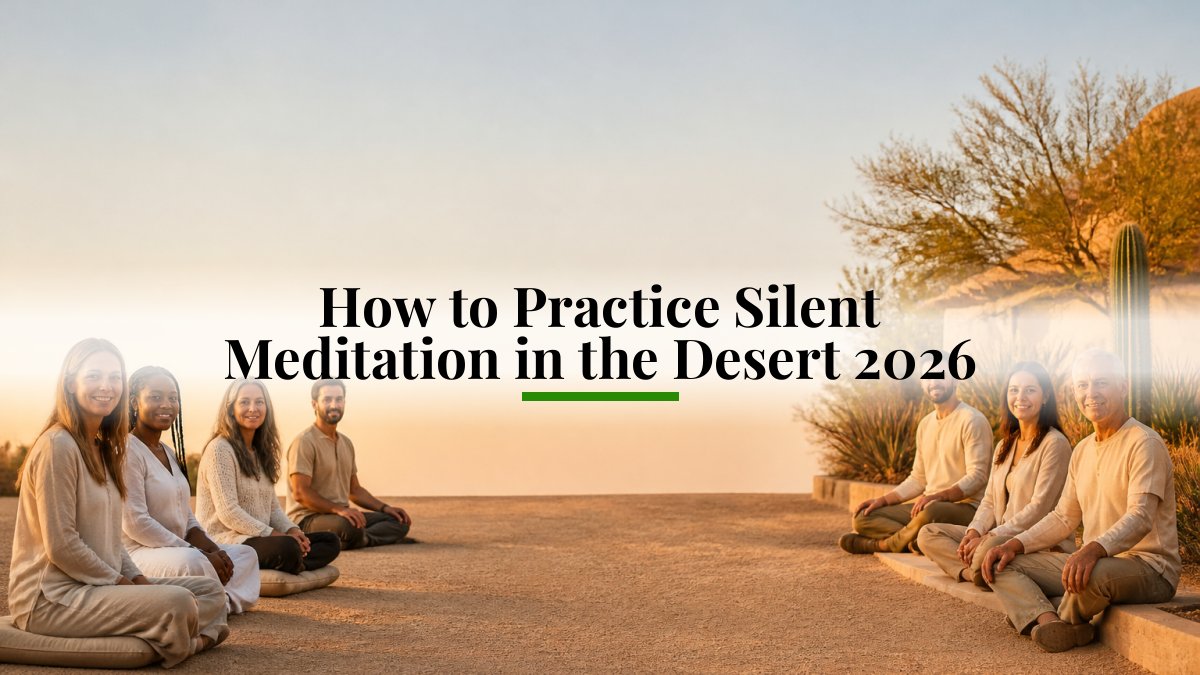
How to Practice Silent Meditation in the Desert 2026
Table of Contents
- Why the Desert Changes Silent Meditation
- Silent Meditation for Beginners: A Desert Starting Point
- How Long to Meditate for Beginners in Desert Heat
- A Guided Silent Meditation Script You Can Follow
- What to Bring to a Meditation Retreat in the Desert
- Staying Safe and Reachable While You Unplug
- Re-Entry: Coming Back After Desert Silence
- Frequently Asked Questions
Last Updated: October 12, 2026
Why the Desert Changes Silent Meditation
Silent meditation is the practice of sitting in stillness without guidance, music, or spoken words, letting your attention rest on breath and body. In the desert, that practice gets easier fast. The landscape strips away noise for you.
Why? Three things happen out there:
- Sound drops to almost nothing, so your mind stops reaching for stimulation
- Heat and open sky pull you into your body, not your inbox
- There is no audience, no schedule, no performance
Research on attention restoration from University of Michigan natural environments studies suggests time in nature measurably improves focus and reduces mental fatigue. The desert is nature at its most stripped down.
Silent Meditation for Beginners: A Desert Starting Point
Silent meditation for beginners works best when you start smaller than you think. Five minutes of true silence beats thirty minutes of fidgeting.
Here is the simplest version. Sit. Close your eyes. Follow your breath. When your mind wanders, come back. That is the whole practice.
The desert can make this beginner-friendly because there is often less external stimulation. But you still need a plan before you arrive.
Choose Your Level of Disconnection
Not everyone needs a full digital detox. Pick the level that fits your life:
- Level 1, Soft Unplug: Phone on airplane mode during sits only. Check messages twice a day.
- Level 2, Structured Silence: Phone stays in your room. You check it once each evening.
- Level 3, Full Disconnection: Phone handed to a host or locked away for the duration.
Most first-timers do best at Level 2. Full disconnection sounds romantic until hour six, when your thumb starts hunting for a screen that is not there.
Prepare Before You Go Offline
The practical prep matters more than the spiritual prep. Do these things before you leave:
- Tell two people where you will be and when you will check in
- Set an out-of-office reply with your return date
- Download maps, confirmations, and your meditation timer in advance
- Pack a paper notebook, since screens are going away
- Charge a power bank for emergencies only
- Choose one person who can reach you if something urgent happens
How Long to Meditate for Beginners in Desert Heat
How long to meditate for beginners depends on heat, not willpower. In desert conditions, shorter sits done more often beat long marathons.
Start with this schedule:
| Week | Sit Length | Sessions Per Day | Best Time |
|---|---|---|---|
| 1 | 5-10 minutes | 1 | Sunrise |
| 2 | 10-15 minutes | 2 | Sunrise, sunset |
| 3 | 15-20 minutes | 2 | Sunrise, sunset |
| 4 | 20-30 minutes | 1-2 | Sunrise, sunset |
A general guideline is to meditate before the heat builds and again as it fades. Midday often belongs to shade, water, and rest.
Heat can change the experience. Your body may work harder to stay cool, which can affect mental focus (Effects of Heat Strain on Cognitive Function Among a Sample of Miners). Shorter, focused sessions at cooler times of day may be more beneficial than longer sessions during peak heat.
A Guided Silent Meditation Script You Can Follow
A guided silent meditation script gives structure without a voice talking over you. Read it once, memorize the shape, then practice it in silence.
Here is the script we use:
Settle. Sit comfortably. Let your hands rest. Close your eyes or soften your gaze toward the ground.
Arrive. Take three slow breaths. Feel the air move in and out. Notice the temperature on your skin.
Ground. Feel the weight of your body against the earth. The desert has held this ground for thousands of years.
Breathe. Follow your breath. No counting required. Just watch it come and go.
Release. When a thought arrives, name it quietly. "Planning." "Worry." Let it pass like a cloud over the mesa.
Return. Come back to your breath. Again and again. This returning is the practice.
Close. When you are ready, open your eyes slowly. Sit for one more minute before you move.
Use this script for five minutes or fifty. The words stay the same. Only the depth changes.
What to Bring to a Meditation Retreat in the Desert
What to bring to a meditation retreat in the desert comes down to comfort, safety, and one good notebook. Overpacking defeats the purpose.
Bring these:
- Loose, light clothing that covers your skin from sun
- A wide-brim hat and sunglasses
- A refillable water bottle, and a second one
- A meditation cushion or folded blanket
- Sunscreen and lip balm
- A journal and two pens
- Electrolyte packets
- A small flashlight for early morning sits
- Comfortable walking shoes for trails
Leave these behind:
- Laptops and tablets
- Work documents
- More than one book
- Anything that needs charging daily
The CDC guidance on heat safety is worth a read before any desert trip. Hydration and timing matter more than most people expect.
Staying Safe and Reachable While You Unplug
Safety and silence can coexist. You just need a plan that both you and someone at home understands.
Before you go offline, agree on three things:
- A check-in window. One text or call per day at a set time.
- An emergency contact. Someone with your location and the retreat's number.
- A signal for real urgency. Family should know what actually warrants breaking your silence.
Most people do not need to be fully unreachable. They need to be unreachable for the small stuff. That distinction makes silence possible without guilt.
If you are managing a health condition, a job on call, or a family member in care, tell your retreat host. It can be helpful to discuss your needs with your retreat host. Some hosts may build flexibility into the schedule.
Re-Entry: Coming Back After Desert Silence
Coming back is harder than going quiet. The noise you left has not changed, but you have. A timed re-entry plan can help maintain the benefits of silence.
First 24 hours. Do not turn the phone on the moment you reach the car. Drive in silence. When you do power up, let the notifications land without answering them. Skim, do not reply. Eat something warm. Go to bed early. Expect a strange heaviness when you pick up the phone and irritation at alerts that never bothered you before. This lingering friction between digital urgency and desert stillness serves as a necessary catalyst for those attempting to cultivate a more intentional slow living lifestyle.
Days 2 through 3. Resume only what is genuinely urgent. Batch your replies into two windows rather than answering all day. Keep one daily sit, even if it is five minutes at sunrise. Keep the phone off for the first hour of the morning. Keep the journal going.
Days 4 through 7. Reintroduce the rest of your inbox and calendar in one pass. Notice which commitments you agreed to out of habit rather than intention. This is the week most people feel the retreat start to fade, so protect the sit and the morning quiet before anything else.
Week 2 and beyond. Choose one habit from the retreat to keep permanently, a daily sit, a weekly walk without your phone, a Sunday evening with no screens. Consistency in a chosen habit can be beneficial.
Expect these in your first 72 hours:
- A strong urge to book another retreat immediately
- A short fuse with small interruptions
- A surprising grief for the quiet you left
That last one is common. Sit with it before you act on it. The goal is often to integrate aspects of the retreat experience into daily life.
If you want a setting built for this kind of depth, our transformational wellness retreats are designed around silence, breathwork, and space to hear yourself think. Guests often pair silent sits with guided breathwork and sound healing for a fuller reset.
Frequently Asked Questions
How do you prepare for silent meditation outdoors?
Pick a shaded spot and check the forecast before you sit. Bring more water than you think you need, wear loose long sleeves, and tell someone where you'll be and when you'll return. Start with 10-minute sessions at dawn or dusk when temperatures drop. A wide-brimmed hat, a cushion, and a light blanket for the cool ground cover most needs. If you're joining a silent meditation retreat, ask the facilitators about the daily schedule and heat precautions ahead of time.
How long should a beginner meditate in silence?
Start with 5 to 10 minutes of unguided silence, once or twice a day. Add 2 to 3 minutes each week until you reach 20 to 30 minutes comfortably. Beginners often do better with a shorter, consistent practice than a long session that leaves them restless. In desert heat, cap outdoor sits at 15 to 20 minutes and move indoors during peak sun. A guided silent meditation script can help you stay oriented when your timer feels too open-ended.
What should you bring for a desert meditation session?
Pack water, a shade source, sun protection, and a cushion or folded blanket. Add electrolyte packets, a hat, sunglasses, and a small first-aid kit. For longer retreats, bring loose breathable clothing, a journal, and a watch or basic timer so you can leave your phone behind. If you take medication or need to stay reachable, set up a check-in plan with a friend or the retreat team before you go offline.
How do you practice meditation safely in hot, dry conditions?
Sit before 9 a.m. or after 5 p.m. when desert temperatures are lower. Choose shade, not direct sun, and keep sessions under 20 minutes outdoors. Drink water before, during, and after, and watch for dizziness, headache, or dry mouth, which are early signs of heat stress. Move indoors or into a cooled space if any appear. Never meditate alone in remote desert terrain without telling someone your location and expected return time.