 how-to
How to Plan a Desert Healing Retreat Step by Step
Table of Contents
- Step 1: Define Your Retreat's Intention and Audience
- Step 2: Master Desert Venue Selection and Logistics
- Step 3: How to Structure a Healing Retreat Itinerary
- Step 4: Design a High-Touch Retreat Guest Experience
- Step 5: Plan for Desert Safety and Emergency Protocols
- Step 6: Budgeting, Legalities, and Insurance for Your Desert Healing Retreat
- Your Wellness Retreat Planning Checklist
- Is Partnering with Retreat Centers Worth It?
- Frequently Asked Questions
Last Updated: September 6, 2026
Planning a desert healing retreat step by step requires more than booking a venue and printing a schedule. The desert environment demands respect for its climate, its ecology, and the vulnerable emotional states your guests will arrive in. The difference between a good retreat and a life-changing one is almost always in the preparation.
A desert healing retreat uses the isolation, silence, and stark beauty of an arid landscape to support deep personal transformation through structured wellness practices. This guide walks you through the six essential phases of planning, from defining your intention to managing legal liability.
Step 1: Define Your Retreat's Intention and Audience
Clarity of purpose shapes every decision that follows, from venue selection to marketing copy. Begin by writing a single sentence: "This retreat exists to help [specific person] achieve [specific outcome]."
Your target audience determines your pricing strategy, activity mix, and time of year. A retreat for burned-out executives looks different from one for yoga teachers seeking certification, and both differ from a grief-focused women's circle.
Consider these audience-defining questions:
- What life stage or pressure point is your guest experiencing?
- What level of physical ability and wellness experience will you assume?
- What is their comfort level with silence, group sharing, and introspection?
- How much structure do they need versus open time?
The most common mistake is trying to serve everyone. A retreat designed for "anyone who needs a break" attracts no one because it promises nothing specific. Niche down.
Step 2: Master Desert Venue Selection and Logistics
Desert venue selection is different from planning a retreat in the mountains or by the coast. The environment itself becomes a co-facilitator, so choose a location that amplifies your intention rather than fighting it.
A desert healing retreat venue needs more than beautiful views. Evaluate potential sites against these non-negotiables:
- Water and hydration infrastructure: Is potable water readily available, and can you provide continuous hydration stations?
- Climate control: What happens when the temperature swings 30 degrees between day and night?
- Acclimatization: Can guests ease into the heat, or will they arrive and immediately face exposure?
- Medical access: How far is the nearest emergency room, and can emergency vehicles reach the site?
- Group dynamics and privacy: Can your group gather without disturbing other guests, and do you have exclusive space for vulnerable sharing?
Logistics management in the desert means planning for distances. Supplies, medical help, and even cell service may be far away. Create a detailed map of the nearest hospital, urgent care, and pharmacy, and share it with staff and guests.
The US National Park Service emphasizes that desert visitors should carry water and let someone know their plans before heading out, guidance that applies just as much to retreat facilitators as to day hikers (National Park Service desert safety guidance).
Step 3: How to Structure a Healing Retreat Itinerary
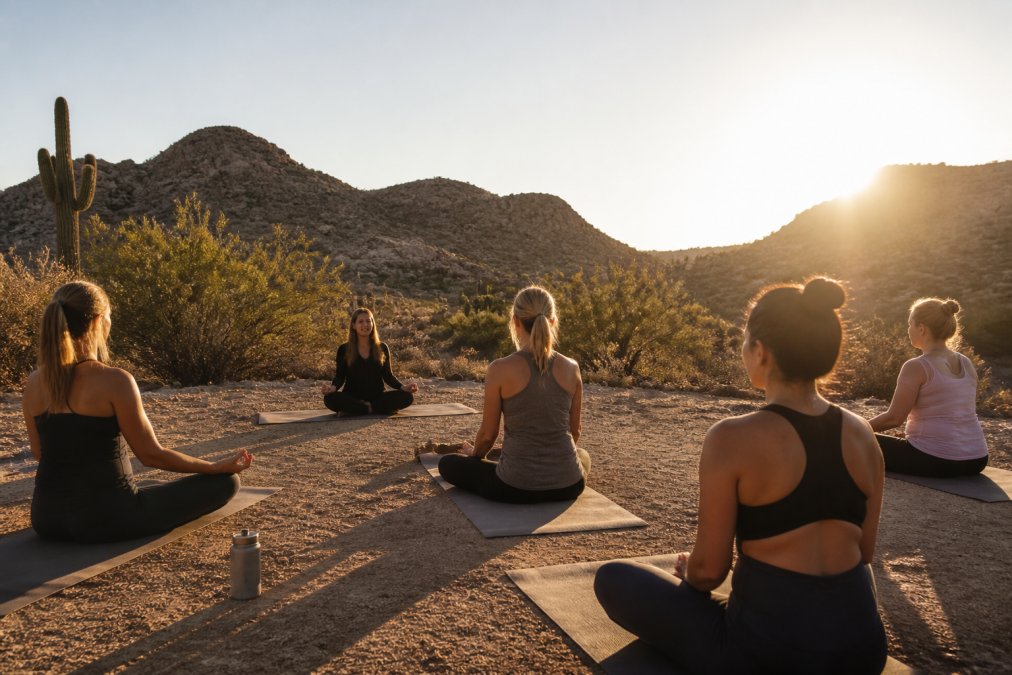
An itinerary for a desert healing retreat should follow a rhythm that mirrors the desert itself: intense heat at midday, soft light at dawn and dusk, and profound silence at night. Structure days around these natural cycles.
Schedule demanding physical activities like hiking or breathwork in the early morning or late afternoon. Reserve midday hours for rest, journaling, and indoor practices like meditation or sound healing.
A balanced daily structure for a healing retreat itinerary might look like this:
- 6:30 AM: Sunrise meditation and gentle movement
- 8:00 AM: Nourishing breakfast
- 9:30 AM: Core workshop or therapeutic session
- 12:30 PM: Lunch and rest period
- 3:30 PM: Cooling restorative practice or free time
- 5:30 PM: Sunset ceremony or group sharing
- 7:30 PM: Dinner
- 9:00 PM: Evening sound bath or silent stargazing
Itinerary flow matters more than filling every hour. Build in spaciousness. Guests arrive carrying busy lives, and the retreat experience begins when they finally stop doing and start being. Resist the urge to over-program.
Step 4: Design a High-Touch Retreat Guest Experience
A high-touch retreat guest experience separates a memorable healing event from a forgettable one. It is the difference between guests feeling accommodated and feeling genuinely cared for, built through small, deliberate details.
Start before guests arrive. Send a thorough packing list that accounts for the desert climate: wide-brim hats, layers for cool evenings, refillable water bottles, and sturdy closed-toe shoes for hiking.
On-site, the experience hinges on anticipation. Have cold water waiting when guests finish a session, place electrolyte packets in each room, and offer cooling towels before outdoor activities. These gestures communicate safety and attention without a word.
Group dynamics require careful facilitation. Mix structured sharing with unstructured social time, and give introverts permission to opt out.
Step 5: Plan for Desert Safety and Emergency Protocols
Desert safety planning is not optional, and it is where generic retreat planning advice falls short. The desert presents unique risks, and your emergency preparedness must be specific to the environment.
Emergency medical protocols for a remote desert location should include:
- A written emergency action plan shared with all staff and facilitators
- A stocked first-aid kit that includes oral rehydration salts and electrolyte replacement
- Designated staff trained in first aid and CPR
- A communication plan for areas with unreliable cell service, including satellite options
- Pre-identified evacuation routes and a relationship with local emergency services
Heat safety is your primary concern. Heat exhaustion and heatstroke can escalate quickly, especially for guests unaccustomed to arid climates. Implement mandatory hydration protocols: water stations at every activity, scheduled hydration breaks, and education on early signs of heat illness.
Acclimatization is a real physiological process. Guests flying in from cooler, more humid climates need time to adjust. Plan lighter activity for the first 24 to 48 hours.
The US Centers for Disease Control and Prevention offers clear guidance on heat-related illness, noting that people exercising in high heat should drink water every 15 to 20 minutes and watch for symptoms like headache, dizziness, and nausea (CDC heat stress recommendations).
Cultural sensitivity and land acknowledgment also belong here. Many desert regions are ancestral lands of Indigenous peoples. A respectful acknowledgment in your opening circle shows that your retreat honors the land, not just uses it.
Step 6: Budgeting, Legalities, and Insurance for Your Desert Healing Retreat
Budget allocation for a desert healing retreat requires honesty about costs that other venues hide. Water delivery, generator fuel, shade structures, and emergency transportation add up quickly. Build a buffer of at least 10 percent of your total budget for unexpected expenses.
A realistic budget should account for:
- Venue rental and any site fees
- Facilitator fees, travel, and lodging
- Meals, including special dietary needs
- Insurance premiums
- Marketing and registration platform fees
- Supplies, including yoga mats, props, and first-aid materials
- Transportation for guests if the venue is remote
Pricing strategy is a delicate balance. You must cover costs and pay facilitators fairly, but your price also positions your retreat in the market. Research comparable offerings and price accordingly.
Legal liability is the least glamorous part of retreat planning and the most critical. Consult an attorney experienced in retreat and event law. You will need comprehensive waivers and liability releases that guests sign before arrival, and you should understand the specific insurance requirements for your state.
The legal landscape for wellness retreats is evolving, and the American Bar Association has noted that wellness tourism raises distinct liability questions around the scope of services provided and the duty of care owed to participants (American Bar Association wellness tourism liability overview).
:::takeaway Insurance is not the place to cut corners. A comprehensive policy that covers your specific activities, whether that is yoga, breathwork, or guided hiking, is the single most important financial investment you can make. One incident without coverage can end your retreat business entirely.
Your Wellness Retreat Planning Checklist
Use this wellness retreat planning checklist to track your progress from concept to execution. Work through it in order, and do not skip steps.
- Define your retreat's intention and ideal guest avatar
- Set a budget that includes a 10 percent contingency buffer
- Research and visit potential desert venues, evaluating climate control and medical access
- Confirm venue availability and sign a contract with clear cancellation terms
- Secure comprehensive liability insurance for all planned activities
- Draft and review participant waivers with legal counsel
- Design your itinerary around the desert's temperature cycles
- Book facilitators and confirm their certifications and insurance
- Create an emergency action plan and identify the nearest medical facilities
- Stock first-aid supplies, including heat-specific items
- Develop a marketing plan and launch your registration page
- Send pre-retreat communications, including a desert-specific packing list
- Plan meals with a focus on hydration and cooling foods
- Prepare a land acknowledgment and any cultural protocols
- Confirm all logistics one week before guests arrive
| Planning Phase | Key Focus | Common Pitfall | Time to Allocate |
|---|---|---|---|
| Intention and Audience | Clarity and niche | Trying to serve everyone | 2-3 weeks |
| Venue and Logistics | Climate and medical access | Booking on looks alone | 4-8 weeks |
| Itinerary Design | Rhythm and spaciousness | Over-programming | 2-3 weeks |
| Guest Experience | Anticipation and care | Forgetting small details | 1-2 weeks |
| Safety and Emergency | Heat protocols | Generic first-aid planning | 2-4 weeks |
| Budget and Legal | Insurance and waivers | Skipping legal counsel | 4-6 weeks |
Is Partnering with Retreat Centers Worth It?
For many facilitators, whether partnering with retreat centers is worth it comes down to a choice between full control and turnkey convenience. Both paths can work, but they produce very different retreat experiences.
Partnering with an established retreat center can dramatically reduce your planning burden. The venue handles accommodations, meals, and often basic logistics, freeing you to focus on programming and guest care.
The trade-off is control. You may have less flexibility over schedules, menus, and the overall atmosphere. You are also renting space within someone else's container.
A third model, full partnership, exists for those who want the best of both. In this arrangement, you collaborate with a venue that shares hosting duties, marketing, and profit. This works best when the venue's mission aligns with your own and when both parties bring complementary strengths.
For facilitators considering this path, the decision hinges on whether the retreat center can deliver the high-touch experience your guests expect. Ask pointed questions about staff-to-guest ratios and on-site caretaker presence.
At Blisstopia Retreats, our founders Mark and Lana Royce live on-site as full-time caretakers, and we partner with outside facilitators under three flexible models: solo venue rental, partial collaboration, or a full 50/50 partnership. This approach means facilitators can choose their level of involvement while guests still receive consistent, attentive care throughout their stay. Whether you are leading a small women's circle or a 15-person teacher training, the right partnership lets you focus on transformation while the logistics run quietly in the background.
The desert has a way of stripping away the nonessential. A well-planned retreat does the same, creating a container where guests can release what no longer serves them and reconnect with what matters.
Planning a desert healing retreat step by step is demanding work, but the payoff is profound when you watch guests transform in an environment that challenges and supports them in equal measure. The desert rewards preparation, and your guests will feel the difference between a thrown-together event and one built with intention. If you are ready to bring your vision to life without shouldering every logistical detail, explore how Blisstopia Retreats partners with facilitators to create soul-nourishing desert experiences. Call us at 623-986-2899 to start the conversation.
Frequently Asked Questions
What are the first steps to plan a desert healing retreat effectively?
Start by defining a clear intention and identifying your target audience. This foundational step shapes every other decision, from choosing a venue that supports your goals to designing an itinerary that resonates with your guests. Next, create a realistic budget and timeline. A detailed wellness retreat planning checklist can help you track tasks like venue booking, marketing, and logistics without feeling overwhelmed.
What logistical elements are essential for a high-touch retreat experience?
A high-touch retreat guest experience depends on anticipating needs before they are expressed. This includes seamless airport transfers, clear communication before arrival, and a well-stocked welcome kit. On-site, focus on personalized dietary accommodations, comfortable and clean accommodations, and a schedule that balances structured activities with ample free time. Small details, like providing sunscreen and high-quality water bottles for the desert climate, show guests you have considered their comfort and safety.
How do you structure a healing retreat itinerary for maximum impact?
Structure your itinerary to support a gradual release of tension. Begin with grounding activities like gentle yoga and breathwork to help guests arrive and settle in. As the retreat progresses, introduce deeper inner work through workshops or guided meditation. Crucially, build in unscheduled time for rest and personal reflection. End the retreat with integration sessions, helping guests create a plan to carry their insights home. Always schedule strenuous activities for cooler morning or evening hours.
Do you need a license or specific permits to host a private wellness retreat in the desert?
Requirements vary significantly by state and local jurisdiction. Generally, you will need a business license and may require permits for lodging, food service, and hosting organized events. If you are using public land, you will likely need a special recreation permit. For a private retreat on a partner venue's property, the facility may already hold the necessary permits. Always consult with local authorities and an insurance professional to understand the legal liability and specific regulations that apply to your event.